Xuexia Yang, Yijie Du, Zhaoyun Liu, Shuai Shi, Chao Chang
{"title":"An Anand-type constitutive model to predict the deformation behavior of Sn3.0Ag0.5Cu under different temperature and strain rates","authors":"Xuexia Yang, Yijie Du, Zhaoyun Liu, Shuai Shi, Chao Chang","doi":"10.1007/s10854-025-14762-7","DOIUrl":null,"url":null,"abstract":"<div><p>This study investigates the compressive mechanical behavior of Sn3.0Ag0.5Cu (SAC305) lead-free solder under varying temperature and strain rate conditions. Compression tests were performed using an electronic universal testing machine across four distinct temperatures (20 °C, 60 °C, 100 °C, and 140 °C) and five different strain rates(<span>\\(1\\times {10}^{-3}{s}^{-1}\\)</span>,<span>\\(5\\times {10}^{-4}{s}^{-1}\\)</span>, <span>\\(2\\times {10}^{-4}{s}^{-1}\\)</span>,<span>\\(8\\times {10}^{-5}{s}^{-1}\\)</span>, <span>\\(5\\times {10}^{-5}{s}^{-1}\\)</span>) Stress–strain curve of SAC305 obtained by constant temperature compression test. The Anand viscoplastic model was applied to fit the experimental data, analyzing temperature and strain rate effects on the mechanical properties of material. The results demonstrate that SAC305 exhibits strong dependence on both temperature and strain rate. Specifically, yield stress decreases with an increase in temperature, while it increases with higher strain rates. Notably, the temperature effect is more pronounced than the strain rate effect. Moreover, the Anand viscoplastic model, when fitted to the experimental data, shows excellent agreement with the observed stress–strain behavior, confirming its suitability for predicting the mechanical response of SAC305 solder under diverse thermal and strain rate conditions. These findings provide a theoretical foundation for subsequent simulation studies on the thermal-vibration coupling performance of SAC305 lead-free solder joints.</p></div>","PeriodicalId":646,"journal":{"name":"Journal of Materials Science: Materials in Electronics","volume":"36 12","pages":""},"PeriodicalIF":2.8000,"publicationDate":"2025-04-22","publicationTypes":"Journal Article","fieldsOfStudy":null,"isOpenAccess":false,"openAccessPdf":"","citationCount":"0","resultStr":null,"platform":"Semanticscholar","paperid":null,"PeriodicalName":"Journal of Materials Science: Materials in Electronics","FirstCategoryId":"5","ListUrlMain":"https://link.springer.com/article/10.1007/s10854-025-14762-7","RegionNum":4,"RegionCategory":"工程技术","ArticlePicture":[],"TitleCN":null,"AbstractTextCN":null,"PMCID":null,"EPubDate":"","PubModel":"","JCR":"Q2","JCRName":"ENGINEERING, ELECTRICAL & ELECTRONIC","Score":null,"Total":0}
引用次数: 0
Abstract
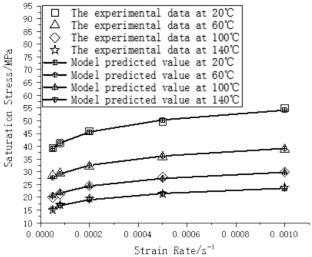
This study investigates the compressive mechanical behavior of Sn3.0Ag0.5Cu (SAC305) lead-free solder under varying temperature and strain rate conditions. Compression tests were performed using an electronic universal testing machine across four distinct temperatures (20 °C, 60 °C, 100 °C, and 140 °C) and five different strain rates(\(1\times {10}^{-3}{s}^{-1}\),\(5\times {10}^{-4}{s}^{-1}\), \(2\times {10}^{-4}{s}^{-1}\),\(8\times {10}^{-5}{s}^{-1}\), \(5\times {10}^{-5}{s}^{-1}\)) Stress–strain curve of SAC305 obtained by constant temperature compression test. The Anand viscoplastic model was applied to fit the experimental data, analyzing temperature and strain rate effects on the mechanical properties of material. The results demonstrate that SAC305 exhibits strong dependence on both temperature and strain rate. Specifically, yield stress decreases with an increase in temperature, while it increases with higher strain rates. Notably, the temperature effect is more pronounced than the strain rate effect. Moreover, the Anand viscoplastic model, when fitted to the experimental data, shows excellent agreement with the observed stress–strain behavior, confirming its suitability for predicting the mechanical response of SAC305 solder under diverse thermal and strain rate conditions. These findings provide a theoretical foundation for subsequent simulation studies on the thermal-vibration coupling performance of SAC305 lead-free solder joints.
期刊介绍:
The Journal of Materials Science: Materials in Electronics is an established refereed companion to the Journal of Materials Science. It publishes papers on materials and their applications in modern electronics, covering the ground between fundamental science, such as semiconductor physics, and work concerned specifically with applications. It explores the growth and preparation of new materials, as well as their processing, fabrication, bonding and encapsulation, together with the reliability, failure analysis, quality assurance and characterization related to the whole range of applications in electronics. The Journal presents papers in newly developing fields such as low dimensional structures and devices, optoelectronics including III-V compounds, glasses and linear/non-linear crystal materials and lasers, high Tc superconductors, conducting polymers, thick film materials and new contact technologies, as well as the established electronics device and circuit materials.




 京公网安备 11010802042870号
京ICP备2023020795号-1
京公网安备 11010802042870号
京ICP备2023020795号-1

 分享
分享
 求助内容:
求助内容: 应助结果提醒方式:
 扫码关注我们
