Dae Joon Jeong, Dong Gyu Lee, Hee-Jung Kim, Eun Hee Cho, Sang-Wook Kim
{"title":"ENPP1 K121Q Genotype Not Associated with Coronary Artery Calcification in Korean Patients with Type 2 Diabetes Mellitus.","authors":"Dae Joon Jeong, Dong Gyu Lee, Hee-Jung Kim, Eun Hee Cho, Sang-Wook Kim","doi":"10.4093/kdj.2010.34.5.320","DOIUrl":null,"url":null,"abstract":"<p><strong>Background: </strong>Ectonucleotide pyrophosphatase/phosphodiesterase-1 (ENPP1) generates inorganic pyrophosphate, a solute that serves as an essential physiological inhibitor of calcification. Inactivating mutations of ENPP1 are associated with generalized calcification in infancy and an increased risk of developing type 2 diabetes mellitus (T2DM). We hypothesized that the ENPP1 K121Q variant may be associated with increased coronary artery calcification in T2DM patients.</p><p><strong>Methods: </strong>The study subjects were aged 34 to 85 years and showed no evidence of clinical cardiovascular disease prior to recruitment. A total of 140 patients with T2DM were assessed for their coronary artery calcium (CAC) scores and ENPP1 K121Q polymorphisms were identified.</p><p><strong>Results: </strong>The prevalence of subjects carrying the KQ genotype was 12.9% (n = 18). There were no 121QQ homozygotes. Patients with the KQ genotype did not show a significantly higher CAC score (122 vs. 18; P = 0.858). We matched each patient with the KQ genotype to a respective control with the KK genotype by gender, age, and duration of diabetes. When compared to matched controls, we observed no significant difference in CAC score (P = 0.959).</p><p><strong>Conclusions: </strong>The ENPP1 K121Q polymorphism does not appear to be associated with coronary artery calcification in patients with T2DM.</p>","PeriodicalId":88924,"journal":{"name":"Korean diabetes journal","volume":"34 5","pages":"320-6"},"PeriodicalIF":0.0000,"publicationDate":"2010-10-01","publicationTypes":"Journal Article","fieldsOfStudy":null,"isOpenAccess":false,"openAccessPdf":"https://sci-hub-pdf.com/10.4093/kdj.2010.34.5.320","citationCount":"4","resultStr":null,"platform":"Semanticscholar","paperid":null,"PeriodicalName":"Korean diabetes journal","FirstCategoryId":"1085","ListUrlMain":"https://doi.org/10.4093/kdj.2010.34.5.320","RegionNum":0,"RegionCategory":null,"ArticlePicture":[],"TitleCN":null,"AbstractTextCN":null,"PMCID":null,"EPubDate":"2010/10/31 0:00:00","PubModel":"Epub","JCR":"","JCRName":"","Score":null,"Total":0}
引用次数: 4
Abstract
Background: Ectonucleotide pyrophosphatase/phosphodiesterase-1 (ENPP1) generates inorganic pyrophosphate, a solute that serves as an essential physiological inhibitor of calcification. Inactivating mutations of ENPP1 are associated with generalized calcification in infancy and an increased risk of developing type 2 diabetes mellitus (T2DM). We hypothesized that the ENPP1 K121Q variant may be associated with increased coronary artery calcification in T2DM patients.
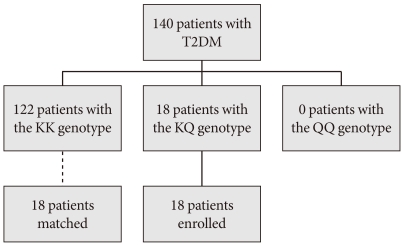
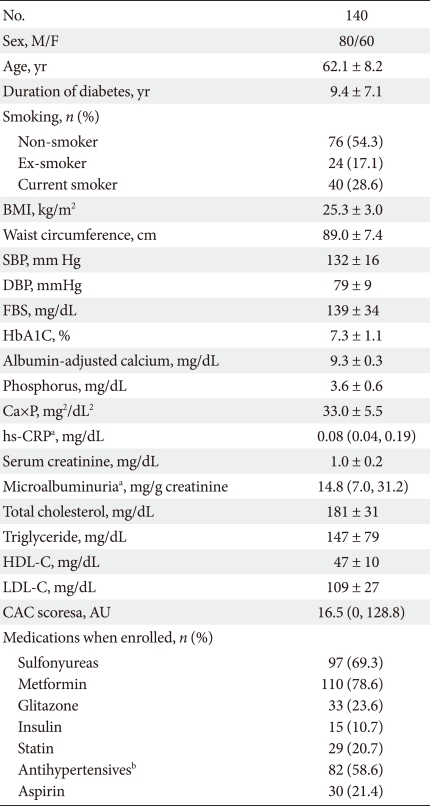
Methods: The study subjects were aged 34 to 85 years and showed no evidence of clinical cardiovascular disease prior to recruitment. A total of 140 patients with T2DM were assessed for their coronary artery calcium (CAC) scores and ENPP1 K121Q polymorphisms were identified.
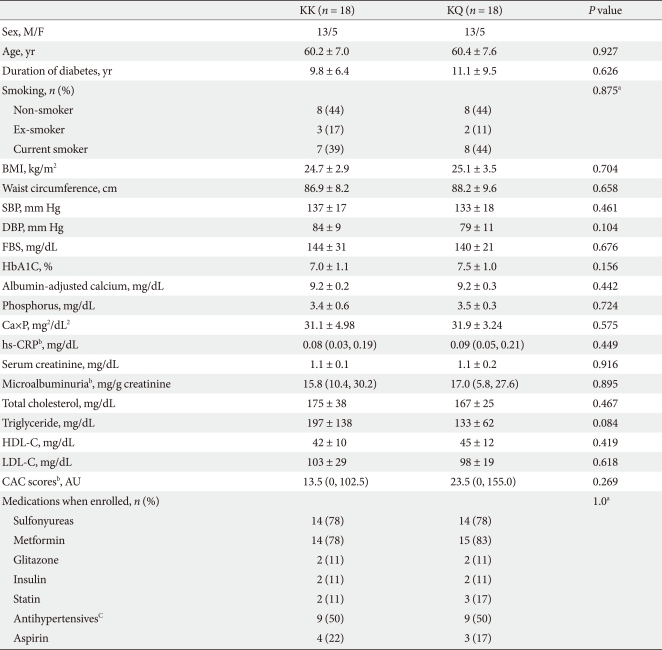
Results: The prevalence of subjects carrying the KQ genotype was 12.9% (n = 18). There were no 121QQ homozygotes. Patients with the KQ genotype did not show a significantly higher CAC score (122 vs. 18; P = 0.858). We matched each patient with the KQ genotype to a respective control with the KK genotype by gender, age, and duration of diabetes. When compared to matched controls, we observed no significant difference in CAC score (P = 0.959).
Conclusions: The ENPP1 K121Q polymorphism does not appear to be associated with coronary artery calcification in patients with T2DM.



 京公网安备 11010802042870号
京ICP备2023020795号-1
京公网安备 11010802042870号
京ICP备2023020795号-1

 分享
分享

 求助内容:
求助内容: 应助结果提醒方式:
 扫码关注我们
