{"title":"Next-generation sequencing data for use in risk assessment","authors":"Bruce Alexander Merrick","doi":"10.1016/j.cotox.2019.02.010","DOIUrl":null,"url":null,"abstract":"<div><p><span>Next-generation sequencing (NGS) represents several powerful platforms that have revolutionized RNA<span> and DNA<span> analysis. The parallel sequencing of millions of DNA molecules can provide mechanistic insights into toxicology and provide new avenues for biomarker discovery with growing relevance for risk assessment. The evolution of NGS technologies has improved over the last decade with increased sensitivity and accuracy to foster new biomarker assays from tissue, blood, and other biofluids. NGS technologies can identify transcriptional changes and genomic targets with base pair precision in response to chemical exposure. Furthermore, there are several exciting movements within the toxicology community that incorporate NGS platforms into new strategies for more rapid toxicological characterizations. These include the Tox21 </span></span></span><em>in vitro</em><span><span><span> high-throughput transcriptomic screening program, development of organotypic </span>spheroids<span>, alternative animal models, mining archival tissues, liquid biopsy, and </span></span>epigenomics. This review will describe NGS-based technologies, demonstrate how they can be used as tools for target discovery in tissue and blood, and suggest how they might be applied for risk assessment.</span></p></div>","PeriodicalId":37736,"journal":{"name":"Current Opinion in Toxicology","volume":"18 ","pages":"Pages 18-26"},"PeriodicalIF":3.6000,"publicationDate":"2019-12-01","publicationTypes":"Journal Article","fieldsOfStudy":null,"isOpenAccess":false,"openAccessPdf":"https://sci-hub-pdf.com/10.1016/j.cotox.2019.02.010","citationCount":"15","resultStr":null,"platform":"Semanticscholar","paperid":null,"PeriodicalName":"Current Opinion in Toxicology","FirstCategoryId":"1085","ListUrlMain":"https://www.sciencedirect.com/science/article/pii/S2468202018300160","RegionNum":0,"RegionCategory":null,"ArticlePicture":[],"TitleCN":null,"AbstractTextCN":null,"PMCID":null,"EPubDate":"","PubModel":"","JCR":"Q1","JCRName":"TOXICOLOGY","Score":null,"Total":0}
引用次数: 15
Abstract
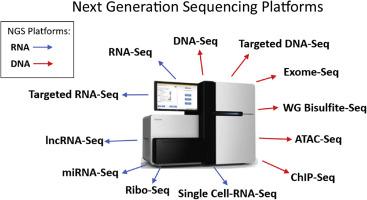
Next-generation sequencing (NGS) represents several powerful platforms that have revolutionized RNA and DNA analysis. The parallel sequencing of millions of DNA molecules can provide mechanistic insights into toxicology and provide new avenues for biomarker discovery with growing relevance for risk assessment. The evolution of NGS technologies has improved over the last decade with increased sensitivity and accuracy to foster new biomarker assays from tissue, blood, and other biofluids. NGS technologies can identify transcriptional changes and genomic targets with base pair precision in response to chemical exposure. Furthermore, there are several exciting movements within the toxicology community that incorporate NGS platforms into new strategies for more rapid toxicological characterizations. These include the Tox21 in vitro high-throughput transcriptomic screening program, development of organotypic spheroids, alternative animal models, mining archival tissues, liquid biopsy, and epigenomics. This review will describe NGS-based technologies, demonstrate how they can be used as tools for target discovery in tissue and blood, and suggest how they might be applied for risk assessment.
期刊介绍:
The aims and scope of Current Opinion in Toxicology is to systematically provide the reader with timely and provocative views and opinions of the highest qualified and recognized experts on current advances in selected topics within the field of toxicology. The goal is that Current Opinion in Toxicology will be an invaluable source of information and perspective for researchers, teachers, managers and administrators, policy makers and students. Division of the subject into sections: For this purpose, the scope of Toxicology is divided into six selected high impact themed sections, each of which is reviewed once a year: Mechanistic Toxicology, Metabolic Toxicology, Risk assessment in Toxicology, Genomic Toxicology, Systems Toxicology, Translational Toxicology.



 京公网安备 11010802042870号
京ICP备2023020795号-1
京公网安备 11010802042870号
京ICP备2023020795号-1

 分享
分享
 求助内容:
求助内容: 应助结果提醒方式:
 扫码关注我们
