Efficacy and safety of tyrosine kinase inhibitors in advanced non-small-cell lung cancer harboring epidermal growth factor receptor mutation: a network meta-analysis.
Abdullah Alanazi, Ismaeel Yunusa, Khaled Elenizi, Abdulaziz I Alzarea
{"title":"Efficacy and safety of tyrosine kinase inhibitors in advanced non-small-cell lung cancer harboring epidermal growth factor receptor mutation: a network meta-analysis.","authors":"Abdullah Alanazi, Ismaeel Yunusa, Khaled Elenizi, Abdulaziz I Alzarea","doi":"10.2217/lmt-2020-0011","DOIUrl":null,"url":null,"abstract":"<p><strong>Aim: </strong>To compare the efficacy and safety of tyrosine kinase inhibitors (TKIs) as first-line treatment in patients with locally advanced or metastatic non-small-cell lung cancer (NSCLC) with positive <i>EGFR</i> mutation.</p><p><strong>Materials & methods: </strong>Following a systematic literature review until December 2019, we conducted a random-effects pairwise and network meta-analyses (NMA). We ranked treatments for efficacy and safety based on the surface under the cumulative ranking curve (SUCRA).</p><p><strong>Results: </strong>Tyrosine kinase inhibitors of the epidermal growth factor receptor (EGFR-TKI) improved survival outcomes with fewer grade 3 or higher adverse events compared to chemotherapy. Overall survival results suggest that osimertinib has the highest probability of being the most efficacious (SUCRA, 79.9%), followed by dacomitinib (SUCRA, 75.8%). Adverse events results suggest that osimertinib (SUCRA, 84.3%) and gefitinib (SUCRA, 78.9%) has the highest probability of being the safest.</p><p><strong>Conclusion: </strong>In this NMA, we found that osimertinib is the most efficacious and safest EGFR-TKI. These results may guide clinicians in choosing the most appropriate treatment option among EGFR-TKIs for their patient's individual clinical characteristics.</p>","PeriodicalId":43551,"journal":{"name":"Lung Cancer Management","volume":"10 1","pages":"LMT43"},"PeriodicalIF":0.7000,"publicationDate":"2020-11-23","publicationTypes":"Journal Article","fieldsOfStudy":null,"isOpenAccess":false,"openAccessPdf":"https://sci-hub-pdf.com/10.2217/lmt-2020-0011","citationCount":"18","resultStr":null,"platform":"Semanticscholar","paperid":null,"PeriodicalName":"Lung Cancer Management","FirstCategoryId":"1085","ListUrlMain":"https://doi.org/10.2217/lmt-2020-0011","RegionNum":0,"RegionCategory":null,"ArticlePicture":[],"TitleCN":null,"AbstractTextCN":null,"PMCID":null,"EPubDate":"","PubModel":"","JCR":"Q4","JCRName":"RESPIRATORY SYSTEM","Score":null,"Total":0}
引用次数: 18
Abstract
Aim: To compare the efficacy and safety of tyrosine kinase inhibitors (TKIs) as first-line treatment in patients with locally advanced or metastatic non-small-cell lung cancer (NSCLC) with positive EGFR mutation.
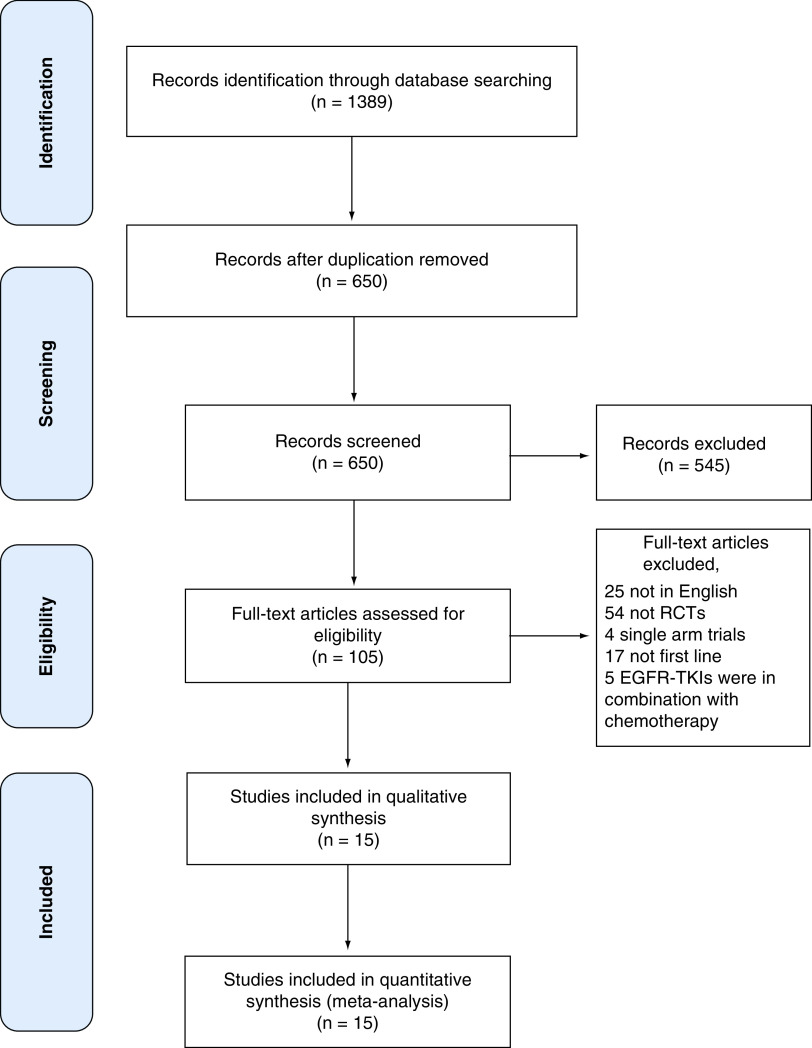
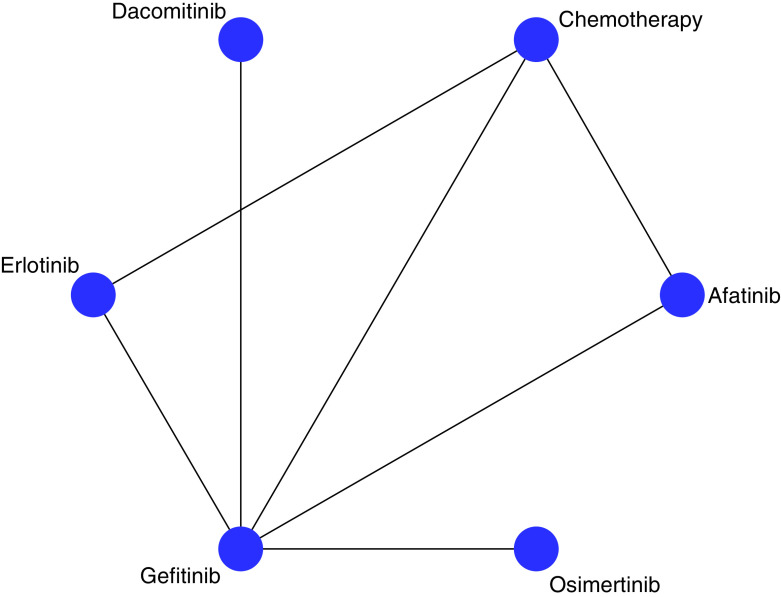
Materials & methods: Following a systematic literature review until December 2019, we conducted a random-effects pairwise and network meta-analyses (NMA). We ranked treatments for efficacy and safety based on the surface under the cumulative ranking curve (SUCRA).
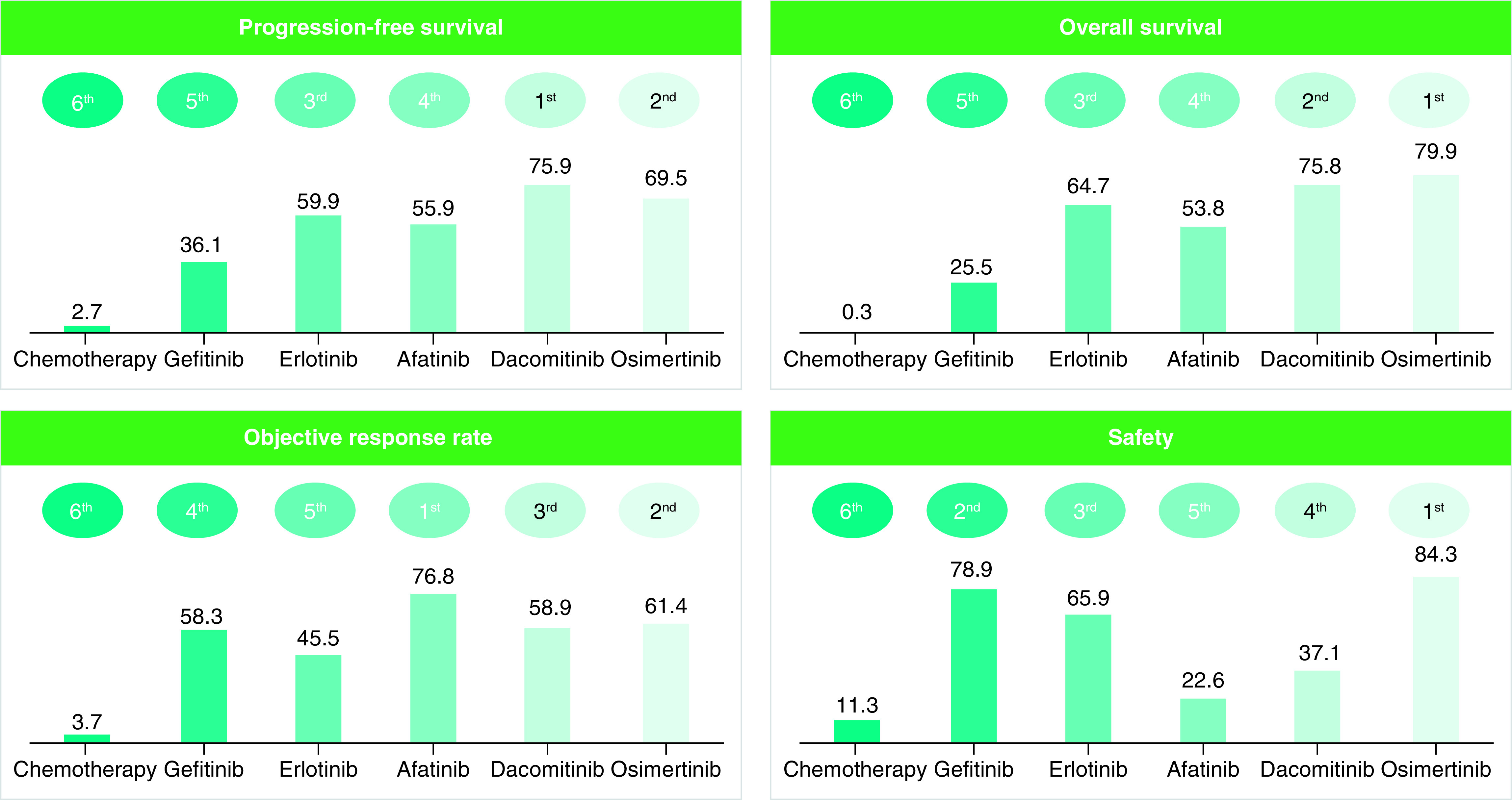
Results: Tyrosine kinase inhibitors of the epidermal growth factor receptor (EGFR-TKI) improved survival outcomes with fewer grade 3 or higher adverse events compared to chemotherapy. Overall survival results suggest that osimertinib has the highest probability of being the most efficacious (SUCRA, 79.9%), followed by dacomitinib (SUCRA, 75.8%). Adverse events results suggest that osimertinib (SUCRA, 84.3%) and gefitinib (SUCRA, 78.9%) has the highest probability of being the safest.
Conclusion: In this NMA, we found that osimertinib is the most efficacious and safest EGFR-TKI. These results may guide clinicians in choosing the most appropriate treatment option among EGFR-TKIs for their patient's individual clinical characteristics.




 京公网安备 11010802042870号
京ICP备2023020795号-1
京公网安备 11010802042870号
京ICP备2023020795号-1

 分享
分享
 求助内容:
求助内容: 应助结果提醒方式:
 扫码关注我们
