Danuta Jaworska, Elżbieta Rosiak, Eliza Kostyra, Katarzyna Jaszczyk, Monika Wroniszewska, Wiesław Przybylski
{"title":"Effect of Herbal Addition on the Microbiological, Oxidative Stability and Sensory Quality of Minced Poultry Meat.","authors":"Danuta Jaworska, Elżbieta Rosiak, Eliza Kostyra, Katarzyna Jaszczyk, Monika Wroniszewska, Wiesław Przybylski","doi":"10.3390/foods10071537","DOIUrl":null,"url":null,"abstract":"<p><p>The study aimed to assess the effect of herbal additions with antioxidant properties (pepper, thyme and oregano) on the microbiological and oxidative stability as well as the sensory quality of minced poultry meat. Meatballs treatments without additives and treatments with the addition of three types of spices in two forms-dry spices and industrial extracts were examined. Popular seasoning additives of oregano (<i>Origanum vulgare</i>), thyme (<i>Thymus vulgaris</i>) and black pepper (<i>Piper nigrum</i>) at 0.3% of dry herbal or 0.003% as industrial extract were added to minced meat. The microbiological, chemical and sensory tests were performed at specified times and storage temperature. Based on the studied criteria, products maintained constant and adequate quality by up to 10 days while stored in 4 °C. In the case of all tested samples, the overall sensory quality began to deteriorate after 10 days of storage. The preservative role of herbs and extracts in meat products during processing and storage was observed. Oregano and black pepper in both forms maintained good microbial quality and showed their inhibitory effects on the growth of psychrotrophic bacteria. It was observed that dried herbs revealed a stronger antioxidant effect than additives in the form of extracts. The studied dried herbs played an antioxidant, antimicrobial and preservative role in meat products during processing and storage.</p>","PeriodicalId":12386,"journal":{"name":"Foods","volume":"10 7","pages":""},"PeriodicalIF":5.1000,"publicationDate":"2021-07-02","publicationTypes":"Journal Article","fieldsOfStudy":null,"isOpenAccess":false,"openAccessPdf":"https://sci-hub-pdf.com/10.3390/foods10071537","citationCount":"5","resultStr":null,"platform":"Semanticscholar","paperid":null,"PeriodicalName":"Foods","FirstCategoryId":"97","ListUrlMain":"https://doi.org/10.3390/foods10071537","RegionNum":2,"RegionCategory":"农林科学","ArticlePicture":[],"TitleCN":null,"AbstractTextCN":null,"PMCID":null,"EPubDate":"","PubModel":"","JCR":"Q1","JCRName":"FOOD SCIENCE & TECHNOLOGY","Score":null,"Total":0}
引用次数: 5
Abstract
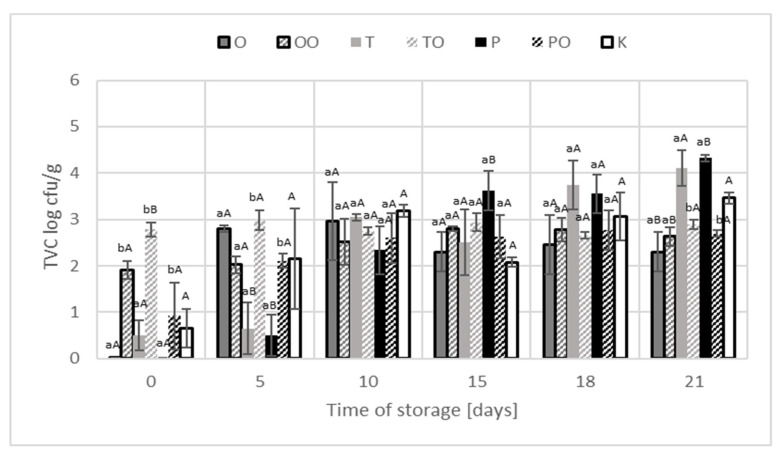
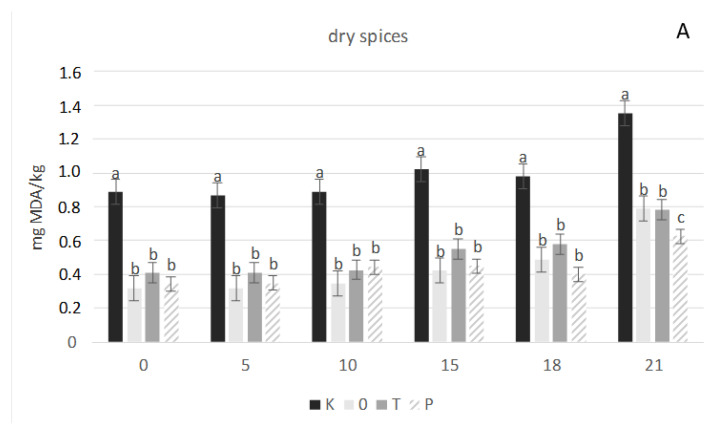
The study aimed to assess the effect of herbal additions with antioxidant properties (pepper, thyme and oregano) on the microbiological and oxidative stability as well as the sensory quality of minced poultry meat. Meatballs treatments without additives and treatments with the addition of three types of spices in two forms-dry spices and industrial extracts were examined. Popular seasoning additives of oregano (Origanum vulgare), thyme (Thymus vulgaris) and black pepper (Piper nigrum) at 0.3% of dry herbal or 0.003% as industrial extract were added to minced meat. The microbiological, chemical and sensory tests were performed at specified times and storage temperature. Based on the studied criteria, products maintained constant and adequate quality by up to 10 days while stored in 4 °C. In the case of all tested samples, the overall sensory quality began to deteriorate after 10 days of storage. The preservative role of herbs and extracts in meat products during processing and storage was observed. Oregano and black pepper in both forms maintained good microbial quality and showed their inhibitory effects on the growth of psychrotrophic bacteria. It was observed that dried herbs revealed a stronger antioxidant effect than additives in the form of extracts. The studied dried herbs played an antioxidant, antimicrobial and preservative role in meat products during processing and storage.
期刊介绍:
Foods (ISSN 2304-8158) is an international, peer-reviewed scientific open access journal which provides an advanced forum for studies related to all aspects of food research. It publishes reviews, regular research papers and short communications. Our aim is to encourage scientists, researchers, and other food professionals to publish their experimental and theoretical results in as much detail as possible or share their knowledge with as much readers unlimitedly as possible. There is no restriction on the length of the papers. The full experimental details must be provided so that the results can be reproduced. There are, in addition, unique features of this journal:
manuscripts regarding research proposals and research ideas will be particularly welcomed
electronic files or software regarding the full details of the calculation and experimental procedure, if unable to be published in a normal way, can be deposited as supplementary material
we also accept manuscripts communicating to a broader audience with regard to research projects financed with public funds




 京公网安备 11010802042870号
京ICP备2023020795号-1
京公网安备 11010802042870号
京ICP备2023020795号-1

 分享
分享
 求助内容:
求助内容: 应助结果提醒方式:
 扫码关注我们
