{"title":"An End-to-End Deep Learning Approach for State Recognition of Multifunction Radars.","authors":"Xinsong Xu, Daping Bi, Jifei Pan","doi":"10.3390/s22134980","DOIUrl":null,"url":null,"abstract":"<p><p>With the widespread use of multifunction radars (MFRs), it is hard for the traditional radar signal recognition technology to meet the needs of current electronic intelligence systems. For signal recognition of an MFR, it is necessary to identify not only the type or individual of the emitter but also its current state. Existing methods identify MFR states through hierarchical modeling, but most of them rely heavily on prior information. In the paper, we focus on the MFR state recognition with actual intercepted MFR signals and develop it by introducing recurrent neural networks (RNNs) of deep learning into the modeling of MFR signals. According to the layered MFR signal architecture, we propose a novel end-to-end state recognition approach with two RNNs' connections. This approach makes full use of RNNs' ability to directly tackle corrupted data and automatically learn the features from input data. So, it is practical and less dependent on prior information. In addition, the hierarchical modeling method applied to the end-to-end network effectively restricts the scale of the end-to-end model so that the model can be trained with a small amount of data. Simulation results on a real MFR show the excellent recognition performance of our end-to-end approach with little prior information.</p>","PeriodicalId":221960,"journal":{"name":"Sensors (Basel, Switzerland)","volume":" ","pages":""},"PeriodicalIF":0.0000,"publicationDate":"2022-07-01","publicationTypes":"Journal Article","fieldsOfStudy":null,"isOpenAccess":false,"openAccessPdf":"https://www.ncbi.nlm.nih.gov/pmc/articles/PMC9269791/pdf/","citationCount":"1","resultStr":null,"platform":"Semanticscholar","paperid":null,"PeriodicalName":"Sensors (Basel, Switzerland)","FirstCategoryId":"103","ListUrlMain":"https://doi.org/10.3390/s22134980","RegionNum":0,"RegionCategory":null,"ArticlePicture":[],"TitleCN":null,"AbstractTextCN":null,"PMCID":null,"EPubDate":"","PubModel":"","JCR":"","JCRName":"","Score":null,"Total":0}
引用次数: 1
Abstract
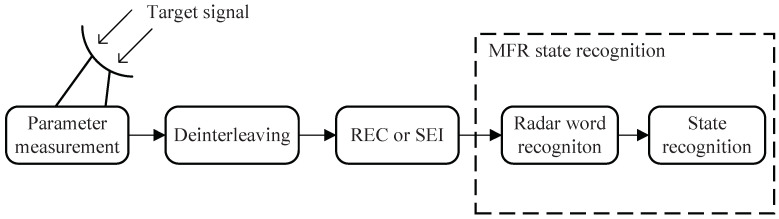
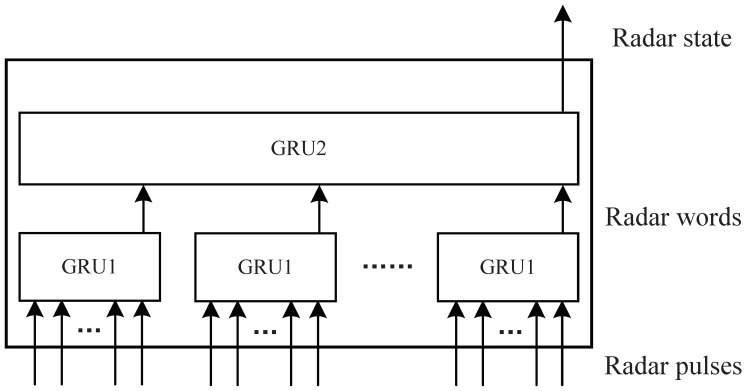
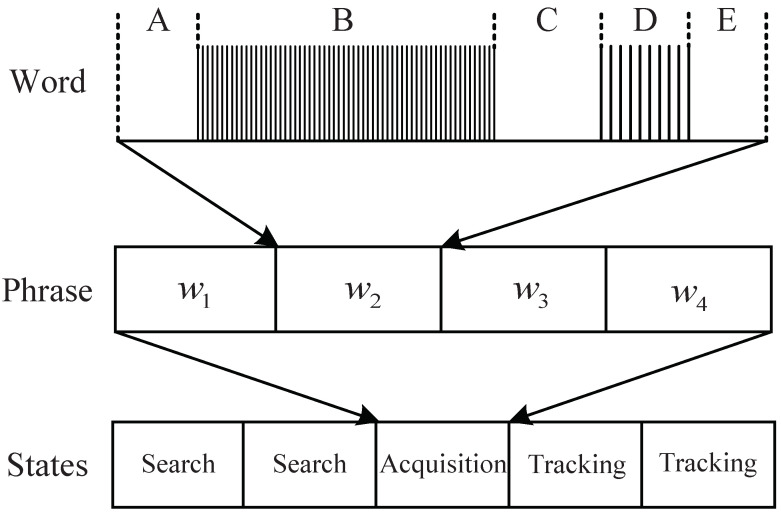
With the widespread use of multifunction radars (MFRs), it is hard for the traditional radar signal recognition technology to meet the needs of current electronic intelligence systems. For signal recognition of an MFR, it is necessary to identify not only the type or individual of the emitter but also its current state. Existing methods identify MFR states through hierarchical modeling, but most of them rely heavily on prior information. In the paper, we focus on the MFR state recognition with actual intercepted MFR signals and develop it by introducing recurrent neural networks (RNNs) of deep learning into the modeling of MFR signals. According to the layered MFR signal architecture, we propose a novel end-to-end state recognition approach with two RNNs' connections. This approach makes full use of RNNs' ability to directly tackle corrupted data and automatically learn the features from input data. So, it is practical and less dependent on prior information. In addition, the hierarchical modeling method applied to the end-to-end network effectively restricts the scale of the end-to-end model so that the model can be trained with a small amount of data. Simulation results on a real MFR show the excellent recognition performance of our end-to-end approach with little prior information.



 京公网安备 11010802042870号
京ICP备2023020795号-1
京公网安备 11010802042870号
京ICP备2023020795号-1

 分享
分享

 求助内容:
求助内容: 应助结果提醒方式:
 扫码关注我们
