Muhammad Afzaal, Farhan Saeed, Fakhar Islam, Huda Ateeq, Aasma Asghar, Yasir Abbas Shah, Chigozie E Ofoedu, James S Chacha
{"title":"Nutritional Health Perspective of Natto: A Critical Review.","authors":"Muhammad Afzaal, Farhan Saeed, Fakhar Islam, Huda Ateeq, Aasma Asghar, Yasir Abbas Shah, Chigozie E Ofoedu, James S Chacha","doi":"10.1155/2022/5863887","DOIUrl":null,"url":null,"abstract":"<p><p>Natto, a traditional soy food fermented by <i>Bacillus subtilis</i>, is made by steaming or cooking soaked soybean seeds, inoculating them with the bacteria, and then letting them sit for an incubation period. Natto soya has grown popular because of its nutritional importance and health advantages. As a result, farmers have more opportunities, thanks to the natto soybean market. For the natto soybean market to remain stable and grow, improved soybean cultivars with enhanced natto quality traits are essential. Natto's high-quality attributes are influenced by the bacteria strain, processing parameters, and soybean variety. Natto has a specific flavor and aroma with a slimy, sticky consistency. Natto possesses various therapeutic potentials and contains a range of essential nutrients and bioactive compounds, i.e., nattokinase, soybean isoflavone, <i>γ</i>-polyglutamic acid, vitamin K<sub>2</sub>, and biogenic amines. Bacterial species, processing conditions, and cultivars of soybean determine the quality characteristics of natto. Natto food is higher in menaquinone-7 and contains 100 times more menaquinone-7 than most cheeses. The present review highlights the production technology, microbiology, nutritional composition, and therapeutic potentials of natto.</p>","PeriodicalId":3,"journal":{"name":"ACS Applied Electronic Materials","volume":" ","pages":"5863887"},"PeriodicalIF":4.7000,"publicationDate":"2022-10-21","publicationTypes":"Journal Article","fieldsOfStudy":null,"isOpenAccess":false,"openAccessPdf":"https://www.ncbi.nlm.nih.gov/pmc/articles/PMC9616652/pdf/","citationCount":"0","resultStr":null,"platform":"Semanticscholar","paperid":null,"PeriodicalName":"ACS Applied Electronic Materials","FirstCategoryId":"1085","ListUrlMain":"https://doi.org/10.1155/2022/5863887","RegionNum":3,"RegionCategory":"材料科学","ArticlePicture":[],"TitleCN":null,"AbstractTextCN":null,"PMCID":null,"EPubDate":"2022/1/1 0:00:00","PubModel":"eCollection","JCR":"Q1","JCRName":"ENGINEERING, ELECTRICAL & ELECTRONIC","Score":null,"Total":0}
引用次数: 0
Abstract
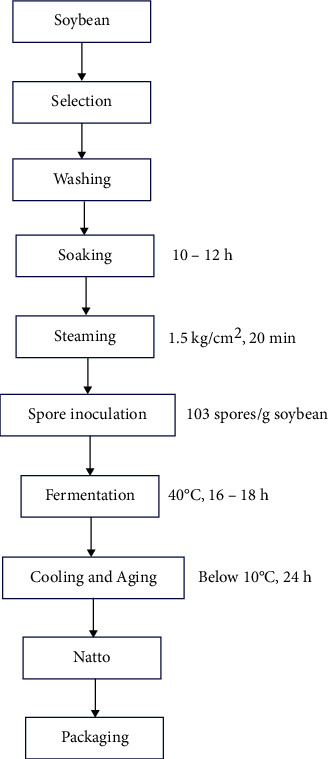
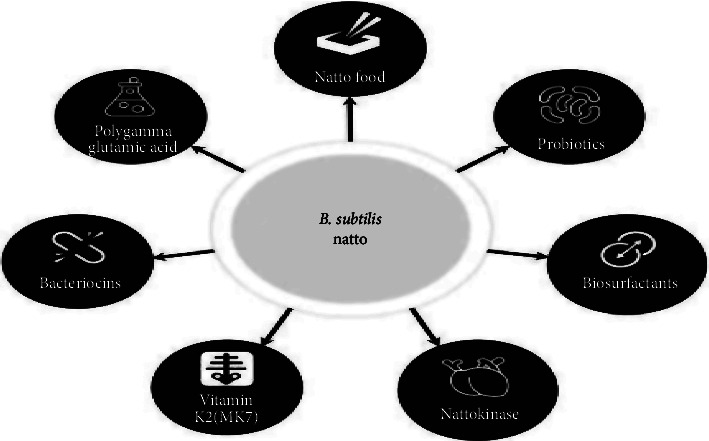
Natto, a traditional soy food fermented by Bacillus subtilis, is made by steaming or cooking soaked soybean seeds, inoculating them with the bacteria, and then letting them sit for an incubation period. Natto soya has grown popular because of its nutritional importance and health advantages. As a result, farmers have more opportunities, thanks to the natto soybean market. For the natto soybean market to remain stable and grow, improved soybean cultivars with enhanced natto quality traits are essential. Natto's high-quality attributes are influenced by the bacteria strain, processing parameters, and soybean variety. Natto has a specific flavor and aroma with a slimy, sticky consistency. Natto possesses various therapeutic potentials and contains a range of essential nutrients and bioactive compounds, i.e., nattokinase, soybean isoflavone, γ-polyglutamic acid, vitamin K2, and biogenic amines. Bacterial species, processing conditions, and cultivars of soybean determine the quality characteristics of natto. Natto food is higher in menaquinone-7 and contains 100 times more menaquinone-7 than most cheeses. The present review highlights the production technology, microbiology, nutritional composition, and therapeutic potentials of natto.
期刊介绍:
ACS Applied Electronic Materials is an interdisciplinary journal publishing original research covering all aspects of electronic materials. The journal is devoted to reports of new and original experimental and theoretical research of an applied nature that integrate knowledge in the areas of materials science, engineering, optics, physics, and chemistry into important applications of electronic materials. Sample research topics that span the journal's scope are inorganic, organic, ionic and polymeric materials with properties that include conducting, semiconducting, superconducting, insulating, dielectric, magnetic, optoelectronic, piezoelectric, ferroelectric and thermoelectric.
Indexed/Abstracted:
Web of Science SCIE
Scopus
CAS
INSPEC
Portico




 京公网安备 11010802042870号
京ICP备2023020795号-1
京公网安备 11010802042870号
京ICP备2023020795号-1

 分享
分享
 求助内容:
求助内容: 应助结果提醒方式:
 扫码关注我们
