Caitlin Rigler, Gautam Menon, Samuel Lipworth, Jeremy P Langrish, Courtney Kipps, Mayooran Shanmuganathan, Ralph Smith
{"title":"Case Series of Triathletes with Takotsubo Cardiomyopathy Presenting with Swimming-Induced Pulmonary Edema.","authors":"Caitlin Rigler, Gautam Menon, Samuel Lipworth, Jeremy P Langrish, Courtney Kipps, Mayooran Shanmuganathan, Ralph Smith","doi":"10.1155/2022/3602505","DOIUrl":null,"url":null,"abstract":"<p><strong>Objectives: </strong>To report three cases of triathletes who presented with swimming-induced pulmonary edema (SIPE) following water immersion. They were subsequently diagnosed with Takotsubo cardiomyopathy (TCM).</p><p><strong>Design: </strong>Retrospective case series.</p><p><strong>Method: </strong>All cases were recreational athletes competing in mass participation triathlons between June 2018 and 2019. They were initially managed by the event medical team and subsequently at the local tertiary level hospital. Written consent was gained from all the subjects.</p><p><strong>Results: </strong>The three triathletes were aged between 50 and 60 years, two were females, and all presented with acute dyspnoea on exiting the water. Two also presented with chest pain and haemoptysis. A diagnosis of SIPE was suspected by the medical event team on initial presentation of low oxygen saturations and clinical signs of pulmonary oedema. All were transferred to the local emergency department and had signs of pulmonary oedema on chest radiographs. Further investigations led to a diagnosis of TCM with findings of <i>T</i> wave inversion in anterolateral electrocardiogram leads and apical hypokinesia on transthoracic echocardiogram and unobstructed coronary arteries.</p><p><strong>Conclusions: </strong>This case series presents triathletes diagnosed with SIPE and TCM following the open water swim phase. It is unclear whether the myocardial dysfunction contributed to causation of SIPE or was the result of SIPE. Mass participation race organizers must be prepared that both SIPE and TCM can present in this population. Those presenting with an episode of SIPE require prompt evaluation of their cardiac and pulmonary physiology. Further research is required to ascertain the exact nature of the relationship between TCM and SIPE.</p>","PeriodicalId":1,"journal":{"name":"Accounts of Chemical Research","volume":" ","pages":"3602505"},"PeriodicalIF":17.7000,"publicationDate":"2022-10-26","publicationTypes":"Journal Article","fieldsOfStudy":null,"isOpenAccess":false,"openAccessPdf":"https://www.ncbi.nlm.nih.gov/pmc/articles/PMC11022776/pdf/","citationCount":"0","resultStr":null,"platform":"Semanticscholar","paperid":null,"PeriodicalName":"Accounts of Chemical Research","FirstCategoryId":"1085","ListUrlMain":"https://doi.org/10.1155/2022/3602505","RegionNum":1,"RegionCategory":"化学","ArticlePicture":[],"TitleCN":null,"AbstractTextCN":null,"PMCID":null,"EPubDate":"2022/1/1 0:00:00","PubModel":"eCollection","JCR":"Q1","JCRName":"CHEMISTRY, MULTIDISCIPLINARY","Score":null,"Total":0}
引用次数: 0
Abstract
Objectives: To report three cases of triathletes who presented with swimming-induced pulmonary edema (SIPE) following water immersion. They were subsequently diagnosed with Takotsubo cardiomyopathy (TCM).
Design: Retrospective case series.
Method: All cases were recreational athletes competing in mass participation triathlons between June 2018 and 2019. They were initially managed by the event medical team and subsequently at the local tertiary level hospital. Written consent was gained from all the subjects.
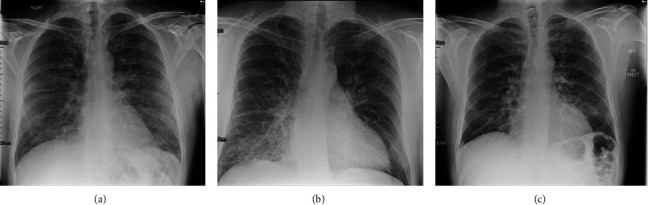
Results: The three triathletes were aged between 50 and 60 years, two were females, and all presented with acute dyspnoea on exiting the water. Two also presented with chest pain and haemoptysis. A diagnosis of SIPE was suspected by the medical event team on initial presentation of low oxygen saturations and clinical signs of pulmonary oedema. All were transferred to the local emergency department and had signs of pulmonary oedema on chest radiographs. Further investigations led to a diagnosis of TCM with findings of T wave inversion in anterolateral electrocardiogram leads and apical hypokinesia on transthoracic echocardiogram and unobstructed coronary arteries.
Conclusions: This case series presents triathletes diagnosed with SIPE and TCM following the open water swim phase. It is unclear whether the myocardial dysfunction contributed to causation of SIPE or was the result of SIPE. Mass participation race organizers must be prepared that both SIPE and TCM can present in this population. Those presenting with an episode of SIPE require prompt evaluation of their cardiac and pulmonary physiology. Further research is required to ascertain the exact nature of the relationship between TCM and SIPE.
期刊介绍:
Accounts of Chemical Research presents short, concise and critical articles offering easy-to-read overviews of basic research and applications in all areas of chemistry and biochemistry. These short reviews focus on research from the author’s own laboratory and are designed to teach the reader about a research project. In addition, Accounts of Chemical Research publishes commentaries that give an informed opinion on a current research problem. Special Issues online are devoted to a single topic of unusual activity and significance.
Accounts of Chemical Research replaces the traditional article abstract with an article "Conspectus." These entries synopsize the research affording the reader a closer look at the content and significance of an article. Through this provision of a more detailed description of the article contents, the Conspectus enhances the article's discoverability by search engines and the exposure for the research.





 京公网安备 11010802042870号
京ICP备2023020795号-1
京公网安备 11010802042870号
京ICP备2023020795号-1

 分享
分享
 求助内容:
求助内容: 应助结果提醒方式:
 扫码关注我们
