{"title":"Reconciling the Theory and the Practice of the Rule of Law in the European Union Measuring the Rule of Law.","authors":"Julinda Beqiraj, Lucy Moxham","doi":"10.1007/s40803-022-00171-z","DOIUrl":null,"url":null,"abstract":"<p><p>The Rule of Law has gained global appeal and recognition, and is one of the fundamental values upon which the European Union (EU) is based, as set out in Article 2 of the Treaty on European Union. In Sect. 1, we briefly consider the main elements of the Rule of Law, in particular those definitions used in the context of the EU, the Council of Europe and the United Nations (UN). Whilst acknowledging that there are national differences among EU Member States, there is broad consensus around the core meaning of the Rule of Law. These definitional issues help frame the discussion that follows on measuring the Rule of Law. In Sect. 2, we outline some general considerations regarding the rationale for measuring the Rule of Law, followed by some specific examples of measurement tools in the context of the Council of Europe (e.g., the European Commission for the Efficiency of Justice (CEPEJ) tools on evaluating the efficiency and quality of European judicial systems, and the Venice Commission Rule of Law Checklist); the EU (e.g., the EU Justice Scoreboard, the Special Eurobarometer on the Rule of Law, and the Rule of Law Report); and the UN (e.g., the Sustainable Development Goals). In Sect. 3, we consider current Rule of Law trends in light of results from a range of datasets (including the Varieties of Democracy (V-Dem) indices, the Democracy Barometer, the Bertelsmann Stiftung's Transformation Index (BTI), and the World Justice Project's Rule of Law Index).</p>","PeriodicalId":45733,"journal":{"name":"Hague Journal on the Rule of Law","volume":"14 1","pages":"139-164"},"PeriodicalIF":3.3000,"publicationDate":"2022-01-01","publicationTypes":"Journal Article","fieldsOfStudy":null,"isOpenAccess":false,"openAccessPdf":"https://www.ncbi.nlm.nih.gov/pmc/articles/PMC9006207/pdf/","citationCount":"0","resultStr":null,"platform":"Semanticscholar","paperid":null,"PeriodicalName":"Hague Journal on the Rule of Law","FirstCategoryId":"90","ListUrlMain":"https://doi.org/10.1007/s40803-022-00171-z","RegionNum":2,"RegionCategory":"社会学","ArticlePicture":[],"TitleCN":null,"AbstractTextCN":null,"PMCID":null,"EPubDate":"2022/4/13 0:00:00","PubModel":"Epub","JCR":"Q1","JCRName":"LAW","Score":null,"Total":0}
引用次数: 0
Abstract
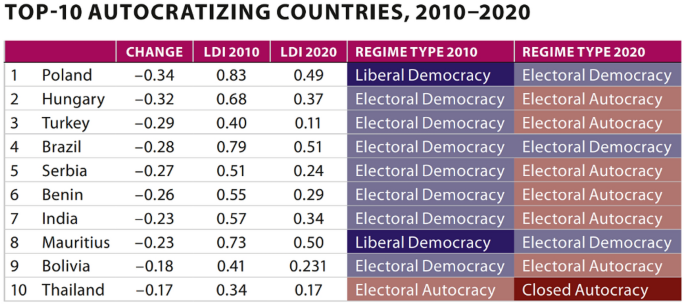
The Rule of Law has gained global appeal and recognition, and is one of the fundamental values upon which the European Union (EU) is based, as set out in Article 2 of the Treaty on European Union. In Sect. 1, we briefly consider the main elements of the Rule of Law, in particular those definitions used in the context of the EU, the Council of Europe and the United Nations (UN). Whilst acknowledging that there are national differences among EU Member States, there is broad consensus around the core meaning of the Rule of Law. These definitional issues help frame the discussion that follows on measuring the Rule of Law. In Sect. 2, we outline some general considerations regarding the rationale for measuring the Rule of Law, followed by some specific examples of measurement tools in the context of the Council of Europe (e.g., the European Commission for the Efficiency of Justice (CEPEJ) tools on evaluating the efficiency and quality of European judicial systems, and the Venice Commission Rule of Law Checklist); the EU (e.g., the EU Justice Scoreboard, the Special Eurobarometer on the Rule of Law, and the Rule of Law Report); and the UN (e.g., the Sustainable Development Goals). In Sect. 3, we consider current Rule of Law trends in light of results from a range of datasets (including the Varieties of Democracy (V-Dem) indices, the Democracy Barometer, the Bertelsmann Stiftung's Transformation Index (BTI), and the World Justice Project's Rule of Law Index).
期刊介绍:
The Hague Journal on the Rule of Law (HJRL) is a multidisciplinary journal that aims to deepen and broaden our knowledge and understanding about the rule of law. Its main areas of interest are: current developments in rule of law in domestic, transnational and international contextstheoretical issues related to the conceptualization and implementation of the rule of law in domestic and international contexts;the relation between the rule of law and economic development, democratization and human rights protection;historical analysis of rule of law;significant trends and initiatives in rule of law promotion (practitioner notes).The HJRL is supported by HiiL Innovating Justice, The Hague, the Netherlands and the Paul Scholten Center for Jurisprudence at the Law School of the University of Amsterdam, the Netherlands.Editorial PolicyThe HJRL welcomes contributions from academics and practitioners with expertise in any relevant field, including law, anthropology, economics, history, philosophy, political science and sociology. It publishes two categories of articles: papers (appr. 6,000-10,000 words) and notes (appr. 2500 words). Papers are accepted on the basis of double blind peer-review. Notes are accepted on the basis of review by two or more editors of the journal. Manuscripts submitted to the HJRL must not be under consideration for publication elsewhere. Acceptance of the Editorial Board’s offer to publish, implies that the author agrees to an embargo on publication elsewhere for a period of two years following the date of publication in the HJRL.



 京公网安备 11010802042870号
京ICP备2023020795号-1
京公网安备 11010802042870号
京ICP备2023020795号-1

 分享
分享
 求助内容:
求助内容: 应助结果提醒方式:
 扫码关注我们
