Vinaya Rudresh, Suchetha Aghanashini, S Srirangarajan, P Srikumar, Ravi J Rao, B Upasana
{"title":"A Novel Ultrastructural Morphological Characterization of Platelet-Rich Fibrin among Diabetics.","authors":"Vinaya Rudresh, Suchetha Aghanashini, S Srirangarajan, P Srikumar, Ravi J Rao, B Upasana","doi":"10.4103/jmau.jmau_103_22","DOIUrl":null,"url":null,"abstract":"<p><strong>Background: </strong>The basic biology of the Platelet Rich Fibrin lies in the fact that they have platelets with enclosed granules in them and fibrin with the ability to release growth factors.</p><p><strong>Aims and objective: </strong>The platelet rich fibrin electron microscopic structure has been characterized in the present cross-sectional novel study. This unique biologic material being vastly used since four decades is not microscopically analyzed amongst type II diabetes mellitus subjects, using light microscopy and transmission electron microscopy. The present novel work employs the transmission electron microscope use to reveal the characteristics of cells in order to correlate the growth factor release.</p><p><strong>Materials and methods: </strong>Venous blood samples drawn were subjected to analysis of HbA1c, CBC, platelet indices, and PRF membrane preparation. Platelet rich fibrin membranes were prepared from healthy, well-controlled, and poorly-controlled diabetic individuals following the protocols for Advanced-Platelet Rich Fibrin+ (1,300 rpm, 8 min) and subjected to assessment of morphological analysis using a light microscope, transmission electron microscopy and growth factor release.</p><p><strong>Results: </strong>A denser network of fibrin with highest growth factor release was seen in the present study.</p><p><strong>Conclusion: </strong>Hence, with the highest growth factors release and a denser network of fibrin, this novel study finds promising biomaterial in diabetics.</p>","PeriodicalId":16340,"journal":{"name":"Journal of Microscopy and Ultrastructure","volume":"1 1","pages":"25-31"},"PeriodicalIF":0.0000,"publicationDate":"2023-03-22","publicationTypes":"Journal Article","fieldsOfStudy":null,"isOpenAccess":false,"openAccessPdf":"https://www.ncbi.nlm.nih.gov/pmc/articles/PMC12063922/pdf/","citationCount":"0","resultStr":null,"platform":"Semanticscholar","paperid":null,"PeriodicalName":"Journal of Microscopy and Ultrastructure","FirstCategoryId":"1085","ListUrlMain":"https://doi.org/10.4103/jmau.jmau_103_22","RegionNum":0,"RegionCategory":null,"ArticlePicture":[],"TitleCN":null,"AbstractTextCN":null,"PMCID":null,"EPubDate":"2025/1/1 0:00:00","PubModel":"eCollection","JCR":"Q3","JCRName":"Medicine","Score":null,"Total":0}
引用次数: 0
Abstract
Background: The basic biology of the Platelet Rich Fibrin lies in the fact that they have platelets with enclosed granules in them and fibrin with the ability to release growth factors.
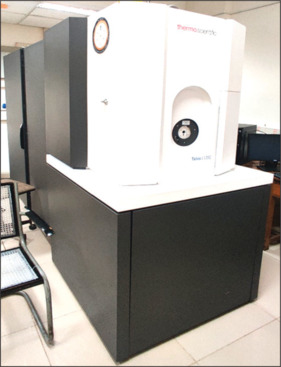
Aims and objective: The platelet rich fibrin electron microscopic structure has been characterized in the present cross-sectional novel study. This unique biologic material being vastly used since four decades is not microscopically analyzed amongst type II diabetes mellitus subjects, using light microscopy and transmission electron microscopy. The present novel work employs the transmission electron microscope use to reveal the characteristics of cells in order to correlate the growth factor release.
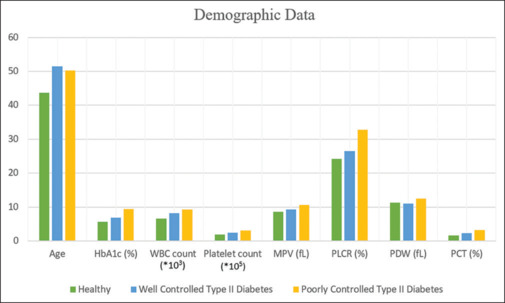
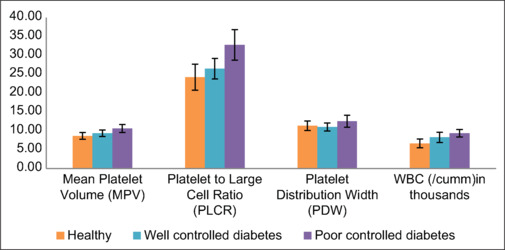
Materials and methods: Venous blood samples drawn were subjected to analysis of HbA1c, CBC, platelet indices, and PRF membrane preparation. Platelet rich fibrin membranes were prepared from healthy, well-controlled, and poorly-controlled diabetic individuals following the protocols for Advanced-Platelet Rich Fibrin+ (1,300 rpm, 8 min) and subjected to assessment of morphological analysis using a light microscope, transmission electron microscopy and growth factor release.
Results: A denser network of fibrin with highest growth factor release was seen in the present study.
Conclusion: Hence, with the highest growth factors release and a denser network of fibrin, this novel study finds promising biomaterial in diabetics.




 京公网安备 11010802042870号
京ICP备2023020795号-1
京公网安备 11010802042870号
京ICP备2023020795号-1

 分享
分享
 求助内容:
求助内容: 应助结果提醒方式:
 扫码关注我们
