C T Zhang, Y B Liang, J T Zhi, L Zhao, P Lin, W Wang, G M Zhang
{"title":"[mNGS 在侵袭性真菌性鼻窦炎诊断中的初步应用]。","authors":"C T Zhang, Y B Liang, J T Zhi, L Zhao, P Lin, W Wang, G M Zhang","doi":"10.3760/cma.j.cn115330-20231129-00253","DOIUrl":null,"url":null,"abstract":"<p><p><b>Objective:</b> By conducting a retrospective analysis of the clinical data of 14 patients diagnosed with invasive fungal rhinosinusitis (IFRS) confirmed by metagenomics next generation sequencing (mNGS) technology, we aim to explore the rapid diagnosis value of mNGS in IFRS. <b>Methods:</b> The clinical data of 14 IFRS patients admitted to TianJin First Central Hospital were retrospectively analyzed from February 2021 to October 2023. The study cohort comprised 8 males and 6 females, with ages ranging from 14 to 77 years. All patients were diagnosed as IFRS by performing mNGS sequencing technology of nasal sinus lesion biopsy specimens. Clinical data such as laboratory examination, imaging examination, histopathological examination results, treatment plan and prognosis were summarized and analyzed. <b>Results:</b> All 14 patients were diagnosed as IFRS, with mNGS detecting pathogens such as <i>Rhizopus</i> (7 cases), Aspergillus (5 cases), Trichoderma (1 case), and <i>Scedosporium apiospermum</i> (1 case). Follow-up evaluations were conducted for a period ranging from 2 months to 2 years post-treatment. At the end of follow-up, 11 out of 14 IFRS patients achieved a complete cure with no signs of recurrence, while the symptoms of the remaining 3 patients significantly improved with comprehensive treatment. <b>Conclusion:</b> mNGS emerges as a highly effective diagnostic tool for IFRS, providing valuable microbiological evidence for clinical diagnosis and demonstrating promising clinical utility.</p>","PeriodicalId":23987,"journal":{"name":"Chinese journal of otorhinolaryngology head and neck surgery","volume":"59 5","pages":"464-471"},"PeriodicalIF":0.0000,"publicationDate":"2024-05-07","publicationTypes":"Journal Article","fieldsOfStudy":null,"isOpenAccess":false,"openAccessPdf":"","citationCount":"0","resultStr":"{\"title\":\"[The preliminary application of mNGS in the diagnosis of invasive fungal sinusitis].\",\"authors\":\"C T Zhang, Y B Liang, J T Zhi, L Zhao, P Lin, W Wang, G M Zhang\",\"doi\":\"10.3760/cma.j.cn115330-20231129-00253\",\"DOIUrl\":null,\"url\":null,\"abstract\":\"<p><p><b>Objective:</b> By conducting a retrospective analysis of the clinical data of 14 patients diagnosed with invasive fungal rhinosinusitis (IFRS) confirmed by metagenomics next generation sequencing (mNGS) technology, we aim to explore the rapid diagnosis value of mNGS in IFRS. <b>Methods:</b> The clinical data of 14 IFRS patients admitted to TianJin First Central Hospital were retrospectively analyzed from February 2021 to October 2023. The study cohort comprised 8 males and 6 females, with ages ranging from 14 to 77 years. All patients were diagnosed as IFRS by performing mNGS sequencing technology of nasal sinus lesion biopsy specimens. Clinical data such as laboratory examination, imaging examination, histopathological examination results, treatment plan and prognosis were summarized and analyzed. <b>Results:</b> All 14 patients were diagnosed as IFRS, with mNGS detecting pathogens such as <i>Rhizopus</i> (7 cases), Aspergillus (5 cases), Trichoderma (1 case), and <i>Scedosporium apiospermum</i> (1 case). Follow-up evaluations were conducted for a period ranging from 2 months to 2 years post-treatment. At the end of follow-up, 11 out of 14 IFRS patients achieved a complete cure with no signs of recurrence, while the symptoms of the remaining 3 patients significantly improved with comprehensive treatment. <b>Conclusion:</b> mNGS emerges as a highly effective diagnostic tool for IFRS, providing valuable microbiological evidence for clinical diagnosis and demonstrating promising clinical utility.</p>\",\"PeriodicalId\":23987,\"journal\":{\"name\":\"Chinese journal of otorhinolaryngology head and neck surgery\",\"volume\":\"59 5\",\"pages\":\"464-471\"},\"PeriodicalIF\":0.0000,\"publicationDate\":\"2024-05-07\",\"publicationTypes\":\"Journal Article\",\"fieldsOfStudy\":null,\"isOpenAccess\":false,\"openAccessPdf\":\"\",\"citationCount\":\"0\",\"resultStr\":null,\"platform\":\"Semanticscholar\",\"paperid\":null,\"PeriodicalName\":\"Chinese journal of otorhinolaryngology head and neck surgery\",\"FirstCategoryId\":\"3\",\"ListUrlMain\":\"https://doi.org/10.3760/cma.j.cn115330-20231129-00253\",\"RegionNum\":0,\"RegionCategory\":null,\"ArticlePicture\":[],\"TitleCN\":null,\"AbstractTextCN\":null,\"PMCID\":null,\"EPubDate\":\"\",\"PubModel\":\"\",\"JCR\":\"Q4\",\"JCRName\":\"Medicine\",\"Score\":null,\"Total\":0}","platform":"Semanticscholar","paperid":null,"PeriodicalName":"Chinese journal of otorhinolaryngology head and neck surgery","FirstCategoryId":"3","ListUrlMain":"https://doi.org/10.3760/cma.j.cn115330-20231129-00253","RegionNum":0,"RegionCategory":null,"ArticlePicture":[],"TitleCN":null,"AbstractTextCN":null,"PMCID":null,"EPubDate":"","PubModel":"","JCR":"Q4","JCRName":"Medicine","Score":null,"Total":0}
[The preliminary application of mNGS in the diagnosis of invasive fungal sinusitis].
Objective: By conducting a retrospective analysis of the clinical data of 14 patients diagnosed with invasive fungal rhinosinusitis (IFRS) confirmed by metagenomics next generation sequencing (mNGS) technology, we aim to explore the rapid diagnosis value of mNGS in IFRS. Methods: The clinical data of 14 IFRS patients admitted to TianJin First Central Hospital were retrospectively analyzed from February 2021 to October 2023. The study cohort comprised 8 males and 6 females, with ages ranging from 14 to 77 years. All patients were diagnosed as IFRS by performing mNGS sequencing technology of nasal sinus lesion biopsy specimens. Clinical data such as laboratory examination, imaging examination, histopathological examination results, treatment plan and prognosis were summarized and analyzed. Results: All 14 patients were diagnosed as IFRS, with mNGS detecting pathogens such as Rhizopus (7 cases), Aspergillus (5 cases), Trichoderma (1 case), and Scedosporium apiospermum (1 case). Follow-up evaluations were conducted for a period ranging from 2 months to 2 years post-treatment. At the end of follow-up, 11 out of 14 IFRS patients achieved a complete cure with no signs of recurrence, while the symptoms of the remaining 3 patients significantly improved with comprehensive treatment. Conclusion: mNGS emerges as a highly effective diagnostic tool for IFRS, providing valuable microbiological evidence for clinical diagnosis and demonstrating promising clinical utility.
期刊介绍:
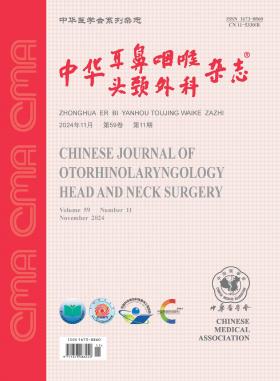
Chinese journal of otorhinolaryngology head and neck surgery is a high-level medical science and technology journal sponsored and published directly by the Chinese Medical Association, reflecting the significant research progress in the field of otorhinolaryngology head and neck surgery in China, and striving to promote the domestic and international academic exchanges for the purpose of running the journal.
Over the years, the journal has been ranked first in the total citation frequency list of national scientific and technical journals published by the Documentation and Intelligence Center of the Chinese Academy of Sciences and the China Science Citation Database, and has always ranked first among the scientific and technical journals in the related fields.
Chinese journal of otorhinolaryngology head and neck surgery has been included in the authoritative databases PubMed, Chinese core journals, CSCD.




 京公网安备 11010802042870号
京ICP备2023020795号-1
京公网安备 11010802042870号
京ICP备2023020795号-1

 分享
分享
 求助内容:
求助内容: 应助结果提醒方式:
 扫码关注我们
