{"title":"用 Bcl-2 修饰的嵌合抗原受体在增强实体瘤靶向性方面的协同效应。","authors":"Xiaoyan Wang, Guodong Liu, Tian Huan, Yuxing Wang, Bo Jiang, Wei Liu, Anran Dai, Xiangzhi Zhang, Feng Yu","doi":"10.1007/s13577-024-01088-5","DOIUrl":null,"url":null,"abstract":"<p><p>Engineered T cells expressing chimeric antigen receptors (CARs) have shown remarkable therapeutic effects on haematological malignancies. However, CART cells are less effective on solid tumours mainly due to their weak persistence, which might be caused by activation-induced cell death (AICD). To overcome this limitation, CART cell with the antigen, Epidermal growth factor receptor variant III (EGFRvIII), targeting was modified to carry the anti-apoptotic molecule B cell lymphoma 2 (Bcl-2), and the final construct was named as EGFRvIII·CART-Bcl2 cells. Compared with the EGFRvIII·CART cells, EGFRvIII·CART-Bcl2 cells revealed higher capacities of proliferation, anti-apoptosis and tumour cell killing in vitro. Moreover, EGFRvIII·CART-Bcl2 cells had a longer persistence rate and exerted better anti-tumour effects than EGFRvIII·CART cells in cervical carcinoma xenograft model. Taken together, our findings suggest that incorporating anti-apoptotic molecules into CART cells may enhance its therapeutic effects against solid tumours.</p>","PeriodicalId":49194,"journal":{"name":"Human Cell","volume":" ","pages":"1421-1433"},"PeriodicalIF":3.1000,"publicationDate":"2024-09-01","publicationTypes":"Journal Article","fieldsOfStudy":null,"isOpenAccess":false,"openAccessPdf":"","citationCount":"0","resultStr":"{\"title\":\"Synergistic effect of chimeric antigen receptor modified with Bcl-2 on enhanced solid tumour targeting.\",\"authors\":\"Xiaoyan Wang, Guodong Liu, Tian Huan, Yuxing Wang, Bo Jiang, Wei Liu, Anran Dai, Xiangzhi Zhang, Feng Yu\",\"doi\":\"10.1007/s13577-024-01088-5\",\"DOIUrl\":null,\"url\":null,\"abstract\":\"<p><p>Engineered T cells expressing chimeric antigen receptors (CARs) have shown remarkable therapeutic effects on haematological malignancies. However, CART cells are less effective on solid tumours mainly due to their weak persistence, which might be caused by activation-induced cell death (AICD). To overcome this limitation, CART cell with the antigen, Epidermal growth factor receptor variant III (EGFRvIII), targeting was modified to carry the anti-apoptotic molecule B cell lymphoma 2 (Bcl-2), and the final construct was named as EGFRvIII·CART-Bcl2 cells. Compared with the EGFRvIII·CART cells, EGFRvIII·CART-Bcl2 cells revealed higher capacities of proliferation, anti-apoptosis and tumour cell killing in vitro. Moreover, EGFRvIII·CART-Bcl2 cells had a longer persistence rate and exerted better anti-tumour effects than EGFRvIII·CART cells in cervical carcinoma xenograft model. Taken together, our findings suggest that incorporating anti-apoptotic molecules into CART cells may enhance its therapeutic effects against solid tumours.</p>\",\"PeriodicalId\":49194,\"journal\":{\"name\":\"Human Cell\",\"volume\":\" \",\"pages\":\"1421-1433\"},\"PeriodicalIF\":3.1000,\"publicationDate\":\"2024-09-01\",\"publicationTypes\":\"Journal Article\",\"fieldsOfStudy\":null,\"isOpenAccess\":false,\"openAccessPdf\":\"\",\"citationCount\":\"0\",\"resultStr\":null,\"platform\":\"Semanticscholar\",\"paperid\":null,\"PeriodicalName\":\"Human Cell\",\"FirstCategoryId\":\"99\",\"ListUrlMain\":\"https://doi.org/10.1007/s13577-024-01088-5\",\"RegionNum\":3,\"RegionCategory\":\"生物学\",\"ArticlePicture\":[],\"TitleCN\":null,\"AbstractTextCN\":null,\"PMCID\":null,\"EPubDate\":\"2024/6/15 0:00:00\",\"PubModel\":\"Epub\",\"JCR\":\"Q3\",\"JCRName\":\"CELL BIOLOGY\",\"Score\":null,\"Total\":0}","platform":"Semanticscholar","paperid":null,"PeriodicalName":"Human Cell","FirstCategoryId":"99","ListUrlMain":"https://doi.org/10.1007/s13577-024-01088-5","RegionNum":3,"RegionCategory":"生物学","ArticlePicture":[],"TitleCN":null,"AbstractTextCN":null,"PMCID":null,"EPubDate":"2024/6/15 0:00:00","PubModel":"Epub","JCR":"Q3","JCRName":"CELL BIOLOGY","Score":null,"Total":0}
引用次数: 0
摘要
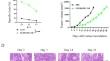
表达嵌合抗原受体(CAR)的工程 T 细胞对血液恶性肿瘤有显著的治疗效果。然而,CART 细胞对实体瘤的疗效较差,主要原因是其持久性较弱,这可能是活化诱导细胞死亡(AICD)造成的。为了克服这一局限性,研究人员改造了以表皮生长因子受体变体 III(EGFRvIII)为抗原的 CART 细胞,使其携带抗凋亡分子 B 细胞淋巴瘤 2(Bcl-2),并将最终构建的细胞命名为 EGFRvIII-CART-Bcl2 细胞。与 EGFRvIII-CART 细胞相比,EGFRvIII-CART-Bcl2 细胞在体外具有更高的增殖、抗凋亡和杀伤肿瘤细胞的能力。此外,与 EGFRvIII-CART 细胞相比,EGFRvIII-CART-Bcl2 细胞在宫颈癌异种移植模型中具有更长的存活率和更好的抗肿瘤效果。综上所述,我们的研究结果表明,在 CART 细胞中加入抗凋亡分子可增强其对实体瘤的治疗效果。
Synergistic effect of chimeric antigen receptor modified with Bcl-2 on enhanced solid tumour targeting.
Engineered T cells expressing chimeric antigen receptors (CARs) have shown remarkable therapeutic effects on haematological malignancies. However, CART cells are less effective on solid tumours mainly due to their weak persistence, which might be caused by activation-induced cell death (AICD). To overcome this limitation, CART cell with the antigen, Epidermal growth factor receptor variant III (EGFRvIII), targeting was modified to carry the anti-apoptotic molecule B cell lymphoma 2 (Bcl-2), and the final construct was named as EGFRvIII·CART-Bcl2 cells. Compared with the EGFRvIII·CART cells, EGFRvIII·CART-Bcl2 cells revealed higher capacities of proliferation, anti-apoptosis and tumour cell killing in vitro. Moreover, EGFRvIII·CART-Bcl2 cells had a longer persistence rate and exerted better anti-tumour effects than EGFRvIII·CART cells in cervical carcinoma xenograft model. Taken together, our findings suggest that incorporating anti-apoptotic molecules into CART cells may enhance its therapeutic effects against solid tumours.
期刊介绍:
Human Cell is the official English-language journal of the Japan Human Cell Society. The journal serves as a forum for international research on all aspects of the human cell, encompassing not only cell biology but also pathology, cytology, and oncology, including clinical oncology. Embryonic stem cells derived from animals, regenerative medicine using animal cells, and experimental animal models with implications for human diseases are covered as well.
Submissions in any of the following categories will be considered: Research Articles, Cell Lines, Rapid Communications, Reviews, and Letters to the Editor. A brief clinical case report focusing on cellular responses to pathological insults in human studies may also be submitted as a Letter to the Editor in a concise and short format.
Not only basic scientists but also gynecologists, oncologists, and other clinical scientists are welcome to submit work expressing new ideas or research using human cells.




 京公网安备 11010802042870号
京ICP备2023020795号-1
京公网安备 11010802042870号
京ICP备2023020795号-1

 分享
分享
 求助内容:
求助内容: 应助结果提醒方式:
 扫码关注我们
