Kyle M Blackburn, Peter V Sguigna, Lauren Tardo, Shaida Khan, Steven Vernino, Lauren Phillips
{"title":"为神经病学受训人员设计和实施免疫疗法最佳实践的简短自主课程。","authors":"Kyle M Blackburn, Peter V Sguigna, Lauren Tardo, Shaida Khan, Steven Vernino, Lauren Phillips","doi":"10.1177/23821205241271546","DOIUrl":null,"url":null,"abstract":"<p><strong>Objectives: </strong>To create and implement a brief, self-directed course on immunotherapy (IT) best practices for trainees on a neuroimmunology elective rotation.</p><p><strong>Methods: </strong>A working group of neurology faculty developed a curriculum covering the mechanism of action, indications, and necessary monitoring for different IT used in neurology practice. The content was presented as a web-based course and hosted on local servers. Neurology residents and fellows participating in a neuroimmunology elective were given access to the curriculum over a 2-week period. A multiple-choice assessment and questionnaire assessing learner confidence with IT was administered prior to starting the course, and again upon course completion. Twelve months after implementation, the pretest and posttest were revised following an item analysis.</p><p><strong>Results: </strong>Twenty-two neurology residents and fellows completed the course since July 2022. The average score on the first version of the pretest and posttest was 78% versus 92% (<i>P </i>= .02), and 51% versus 70% (<i>P =</i> .02) on the revised version. Trainee self-reported confidence with IT also improved, although only 59.1% of trainees completed the postcourse questionnaire. Respondents provided positive feedback on the format and content of the course and expressed a desire for a reference to the material for future use.</p><p><strong>Conclusion: </strong>In this pilot study, our course improved resident confidence and knowledge of IT best practices. The course was well-received, and our methods can be implemented in a variety of clinical environments to supplement trainee learning.</p>","PeriodicalId":45121,"journal":{"name":"Journal of Medical Education and Curricular Development","volume":"11 ","pages":"23821205241271546"},"PeriodicalIF":1.6000,"publicationDate":"2024-08-09","publicationTypes":"Journal Article","fieldsOfStudy":null,"isOpenAccess":false,"openAccessPdf":"https://www.ncbi.nlm.nih.gov/pmc/articles/PMC11311178/pdf/","citationCount":"0","resultStr":"{\"title\":\"Design and Implementation of a Brief, Self-Directed Course on Immunotherapy Best Practices for Neurology Trainees.\",\"authors\":\"Kyle M Blackburn, Peter V Sguigna, Lauren Tardo, Shaida Khan, Steven Vernino, Lauren Phillips\",\"doi\":\"10.1177/23821205241271546\",\"DOIUrl\":null,\"url\":null,\"abstract\":\"<p><strong>Objectives: </strong>To create and implement a brief, self-directed course on immunotherapy (IT) best practices for trainees on a neuroimmunology elective rotation.</p><p><strong>Methods: </strong>A working group of neurology faculty developed a curriculum covering the mechanism of action, indications, and necessary monitoring for different IT used in neurology practice. The content was presented as a web-based course and hosted on local servers. Neurology residents and fellows participating in a neuroimmunology elective were given access to the curriculum over a 2-week period. A multiple-choice assessment and questionnaire assessing learner confidence with IT was administered prior to starting the course, and again upon course completion. Twelve months after implementation, the pretest and posttest were revised following an item analysis.</p><p><strong>Results: </strong>Twenty-two neurology residents and fellows completed the course since July 2022. The average score on the first version of the pretest and posttest was 78% versus 92% (<i>P </i>= .02), and 51% versus 70% (<i>P =</i> .02) on the revised version. Trainee self-reported confidence with IT also improved, although only 59.1% of trainees completed the postcourse questionnaire. Respondents provided positive feedback on the format and content of the course and expressed a desire for a reference to the material for future use.</p><p><strong>Conclusion: </strong>In this pilot study, our course improved resident confidence and knowledge of IT best practices. The course was well-received, and our methods can be implemented in a variety of clinical environments to supplement trainee learning.</p>\",\"PeriodicalId\":45121,\"journal\":{\"name\":\"Journal of Medical Education and Curricular Development\",\"volume\":\"11 \",\"pages\":\"23821205241271546\"},\"PeriodicalIF\":1.6000,\"publicationDate\":\"2024-08-09\",\"publicationTypes\":\"Journal Article\",\"fieldsOfStudy\":null,\"isOpenAccess\":false,\"openAccessPdf\":\"https://www.ncbi.nlm.nih.gov/pmc/articles/PMC11311178/pdf/\",\"citationCount\":\"0\",\"resultStr\":null,\"platform\":\"Semanticscholar\",\"paperid\":null,\"PeriodicalName\":\"Journal of Medical Education and Curricular Development\",\"FirstCategoryId\":\"1085\",\"ListUrlMain\":\"https://doi.org/10.1177/23821205241271546\",\"RegionNum\":0,\"RegionCategory\":null,\"ArticlePicture\":[],\"TitleCN\":null,\"AbstractTextCN\":null,\"PMCID\":null,\"EPubDate\":\"2024/1/1 0:00:00\",\"PubModel\":\"eCollection\",\"JCR\":\"Q2\",\"JCRName\":\"EDUCATION, SCIENTIFIC DISCIPLINES\",\"Score\":null,\"Total\":0}","platform":"Semanticscholar","paperid":null,"PeriodicalName":"Journal of Medical Education and Curricular Development","FirstCategoryId":"1085","ListUrlMain":"https://doi.org/10.1177/23821205241271546","RegionNum":0,"RegionCategory":null,"ArticlePicture":[],"TitleCN":null,"AbstractTextCN":null,"PMCID":null,"EPubDate":"2024/1/1 0:00:00","PubModel":"eCollection","JCR":"Q2","JCRName":"EDUCATION, SCIENTIFIC DISCIPLINES","Score":null,"Total":0}
Design and Implementation of a Brief, Self-Directed Course on Immunotherapy Best Practices for Neurology Trainees.
Objectives: To create and implement a brief, self-directed course on immunotherapy (IT) best practices for trainees on a neuroimmunology elective rotation.
Methods: A working group of neurology faculty developed a curriculum covering the mechanism of action, indications, and necessary monitoring for different IT used in neurology practice. The content was presented as a web-based course and hosted on local servers. Neurology residents and fellows participating in a neuroimmunology elective were given access to the curriculum over a 2-week period. A multiple-choice assessment and questionnaire assessing learner confidence with IT was administered prior to starting the course, and again upon course completion. Twelve months after implementation, the pretest and posttest were revised following an item analysis.
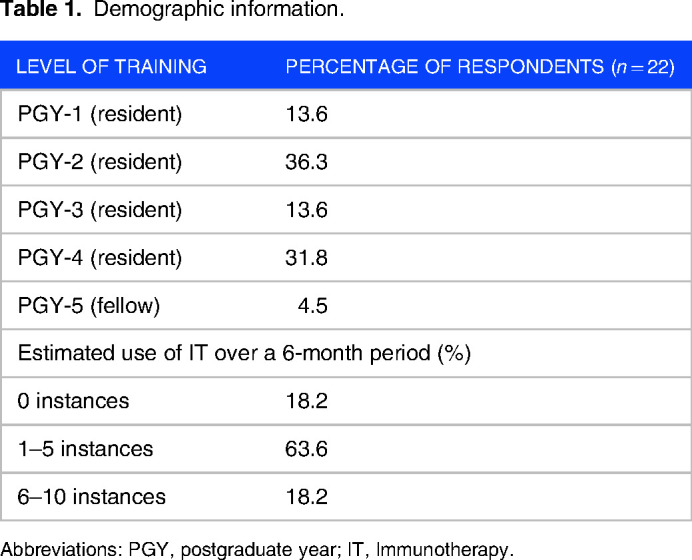
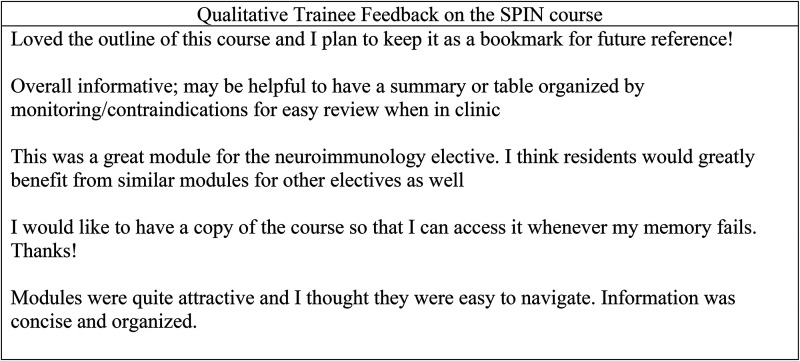
Results: Twenty-two neurology residents and fellows completed the course since July 2022. The average score on the first version of the pretest and posttest was 78% versus 92% (P = .02), and 51% versus 70% (P = .02) on the revised version. Trainee self-reported confidence with IT also improved, although only 59.1% of trainees completed the postcourse questionnaire. Respondents provided positive feedback on the format and content of the course and expressed a desire for a reference to the material for future use.
Conclusion: In this pilot study, our course improved resident confidence and knowledge of IT best practices. The course was well-received, and our methods can be implemented in a variety of clinical environments to supplement trainee learning.






 京公网安备 11010802042870号
京ICP备2023020795号-1
京公网安备 11010802042870号
京ICP备2023020795号-1

 分享
分享
 求助内容:
求助内容: 应助结果提醒方式:
 扫码关注我们
