Marcus Per Gustaf Lithander, Lisa Geraci, Meltem Karaca, Renee Hunsberger
{"title":"纠正神经错乱对学生和教师日后推理的影响。","authors":"Marcus Per Gustaf Lithander, Lisa Geraci, Meltem Karaca, Renee Hunsberger","doi":"10.3390/jintelligence12100098","DOIUrl":null,"url":null,"abstract":"<p><p>Students and educators sometimes hold beliefs about intelligence and learning that lack scientific support, often called neuromyths. Neuromyths can be problematic, so it is important to find methods to correct them. Previous findings demonstrate that textual refutations are effective for correcting neuromyths. However, even after correction, erroneous information may continue to influence reasoning. In three experiments, we investigated whether feedback could be used to update students' and educators' beliefs and influence their reasoning about neuromyths. Across all experiments, the results showed that both students and educators held erroneous beliefs about learning and memory that could be updated after receiving feedback. Feedback also increased students', but not teachers', reasoning accuracy. The results demonstrate that feedback can be used to update beliefs in neuromyths, but these beliefs may influence reasoning even after correction.</p>","PeriodicalId":52279,"journal":{"name":"Journal of Intelligence","volume":"12 10","pages":""},"PeriodicalIF":3.8000,"publicationDate":"2024-10-01","publicationTypes":"Journal Article","fieldsOfStudy":null,"isOpenAccess":false,"openAccessPdf":"https://www.ncbi.nlm.nih.gov/pmc/articles/PMC11508907/pdf/","citationCount":"0","resultStr":"{\"title\":\"The Effect of Correcting Neuromyths on Students' and Teachers' Later Reasoning.\",\"authors\":\"Marcus Per Gustaf Lithander, Lisa Geraci, Meltem Karaca, Renee Hunsberger\",\"doi\":\"10.3390/jintelligence12100098\",\"DOIUrl\":null,\"url\":null,\"abstract\":\"<p><p>Students and educators sometimes hold beliefs about intelligence and learning that lack scientific support, often called neuromyths. Neuromyths can be problematic, so it is important to find methods to correct them. Previous findings demonstrate that textual refutations are effective for correcting neuromyths. However, even after correction, erroneous information may continue to influence reasoning. In three experiments, we investigated whether feedback could be used to update students' and educators' beliefs and influence their reasoning about neuromyths. Across all experiments, the results showed that both students and educators held erroneous beliefs about learning and memory that could be updated after receiving feedback. Feedback also increased students', but not teachers', reasoning accuracy. The results demonstrate that feedback can be used to update beliefs in neuromyths, but these beliefs may influence reasoning even after correction.</p>\",\"PeriodicalId\":52279,\"journal\":{\"name\":\"Journal of Intelligence\",\"volume\":\"12 10\",\"pages\":\"\"},\"PeriodicalIF\":3.8000,\"publicationDate\":\"2024-10-01\",\"publicationTypes\":\"Journal Article\",\"fieldsOfStudy\":null,\"isOpenAccess\":false,\"openAccessPdf\":\"https://www.ncbi.nlm.nih.gov/pmc/articles/PMC11508907/pdf/\",\"citationCount\":\"0\",\"resultStr\":null,\"platform\":\"Semanticscholar\",\"paperid\":null,\"PeriodicalName\":\"Journal of Intelligence\",\"FirstCategoryId\":\"102\",\"ListUrlMain\":\"https://doi.org/10.3390/jintelligence12100098\",\"RegionNum\":3,\"RegionCategory\":\"心理学\",\"ArticlePicture\":[],\"TitleCN\":null,\"AbstractTextCN\":null,\"PMCID\":null,\"EPubDate\":\"\",\"PubModel\":\"\",\"JCR\":\"Q1\",\"JCRName\":\"PSYCHOLOGY, MULTIDISCIPLINARY\",\"Score\":null,\"Total\":0}","platform":"Semanticscholar","paperid":null,"PeriodicalName":"Journal of Intelligence","FirstCategoryId":"102","ListUrlMain":"https://doi.org/10.3390/jintelligence12100098","RegionNum":3,"RegionCategory":"心理学","ArticlePicture":[],"TitleCN":null,"AbstractTextCN":null,"PMCID":null,"EPubDate":"","PubModel":"","JCR":"Q1","JCRName":"PSYCHOLOGY, MULTIDISCIPLINARY","Score":null,"Total":0}
The Effect of Correcting Neuromyths on Students' and Teachers' Later Reasoning.
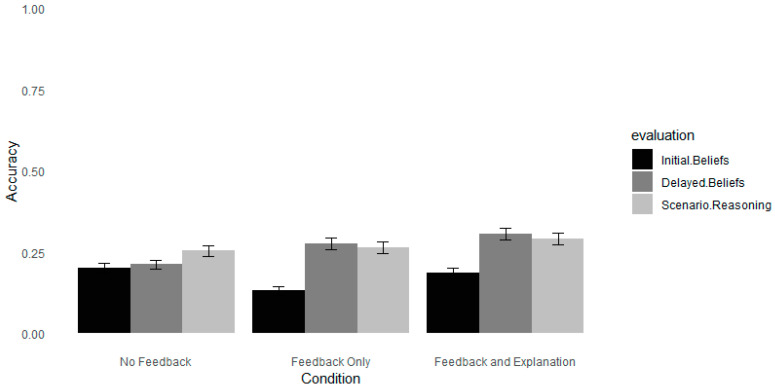
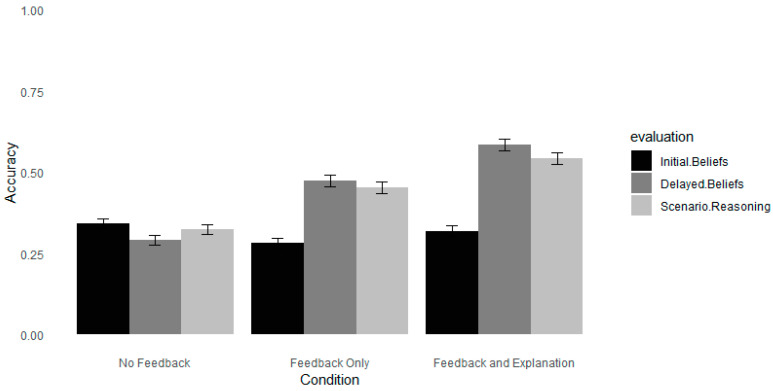
Students and educators sometimes hold beliefs about intelligence and learning that lack scientific support, often called neuromyths. Neuromyths can be problematic, so it is important to find methods to correct them. Previous findings demonstrate that textual refutations are effective for correcting neuromyths. However, even after correction, erroneous information may continue to influence reasoning. In three experiments, we investigated whether feedback could be used to update students' and educators' beliefs and influence their reasoning about neuromyths. Across all experiments, the results showed that both students and educators held erroneous beliefs about learning and memory that could be updated after receiving feedback. Feedback also increased students', but not teachers', reasoning accuracy. The results demonstrate that feedback can be used to update beliefs in neuromyths, but these beliefs may influence reasoning even after correction.






 京公网安备 11010802042870号
京ICP备2023020795号-1
京公网安备 11010802042870号
京ICP备2023020795号-1

 分享
分享
 求助内容:
求助内容: 应助结果提醒方式:
 扫码关注我们
