{"title":"慢性阻塞性肺病患者停用 LABA/ICS 后升级为三联疗法与改用双联支气管扩张剂的有效性和安全性比较:一项回顾性队列研究。","authors":"Li-Wei Wu, Tzu-Chieh Lin, Tzu-Han Lin, Ying-Jay Liou, Chen-Liang Tsai, Kuang-Yao Yang, Meng-Ting Wang","doi":"10.1177/17534666241292242","DOIUrl":null,"url":null,"abstract":"<p><strong>Background: </strong>The latest guidelines discourage the use of long-acting beta<sub>2</sub>-agonists/inhaled corticosteroids (LABA/ICS) for chronic obstructive pulmonary disease (COPD). However, there is a lack of evidence regarding the optimal subsequent treatment after discontinuing LABA/ICS.</p><p><strong>Objectives: </strong>To compare the effectiveness and safety of switching from LABA/ICS to triple therapy (LABA/long-acting muscarinic antagonists (LAMA)/ICS) or to dual bronchodilators (LABA/LAMA) in COPD patients.</p><p><strong>Design: </strong>This was a new-user, active-comparator, and propensity score-matched cohort study analyzing the Taiwanese nationwide healthcare insurance claims.</p><p><strong>Methods: </strong>We recruited COPD patients switching from LABA/ICS to triple therapy or to dual bronchodilators from 2015 to 2019. The primary effectiveness outcome was the annual rate of exacerbations, and safety outcomes included severe pneumonia and all-cause mortality. Stratification by prior exacerbations was conducted.</p><p><strong>Results: </strong>After matching, each group comprised 1892 patients, 55% of whom experienced no exacerbations in the prior year. Treatment with LABA/LAMA/ICS versus LABA/LAMA showed comparable annual rate of moderate-to-severe exacerbations (incidence rate ratio, 1.04; 95% confidence interval (CI), 0.91-1.19). However, switching to LABA/LAMA/ICS was associated with increased risks of severe pneumonia (hazard ratio (HR), 1.65; 95% CI, 1.30-2.09) and all-cause death (HR, 1.39; 95% CI, 1.09-1.78). In patients with⩾2 prior exacerbations, LABA/LAMA/ICS versus LABA/LAMA was related to a 21% reduced rate of exacerbations but with a twofold increased pneumonia risk and a 49% elevated risk of all-cause mortality.</p><p><strong>Conclusion: </strong>Switching from LABA/ICS to triple therapy versus dual bronchodilators in COPD patients was associated with similar rates of annual exacerbations but was related to elevated risks of severe pneumonia and all-cause mortality. Among frequent exacerbators, triple therapy was associated with lower rates of exacerbation but was accompanied by increased risks of pneumonia and mortality compared to LABA/LAMA. Careful consideration of the examined safety events is necessary when switching from LABA/ICS to triple therapy in COPD management.</p>","PeriodicalId":22884,"journal":{"name":"Therapeutic Advances in Respiratory Disease","volume":"18 ","pages":"17534666241292242"},"PeriodicalIF":3.0000,"publicationDate":"2024-01-01","publicationTypes":"Journal Article","fieldsOfStudy":null,"isOpenAccess":false,"openAccessPdf":"https://www.ncbi.nlm.nih.gov/pmc/articles/PMC11533288/pdf/","citationCount":"0","resultStr":"{\"title\":\"Comparative effectiveness and safety of escalating to triple therapy versus switching to dual bronchodilators after discontinuing LABA/ICS in patients with COPD: a retrospective cohort study.\",\"authors\":\"Li-Wei Wu, Tzu-Chieh Lin, Tzu-Han Lin, Ying-Jay Liou, Chen-Liang Tsai, Kuang-Yao Yang, Meng-Ting Wang\",\"doi\":\"10.1177/17534666241292242\",\"DOIUrl\":null,\"url\":null,\"abstract\":\"<p><strong>Background: </strong>The latest guidelines discourage the use of long-acting beta<sub>2</sub>-agonists/inhaled corticosteroids (LABA/ICS) for chronic obstructive pulmonary disease (COPD). However, there is a lack of evidence regarding the optimal subsequent treatment after discontinuing LABA/ICS.</p><p><strong>Objectives: </strong>To compare the effectiveness and safety of switching from LABA/ICS to triple therapy (LABA/long-acting muscarinic antagonists (LAMA)/ICS) or to dual bronchodilators (LABA/LAMA) in COPD patients.</p><p><strong>Design: </strong>This was a new-user, active-comparator, and propensity score-matched cohort study analyzing the Taiwanese nationwide healthcare insurance claims.</p><p><strong>Methods: </strong>We recruited COPD patients switching from LABA/ICS to triple therapy or to dual bronchodilators from 2015 to 2019. The primary effectiveness outcome was the annual rate of exacerbations, and safety outcomes included severe pneumonia and all-cause mortality. Stratification by prior exacerbations was conducted.</p><p><strong>Results: </strong>After matching, each group comprised 1892 patients, 55% of whom experienced no exacerbations in the prior year. Treatment with LABA/LAMA/ICS versus LABA/LAMA showed comparable annual rate of moderate-to-severe exacerbations (incidence rate ratio, 1.04; 95% confidence interval (CI), 0.91-1.19). However, switching to LABA/LAMA/ICS was associated with increased risks of severe pneumonia (hazard ratio (HR), 1.65; 95% CI, 1.30-2.09) and all-cause death (HR, 1.39; 95% CI, 1.09-1.78). In patients with⩾2 prior exacerbations, LABA/LAMA/ICS versus LABA/LAMA was related to a 21% reduced rate of exacerbations but with a twofold increased pneumonia risk and a 49% elevated risk of all-cause mortality.</p><p><strong>Conclusion: </strong>Switching from LABA/ICS to triple therapy versus dual bronchodilators in COPD patients was associated with similar rates of annual exacerbations but was related to elevated risks of severe pneumonia and all-cause mortality. Among frequent exacerbators, triple therapy was associated with lower rates of exacerbation but was accompanied by increased risks of pneumonia and mortality compared to LABA/LAMA. Careful consideration of the examined safety events is necessary when switching from LABA/ICS to triple therapy in COPD management.</p>\",\"PeriodicalId\":22884,\"journal\":{\"name\":\"Therapeutic Advances in Respiratory Disease\",\"volume\":\"18 \",\"pages\":\"17534666241292242\"},\"PeriodicalIF\":3.0000,\"publicationDate\":\"2024-01-01\",\"publicationTypes\":\"Journal Article\",\"fieldsOfStudy\":null,\"isOpenAccess\":false,\"openAccessPdf\":\"https://www.ncbi.nlm.nih.gov/pmc/articles/PMC11533288/pdf/\",\"citationCount\":\"0\",\"resultStr\":null,\"platform\":\"Semanticscholar\",\"paperid\":null,\"PeriodicalName\":\"Therapeutic Advances in Respiratory Disease\",\"FirstCategoryId\":\"3\",\"ListUrlMain\":\"https://doi.org/10.1177/17534666241292242\",\"RegionNum\":3,\"RegionCategory\":\"医学\",\"ArticlePicture\":[],\"TitleCN\":null,\"AbstractTextCN\":null,\"PMCID\":null,\"EPubDate\":\"\",\"PubModel\":\"\",\"JCR\":\"Q2\",\"JCRName\":\"RESPIRATORY SYSTEM\",\"Score\":null,\"Total\":0}","platform":"Semanticscholar","paperid":null,"PeriodicalName":"Therapeutic Advances in Respiratory Disease","FirstCategoryId":"3","ListUrlMain":"https://doi.org/10.1177/17534666241292242","RegionNum":3,"RegionCategory":"医学","ArticlePicture":[],"TitleCN":null,"AbstractTextCN":null,"PMCID":null,"EPubDate":"","PubModel":"","JCR":"Q2","JCRName":"RESPIRATORY SYSTEM","Score":null,"Total":0}
Comparative effectiveness and safety of escalating to triple therapy versus switching to dual bronchodilators after discontinuing LABA/ICS in patients with COPD: a retrospective cohort study.
Background: The latest guidelines discourage the use of long-acting beta2-agonists/inhaled corticosteroids (LABA/ICS) for chronic obstructive pulmonary disease (COPD). However, there is a lack of evidence regarding the optimal subsequent treatment after discontinuing LABA/ICS.
Objectives: To compare the effectiveness and safety of switching from LABA/ICS to triple therapy (LABA/long-acting muscarinic antagonists (LAMA)/ICS) or to dual bronchodilators (LABA/LAMA) in COPD patients.
Design: This was a new-user, active-comparator, and propensity score-matched cohort study analyzing the Taiwanese nationwide healthcare insurance claims.
Methods: We recruited COPD patients switching from LABA/ICS to triple therapy or to dual bronchodilators from 2015 to 2019. The primary effectiveness outcome was the annual rate of exacerbations, and safety outcomes included severe pneumonia and all-cause mortality. Stratification by prior exacerbations was conducted.
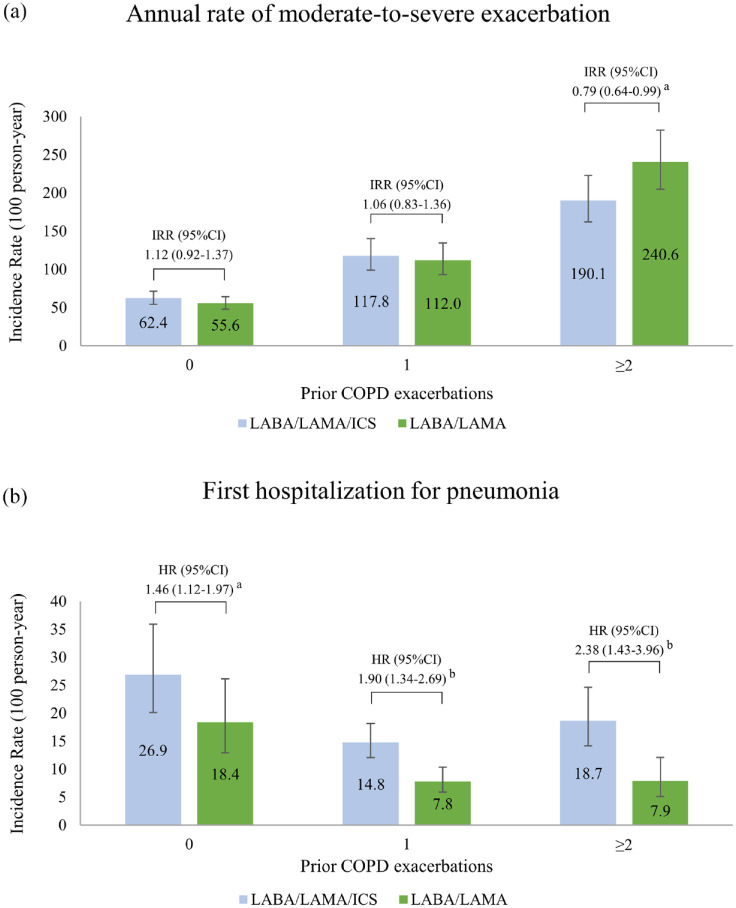
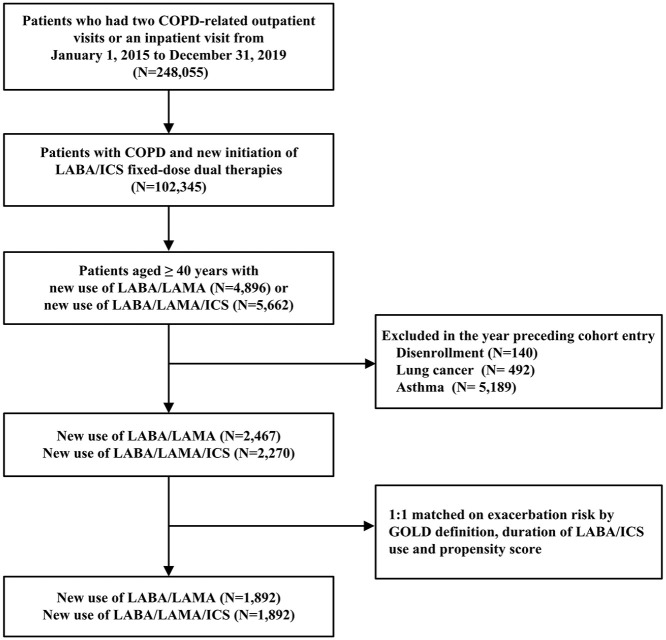
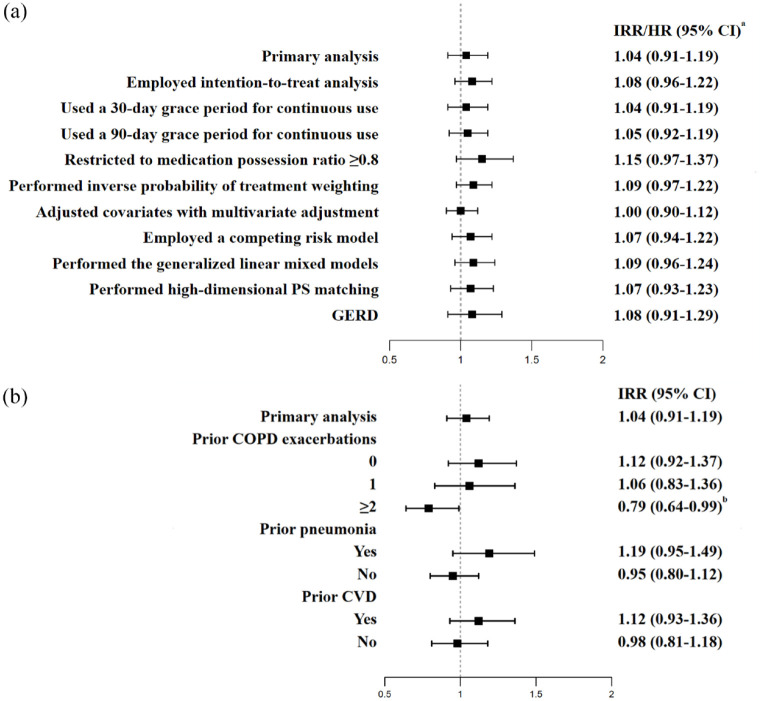
Results: After matching, each group comprised 1892 patients, 55% of whom experienced no exacerbations in the prior year. Treatment with LABA/LAMA/ICS versus LABA/LAMA showed comparable annual rate of moderate-to-severe exacerbations (incidence rate ratio, 1.04; 95% confidence interval (CI), 0.91-1.19). However, switching to LABA/LAMA/ICS was associated with increased risks of severe pneumonia (hazard ratio (HR), 1.65; 95% CI, 1.30-2.09) and all-cause death (HR, 1.39; 95% CI, 1.09-1.78). In patients with⩾2 prior exacerbations, LABA/LAMA/ICS versus LABA/LAMA was related to a 21% reduced rate of exacerbations but with a twofold increased pneumonia risk and a 49% elevated risk of all-cause mortality.
Conclusion: Switching from LABA/ICS to triple therapy versus dual bronchodilators in COPD patients was associated with similar rates of annual exacerbations but was related to elevated risks of severe pneumonia and all-cause mortality. Among frequent exacerbators, triple therapy was associated with lower rates of exacerbation but was accompanied by increased risks of pneumonia and mortality compared to LABA/LAMA. Careful consideration of the examined safety events is necessary when switching from LABA/ICS to triple therapy in COPD management.
期刊介绍:
Therapeutic Advances in Respiratory Disease delivers the highest quality peer-reviewed articles, reviews, and scholarly comment on pioneering efforts and innovative studies across all areas of respiratory disease.




 京公网安备 11010802042870号
京ICP备2023020795号-1
京公网安备 11010802042870号
京ICP备2023020795号-1

 分享
分享
 求助内容:
求助内容: 应助结果提醒方式:
 扫码关注我们
