{"title":"揭示隐藏的协同作用:在压力农业中赋予生物肥料以硅促进植物生长。","authors":"Hassan Etesami","doi":"10.1111/pce.15300","DOIUrl":null,"url":null,"abstract":"<div>\n \n <p>Food security is increasingly threatened by climate change and environmental pressures that hinder plant growth and development. Harnessing soil microorganisms, such as mycorrhizal fungi and plant growth-promoting bacteria, offers a promising approach to boost crop production. However, existing screening methods for these microorganisms often prove ineffective in real-world, stress-prone environments, limiting the efficacy of microbial biofertilizers. To address this challenge, this review proposes the integration of silicon—renowned for its stress-mitigating properties in plants—with biofertilizers. Silicon has been shown to work synergistically with plant growth-promoting microorganisms, enhancing plant resilience to environmental stress while improving colonization efficiency and plant-microbe interactions in stressful conditions. By combining silicon with biofertilizers to create silicon-enriched biofertilizers, this strategy has the potential to optimize microbial performance and fortify food security against global challenges. The review advocates for the co-application of silicon and microbial biofertilizers as a sustainable solution to boost plant resilience against environmental stressors, thereby contributing to agricultural sustainability.</p></div>","PeriodicalId":222,"journal":{"name":"Plant, Cell & Environment","volume":"48 3","pages":"2411-2433"},"PeriodicalIF":6.3000,"publicationDate":"2024-12-01","publicationTypes":"Journal Article","fieldsOfStudy":null,"isOpenAccess":false,"openAccessPdf":"https://onlinelibrary.wiley.com/doi/epdf/10.1111/pce.15300","citationCount":"0","resultStr":"{\"title\":\"Unveiling a Hidden Synergy: Empowering Biofertilizers for Enhanced Plant Growth With Silicon in Stressed Agriculture\",\"authors\":\"Hassan Etesami\",\"doi\":\"10.1111/pce.15300\",\"DOIUrl\":null,\"url\":null,\"abstract\":\"<div>\\n \\n <p>Food security is increasingly threatened by climate change and environmental pressures that hinder plant growth and development. Harnessing soil microorganisms, such as mycorrhizal fungi and plant growth-promoting bacteria, offers a promising approach to boost crop production. However, existing screening methods for these microorganisms often prove ineffective in real-world, stress-prone environments, limiting the efficacy of microbial biofertilizers. To address this challenge, this review proposes the integration of silicon—renowned for its stress-mitigating properties in plants—with biofertilizers. Silicon has been shown to work synergistically with plant growth-promoting microorganisms, enhancing plant resilience to environmental stress while improving colonization efficiency and plant-microbe interactions in stressful conditions. By combining silicon with biofertilizers to create silicon-enriched biofertilizers, this strategy has the potential to optimize microbial performance and fortify food security against global challenges. The review advocates for the co-application of silicon and microbial biofertilizers as a sustainable solution to boost plant resilience against environmental stressors, thereby contributing to agricultural sustainability.</p></div>\",\"PeriodicalId\":222,\"journal\":{\"name\":\"Plant, Cell & Environment\",\"volume\":\"48 3\",\"pages\":\"2411-2433\"},\"PeriodicalIF\":6.3000,\"publicationDate\":\"2024-12-01\",\"publicationTypes\":\"Journal Article\",\"fieldsOfStudy\":null,\"isOpenAccess\":false,\"openAccessPdf\":\"https://onlinelibrary.wiley.com/doi/epdf/10.1111/pce.15300\",\"citationCount\":\"0\",\"resultStr\":null,\"platform\":\"Semanticscholar\",\"paperid\":null,\"PeriodicalName\":\"Plant, Cell & Environment\",\"FirstCategoryId\":\"2\",\"ListUrlMain\":\"https://onlinelibrary.wiley.com/doi/10.1111/pce.15300\",\"RegionNum\":1,\"RegionCategory\":\"生物学\",\"ArticlePicture\":[],\"TitleCN\":null,\"AbstractTextCN\":null,\"PMCID\":null,\"EPubDate\":\"\",\"PubModel\":\"\",\"JCR\":\"Q1\",\"JCRName\":\"PLANT SCIENCES\",\"Score\":null,\"Total\":0}","platform":"Semanticscholar","paperid":null,"PeriodicalName":"Plant, Cell & Environment","FirstCategoryId":"2","ListUrlMain":"https://onlinelibrary.wiley.com/doi/10.1111/pce.15300","RegionNum":1,"RegionCategory":"生物学","ArticlePicture":[],"TitleCN":null,"AbstractTextCN":null,"PMCID":null,"EPubDate":"","PubModel":"","JCR":"Q1","JCRName":"PLANT SCIENCES","Score":null,"Total":0}
Unveiling a Hidden Synergy: Empowering Biofertilizers for Enhanced Plant Growth With Silicon in Stressed Agriculture
Food security is increasingly threatened by climate change and environmental pressures that hinder plant growth and development. Harnessing soil microorganisms, such as mycorrhizal fungi and plant growth-promoting bacteria, offers a promising approach to boost crop production. However, existing screening methods for these microorganisms often prove ineffective in real-world, stress-prone environments, limiting the efficacy of microbial biofertilizers. To address this challenge, this review proposes the integration of silicon—renowned for its stress-mitigating properties in plants—with biofertilizers. Silicon has been shown to work synergistically with plant growth-promoting microorganisms, enhancing plant resilience to environmental stress while improving colonization efficiency and plant-microbe interactions in stressful conditions. By combining silicon with biofertilizers to create silicon-enriched biofertilizers, this strategy has the potential to optimize microbial performance and fortify food security against global challenges. The review advocates for the co-application of silicon and microbial biofertilizers as a sustainable solution to boost plant resilience against environmental stressors, thereby contributing to agricultural sustainability.
期刊介绍:
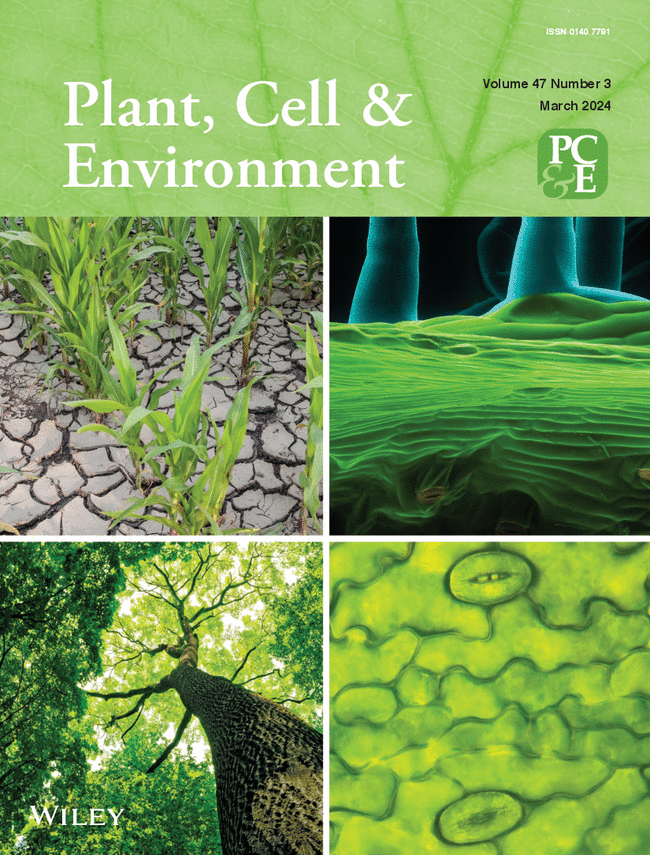
Plant, Cell & Environment is a premier plant science journal, offering valuable insights into plant responses to their environment. Committed to publishing high-quality theoretical and experimental research, the journal covers a broad spectrum of factors, spanning from molecular to community levels. Researchers exploring various aspects of plant biology, physiology, and ecology contribute to the journal's comprehensive understanding of plant-environment interactions.




 京公网安备 11010802042870号
京ICP备2023020795号-1
京公网安备 11010802042870号
京ICP备2023020795号-1

 分享
分享
 求助内容:
求助内容: 应助结果提醒方式:
 扫码关注我们
