Pornpat (Aom) Jantip, Chandra K. Singh, Yaa Asantewaa Kafui Klu, Nihal Ahmad, Bradley W. Bolling
{"title":"花生皮多酚抑制白血病细胞增殖,其a型原花青素选择性通过Caco-2肠屏障","authors":"Pornpat (Aom) Jantip, Chandra K. Singh, Yaa Asantewaa Kafui Klu, Nihal Ahmad, Bradley W. Bolling","doi":"10.1111/1750-3841.70018","DOIUrl":null,"url":null,"abstract":"<div>\n \n <section>\n \n \n <p>Increased consumption of nuts is associated with reduced risk of some forms of cancer, including leukemia. Peanut skins are not typically retained during food processing but are a potential source of anticarcinogenic polyphenols. There are limited data about the antileukemic activity and bioavailability of peanut skin polyphenols. This study determined the polyphenol profile of raw peanut skin extract (PSE), its antiproliferative activity toward Jurkat cells, and intestinal bioavailability and metabolism using a Caco-2 intestinal monolayer model. High-resolution mass spectrometry (UHPLC–Q-Orbitrap) was used to analyze PSE and extracts of PSE-treated Jurkat cells to determine PSE polyphenols associated with antiproliferative activity. PSE reduced Jurkat cell viability, indicating its antiproliferative activity. PSE contained at least 63 polyphenols, including phenolic acids, proanthocyanidins, and prenylated flavonoids, among others. Multiple PSE polyphenols, particularly proanthocyanidins with A-type bonds, interacted with Jurkat cells. In Caco-2 cells, PSE intestinal bioavailability was limited to (+)-catechin, quercetin, procyanidin A2, and tentatively procyanidin A1. Caco-2 cells metabolized PSE polyphenols, including the methylation of A-type procyanidin dimer. Thus, these cell-based studies demonstrate that raw peanut skins contain intestinal bioavailable polyphenols with potential antileukemic properties. PSE polyphenols, including A-type proanthocyanidins, were metabolized by intestinal cells. Thus, the antileukemic activity of PSE polyphenols is modulated by the bioavailability and metabolism of A-type proanthocyanidins.</p>\n </section>\n \n <section>\n \n <h3> Practical Application</h3>\n \n <p>Raw peanut skins are rich in polyphenols, including A-type proanthocyanidins. Extracts of peanut skins inhibit the growth of cultured leukemia cells, and peanut A-type proanthocyanidins are associated with this effect. Peanut skins are not typically retained in food processing, so further research and development are needed to recover or retain these compounds and document their health-promoting activities in human research studies.</p>\n </section>\n </div>","PeriodicalId":193,"journal":{"name":"Journal of Food Science","volume":"90 2","pages":""},"PeriodicalIF":3.4000,"publicationDate":"2025-02-14","publicationTypes":"Journal Article","fieldsOfStudy":null,"isOpenAccess":false,"openAccessPdf":"https://onlinelibrary.wiley.com/doi/epdf/10.1111/1750-3841.70018","citationCount":"0","resultStr":"{\"title\":\"Peanut skin polyphenols inhibit proliferation of leukemia cells in vitro, and its A-type procyanidins selectively pass through a Caco-2 intestinal barrier\",\"authors\":\"Pornpat (Aom) Jantip, Chandra K. Singh, Yaa Asantewaa Kafui Klu, Nihal Ahmad, Bradley W. Bolling\",\"doi\":\"10.1111/1750-3841.70018\",\"DOIUrl\":null,\"url\":null,\"abstract\":\"<div>\\n \\n <section>\\n \\n \\n <p>Increased consumption of nuts is associated with reduced risk of some forms of cancer, including leukemia. Peanut skins are not typically retained during food processing but are a potential source of anticarcinogenic polyphenols. There are limited data about the antileukemic activity and bioavailability of peanut skin polyphenols. This study determined the polyphenol profile of raw peanut skin extract (PSE), its antiproliferative activity toward Jurkat cells, and intestinal bioavailability and metabolism using a Caco-2 intestinal monolayer model. High-resolution mass spectrometry (UHPLC–Q-Orbitrap) was used to analyze PSE and extracts of PSE-treated Jurkat cells to determine PSE polyphenols associated with antiproliferative activity. PSE reduced Jurkat cell viability, indicating its antiproliferative activity. PSE contained at least 63 polyphenols, including phenolic acids, proanthocyanidins, and prenylated flavonoids, among others. Multiple PSE polyphenols, particularly proanthocyanidins with A-type bonds, interacted with Jurkat cells. In Caco-2 cells, PSE intestinal bioavailability was limited to (+)-catechin, quercetin, procyanidin A2, and tentatively procyanidin A1. Caco-2 cells metabolized PSE polyphenols, including the methylation of A-type procyanidin dimer. Thus, these cell-based studies demonstrate that raw peanut skins contain intestinal bioavailable polyphenols with potential antileukemic properties. PSE polyphenols, including A-type proanthocyanidins, were metabolized by intestinal cells. Thus, the antileukemic activity of PSE polyphenols is modulated by the bioavailability and metabolism of A-type proanthocyanidins.</p>\\n </section>\\n \\n <section>\\n \\n <h3> Practical Application</h3>\\n \\n <p>Raw peanut skins are rich in polyphenols, including A-type proanthocyanidins. Extracts of peanut skins inhibit the growth of cultured leukemia cells, and peanut A-type proanthocyanidins are associated with this effect. Peanut skins are not typically retained in food processing, so further research and development are needed to recover or retain these compounds and document their health-promoting activities in human research studies.</p>\\n </section>\\n </div>\",\"PeriodicalId\":193,\"journal\":{\"name\":\"Journal of Food Science\",\"volume\":\"90 2\",\"pages\":\"\"},\"PeriodicalIF\":3.4000,\"publicationDate\":\"2025-02-14\",\"publicationTypes\":\"Journal Article\",\"fieldsOfStudy\":null,\"isOpenAccess\":false,\"openAccessPdf\":\"https://onlinelibrary.wiley.com/doi/epdf/10.1111/1750-3841.70018\",\"citationCount\":\"0\",\"resultStr\":null,\"platform\":\"Semanticscholar\",\"paperid\":null,\"PeriodicalName\":\"Journal of Food Science\",\"FirstCategoryId\":\"97\",\"ListUrlMain\":\"https://ift.onlinelibrary.wiley.com/doi/10.1111/1750-3841.70018\",\"RegionNum\":2,\"RegionCategory\":\"农林科学\",\"ArticlePicture\":[],\"TitleCN\":null,\"AbstractTextCN\":null,\"PMCID\":null,\"EPubDate\":\"\",\"PubModel\":\"\",\"JCR\":\"Q2\",\"JCRName\":\"FOOD SCIENCE & TECHNOLOGY\",\"Score\":null,\"Total\":0}","platform":"Semanticscholar","paperid":null,"PeriodicalName":"Journal of Food Science","FirstCategoryId":"97","ListUrlMain":"https://ift.onlinelibrary.wiley.com/doi/10.1111/1750-3841.70018","RegionNum":2,"RegionCategory":"农林科学","ArticlePicture":[],"TitleCN":null,"AbstractTextCN":null,"PMCID":null,"EPubDate":"","PubModel":"","JCR":"Q2","JCRName":"FOOD SCIENCE & TECHNOLOGY","Score":null,"Total":0}
Peanut skin polyphenols inhibit proliferation of leukemia cells in vitro, and its A-type procyanidins selectively pass through a Caco-2 intestinal barrier
Increased consumption of nuts is associated with reduced risk of some forms of cancer, including leukemia. Peanut skins are not typically retained during food processing but are a potential source of anticarcinogenic polyphenols. There are limited data about the antileukemic activity and bioavailability of peanut skin polyphenols. This study determined the polyphenol profile of raw peanut skin extract (PSE), its antiproliferative activity toward Jurkat cells, and intestinal bioavailability and metabolism using a Caco-2 intestinal monolayer model. High-resolution mass spectrometry (UHPLC–Q-Orbitrap) was used to analyze PSE and extracts of PSE-treated Jurkat cells to determine PSE polyphenols associated with antiproliferative activity. PSE reduced Jurkat cell viability, indicating its antiproliferative activity. PSE contained at least 63 polyphenols, including phenolic acids, proanthocyanidins, and prenylated flavonoids, among others. Multiple PSE polyphenols, particularly proanthocyanidins with A-type bonds, interacted with Jurkat cells. In Caco-2 cells, PSE intestinal bioavailability was limited to (+)-catechin, quercetin, procyanidin A2, and tentatively procyanidin A1. Caco-2 cells metabolized PSE polyphenols, including the methylation of A-type procyanidin dimer. Thus, these cell-based studies demonstrate that raw peanut skins contain intestinal bioavailable polyphenols with potential antileukemic properties. PSE polyphenols, including A-type proanthocyanidins, were metabolized by intestinal cells. Thus, the antileukemic activity of PSE polyphenols is modulated by the bioavailability and metabolism of A-type proanthocyanidins.
Practical Application
Raw peanut skins are rich in polyphenols, including A-type proanthocyanidins. Extracts of peanut skins inhibit the growth of cultured leukemia cells, and peanut A-type proanthocyanidins are associated with this effect. Peanut skins are not typically retained in food processing, so further research and development are needed to recover or retain these compounds and document their health-promoting activities in human research studies.
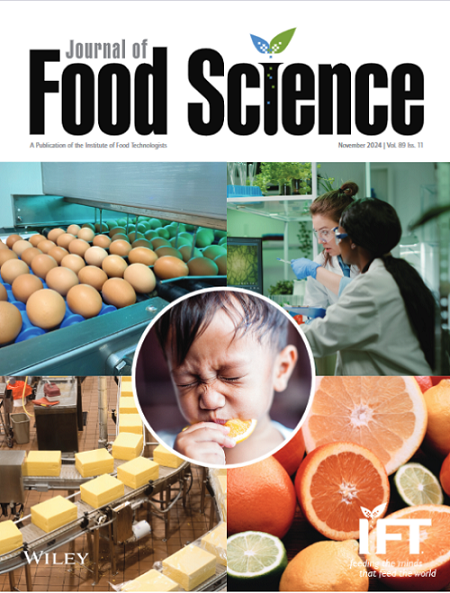
期刊介绍:
The goal of the Journal of Food Science is to offer scientists, researchers, and other food professionals the opportunity to share knowledge of scientific advancements in the myriad disciplines affecting their work, through a respected peer-reviewed publication. The Journal of Food Science serves as an international forum for vital research and developments in food science.
The range of topics covered in the journal include:
-Concise Reviews and Hypotheses in Food Science
-New Horizons in Food Research
-Integrated Food Science
-Food Chemistry
-Food Engineering, Materials Science, and Nanotechnology
-Food Microbiology and Safety
-Sensory and Consumer Sciences
-Health, Nutrition, and Food
-Toxicology and Chemical Food Safety
The Journal of Food Science publishes peer-reviewed articles that cover all aspects of food science, including safety and nutrition. Reviews should be 15 to 50 typewritten pages (including tables, figures, and references), should provide in-depth coverage of a narrowly defined topic, and should embody careful evaluation (weaknesses, strengths, explanation of discrepancies in results among similar studies) of all pertinent studies, so that insightful interpretations and conclusions can be presented. Hypothesis papers are especially appropriate in pioneering areas of research or important areas that are afflicted by scientific controversy.






 京公网安备 11010802042870号
京ICP备2023020795号-1
京公网安备 11010802042870号
京ICP备2023020795号-1

 分享
分享
 求助内容:
求助内容: 应助结果提醒方式:
 扫码关注我们
