{"title":"基于便携式近红外光谱技术的咖啡粉掺假快速无损检测研究。","authors":"Fujie Zhang, Xiaoning Yu, Lixia Li, Wanxia Song, Defeng Dong, Xiaoxian Yue, Shenao Chen, Qingyu Zeng","doi":"10.3390/foods14030536","DOIUrl":null,"url":null,"abstract":"<p><p>This study explores the feasibility of using portable near-infrared spectroscopy for the rapid and non-destructive detection of coffee adulteration. Spectral data from adulterated coffee samples in the 900-1700 nm range were collected and processed using five preprocessing methods. For qualitative detection, the Support Vector Machine (SVM) algorithm was applied. For quantitative detection, two optimization algorithms, Invasive Weed Optimization (IWO) and Binary Chimp Optimization Algorithm (BChOA), were used for the feature wavelength selection. The results showed that convolution smoothing combined with multiple scattering correction effectively improved the signal-to-noise ratio. SVM achieved 96.88% accuracy for qualitative detection. For the quantitative analysis, the IWO algorithm identified key wavelengths, reducing data dimensionality by 82.46% and improving accuracy by 10.96%, reaching 92.25% accuracy. In conclusion, portable near-infrared spectroscopy technology can be used for the rapid and non-destructive qualitative and quantitative detection of coffee adulteration and can serve as a foundation for the further development of rapid, non-destructive testing devices. At the same time, this method has broad application potential and can be extended to various food products such as dairy, juice, grains, and meat for quality control, traceability, and adulteration detection. Through the feature wavelength selection method, it can effectively identify and extract spectral features associated with these food components (such as fat, protein, or characteristic compounds), thereby improving the accuracy and efficiency of detection, further ensuring food safety and enhancing the level of food quality control.</p>","PeriodicalId":12386,"journal":{"name":"Foods","volume":"14 3","pages":""},"PeriodicalIF":5.1000,"publicationDate":"2025-02-06","publicationTypes":"Journal Article","fieldsOfStudy":null,"isOpenAccess":false,"openAccessPdf":"https://www.ncbi.nlm.nih.gov/pmc/articles/PMC11817766/pdf/","citationCount":"0","resultStr":"{\"title\":\"Research on Rapid and Non-Destructive Detection of Coffee Powder Adulteration Based on Portable Near-Infrared Spectroscopy Technology.\",\"authors\":\"Fujie Zhang, Xiaoning Yu, Lixia Li, Wanxia Song, Defeng Dong, Xiaoxian Yue, Shenao Chen, Qingyu Zeng\",\"doi\":\"10.3390/foods14030536\",\"DOIUrl\":null,\"url\":null,\"abstract\":\"<p><p>This study explores the feasibility of using portable near-infrared spectroscopy for the rapid and non-destructive detection of coffee adulteration. Spectral data from adulterated coffee samples in the 900-1700 nm range were collected and processed using five preprocessing methods. For qualitative detection, the Support Vector Machine (SVM) algorithm was applied. For quantitative detection, two optimization algorithms, Invasive Weed Optimization (IWO) and Binary Chimp Optimization Algorithm (BChOA), were used for the feature wavelength selection. The results showed that convolution smoothing combined with multiple scattering correction effectively improved the signal-to-noise ratio. SVM achieved 96.88% accuracy for qualitative detection. For the quantitative analysis, the IWO algorithm identified key wavelengths, reducing data dimensionality by 82.46% and improving accuracy by 10.96%, reaching 92.25% accuracy. In conclusion, portable near-infrared spectroscopy technology can be used for the rapid and non-destructive qualitative and quantitative detection of coffee adulteration and can serve as a foundation for the further development of rapid, non-destructive testing devices. At the same time, this method has broad application potential and can be extended to various food products such as dairy, juice, grains, and meat for quality control, traceability, and adulteration detection. Through the feature wavelength selection method, it can effectively identify and extract spectral features associated with these food components (such as fat, protein, or characteristic compounds), thereby improving the accuracy and efficiency of detection, further ensuring food safety and enhancing the level of food quality control.</p>\",\"PeriodicalId\":12386,\"journal\":{\"name\":\"Foods\",\"volume\":\"14 3\",\"pages\":\"\"},\"PeriodicalIF\":5.1000,\"publicationDate\":\"2025-02-06\",\"publicationTypes\":\"Journal Article\",\"fieldsOfStudy\":null,\"isOpenAccess\":false,\"openAccessPdf\":\"https://www.ncbi.nlm.nih.gov/pmc/articles/PMC11817766/pdf/\",\"citationCount\":\"0\",\"resultStr\":null,\"platform\":\"Semanticscholar\",\"paperid\":null,\"PeriodicalName\":\"Foods\",\"FirstCategoryId\":\"97\",\"ListUrlMain\":\"https://doi.org/10.3390/foods14030536\",\"RegionNum\":2,\"RegionCategory\":\"农林科学\",\"ArticlePicture\":[],\"TitleCN\":null,\"AbstractTextCN\":null,\"PMCID\":null,\"EPubDate\":\"\",\"PubModel\":\"\",\"JCR\":\"Q1\",\"JCRName\":\"FOOD SCIENCE & TECHNOLOGY\",\"Score\":null,\"Total\":0}","platform":"Semanticscholar","paperid":null,"PeriodicalName":"Foods","FirstCategoryId":"97","ListUrlMain":"https://doi.org/10.3390/foods14030536","RegionNum":2,"RegionCategory":"农林科学","ArticlePicture":[],"TitleCN":null,"AbstractTextCN":null,"PMCID":null,"EPubDate":"","PubModel":"","JCR":"Q1","JCRName":"FOOD SCIENCE & TECHNOLOGY","Score":null,"Total":0}
Research on Rapid and Non-Destructive Detection of Coffee Powder Adulteration Based on Portable Near-Infrared Spectroscopy Technology.
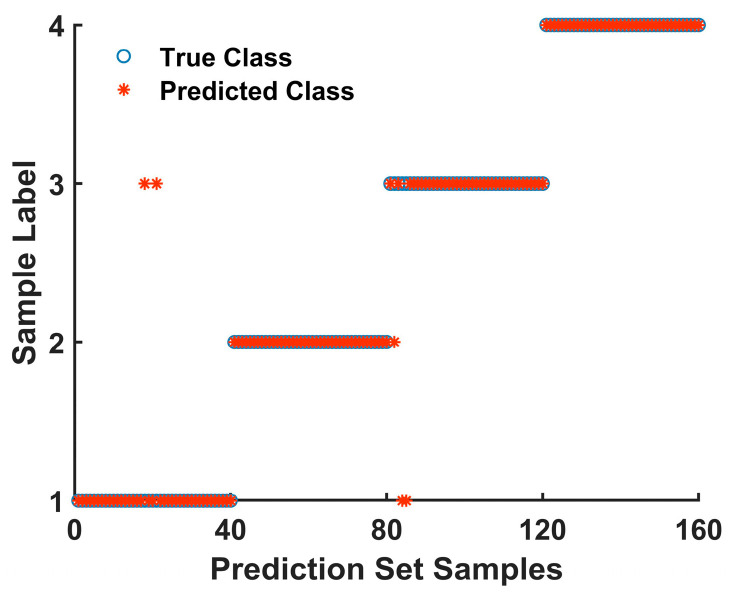
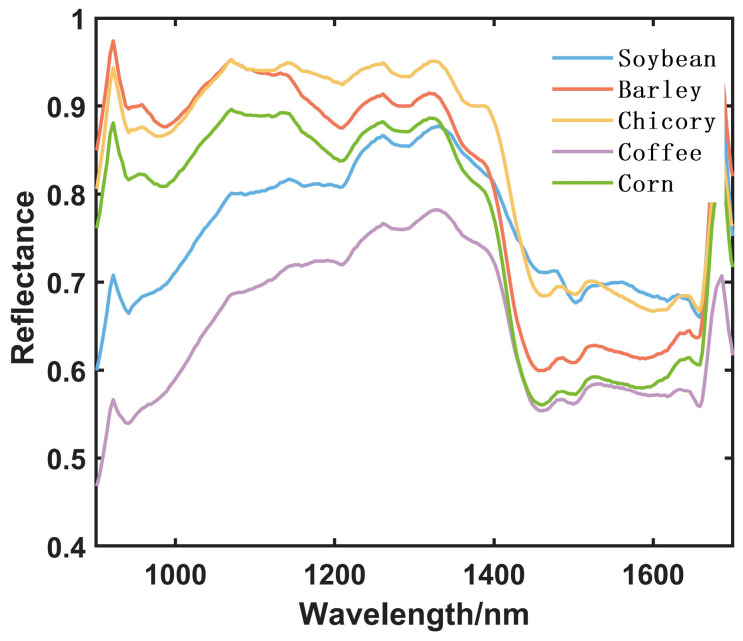
This study explores the feasibility of using portable near-infrared spectroscopy for the rapid and non-destructive detection of coffee adulteration. Spectral data from adulterated coffee samples in the 900-1700 nm range were collected and processed using five preprocessing methods. For qualitative detection, the Support Vector Machine (SVM) algorithm was applied. For quantitative detection, two optimization algorithms, Invasive Weed Optimization (IWO) and Binary Chimp Optimization Algorithm (BChOA), were used for the feature wavelength selection. The results showed that convolution smoothing combined with multiple scattering correction effectively improved the signal-to-noise ratio. SVM achieved 96.88% accuracy for qualitative detection. For the quantitative analysis, the IWO algorithm identified key wavelengths, reducing data dimensionality by 82.46% and improving accuracy by 10.96%, reaching 92.25% accuracy. In conclusion, portable near-infrared spectroscopy technology can be used for the rapid and non-destructive qualitative and quantitative detection of coffee adulteration and can serve as a foundation for the further development of rapid, non-destructive testing devices. At the same time, this method has broad application potential and can be extended to various food products such as dairy, juice, grains, and meat for quality control, traceability, and adulteration detection. Through the feature wavelength selection method, it can effectively identify and extract spectral features associated with these food components (such as fat, protein, or characteristic compounds), thereby improving the accuracy and efficiency of detection, further ensuring food safety and enhancing the level of food quality control.
期刊介绍:
Foods (ISSN 2304-8158) is an international, peer-reviewed scientific open access journal which provides an advanced forum for studies related to all aspects of food research. It publishes reviews, regular research papers and short communications. Our aim is to encourage scientists, researchers, and other food professionals to publish their experimental and theoretical results in as much detail as possible or share their knowledge with as much readers unlimitedly as possible. There is no restriction on the length of the papers. The full experimental details must be provided so that the results can be reproduced. There are, in addition, unique features of this journal:
manuscripts regarding research proposals and research ideas will be particularly welcomed
electronic files or software regarding the full details of the calculation and experimental procedure, if unable to be published in a normal way, can be deposited as supplementary material
we also accept manuscripts communicating to a broader audience with regard to research projects financed with public funds





 京公网安备 11010802042870号
京ICP备2023020795号-1
京公网安备 11010802042870号
京ICP备2023020795号-1

 分享
分享
 求助内容:
求助内容: 应助结果提醒方式:
 扫码关注我们
