{"title":"三种富含酚类物质的豆科植物蛋白水解产物中肽的结构、抗氧化和血管紧张素i转换酶(ACE)抑制活性","authors":"Sam K. C. Chang, Yan Zhang, Tibor Pechan","doi":"10.1111/1750-3841.70069","DOIUrl":null,"url":null,"abstract":"<div>\n \n <section>\n \n \n <p>Lentil, black soybean, and black turtle bean are rich in phenolic antioxidants but belong to different scientific genera with different protein structures. This study's objective was to compare the characteristics of peptides derived from the protein hydrolysates of these legumes. Proteins were isolated, cooked, and subjected to in vitro digestion with pepsin, trypsin, and chymotrypsin. Hydrolyzed peptides were fractionated by ultrafiltration (UF), anion-exchange chromatography, and gel-permeation chromatography (GPC). GPC-eluted peptides of <3 kDa with high angiotensin I-converting enzyme (ACE)-inhibitory activities were sequenced. Antioxidant profiles of peptides from the three legumes analyzed by five methods did not follow the same activity patterns associated with the decreases in peptide's molecular size. Among the UF fractions, the <3 kDa fraction had the highest ACE-inhibition with approximately 45%, 42%, and 39% at 100 µg/mL. Stepwise purifications of the hydrolysates enhanced the ACE-inhibitory capacity (IC<sub>50</sub>) by two to nine folds after GPC to approximately 85, 64, and 93 µg/mL for lentil, black soybean, and black turtle bean, respectively. The 210 peptides sequenced in the <3 kDa fractions had chain-lengths, ranging from 6 to 18 amino acids with lentil having the shortest average length of 7.7 per peptide. Overall, based on chemical analyses, peptides contributed higher antioxidant capacity and ACE-inhibition than phenolics in legumes. Black turtle bean may need to be heated more prior to consumption to achieve the same digestibility as lentil and soy proteins. Results provided a foundation for making bioactive peptides from the three legumes.</p>\n </section>\n \n <section>\n \n <h3> Practical Application</h3>\n \n <p>Three antioxidant-rich legume genera, lentil, black soybean, and black turtle bean, produced different peptides with different angiotensin I-converting enzyme (ACE) potencies and different peptide lengths. The results provided a scientific basis for producing peptides from the selected genera for the development of functional foods or dietary supplement with high antioxidant, ACE inhibitory activities, and digestibility.</p>\n </section>\n </div>","PeriodicalId":193,"journal":{"name":"Journal of Food Science","volume":"90 2","pages":""},"PeriodicalIF":3.4000,"publicationDate":"2025-02-20","publicationTypes":"Journal Article","fieldsOfStudy":null,"isOpenAccess":false,"openAccessPdf":"","citationCount":"0","resultStr":"{\"title\":\"Structures, antioxidant, and angiotensin I-converting enzyme (ACE)-inhibitory activities of peptides derived from protein hydrolysates of three phenolics-rich legume genera\",\"authors\":\"Sam K. C. Chang, Yan Zhang, Tibor Pechan\",\"doi\":\"10.1111/1750-3841.70069\",\"DOIUrl\":null,\"url\":null,\"abstract\":\"<div>\\n \\n <section>\\n \\n \\n <p>Lentil, black soybean, and black turtle bean are rich in phenolic antioxidants but belong to different scientific genera with different protein structures. This study's objective was to compare the characteristics of peptides derived from the protein hydrolysates of these legumes. Proteins were isolated, cooked, and subjected to in vitro digestion with pepsin, trypsin, and chymotrypsin. Hydrolyzed peptides were fractionated by ultrafiltration (UF), anion-exchange chromatography, and gel-permeation chromatography (GPC). GPC-eluted peptides of <3 kDa with high angiotensin I-converting enzyme (ACE)-inhibitory activities were sequenced. Antioxidant profiles of peptides from the three legumes analyzed by five methods did not follow the same activity patterns associated with the decreases in peptide's molecular size. Among the UF fractions, the <3 kDa fraction had the highest ACE-inhibition with approximately 45%, 42%, and 39% at 100 µg/mL. Stepwise purifications of the hydrolysates enhanced the ACE-inhibitory capacity (IC<sub>50</sub>) by two to nine folds after GPC to approximately 85, 64, and 93 µg/mL for lentil, black soybean, and black turtle bean, respectively. The 210 peptides sequenced in the <3 kDa fractions had chain-lengths, ranging from 6 to 18 amino acids with lentil having the shortest average length of 7.7 per peptide. Overall, based on chemical analyses, peptides contributed higher antioxidant capacity and ACE-inhibition than phenolics in legumes. Black turtle bean may need to be heated more prior to consumption to achieve the same digestibility as lentil and soy proteins. Results provided a foundation for making bioactive peptides from the three legumes.</p>\\n </section>\\n \\n <section>\\n \\n <h3> Practical Application</h3>\\n \\n <p>Three antioxidant-rich legume genera, lentil, black soybean, and black turtle bean, produced different peptides with different angiotensin I-converting enzyme (ACE) potencies and different peptide lengths. The results provided a scientific basis for producing peptides from the selected genera for the development of functional foods or dietary supplement with high antioxidant, ACE inhibitory activities, and digestibility.</p>\\n </section>\\n </div>\",\"PeriodicalId\":193,\"journal\":{\"name\":\"Journal of Food Science\",\"volume\":\"90 2\",\"pages\":\"\"},\"PeriodicalIF\":3.4000,\"publicationDate\":\"2025-02-20\",\"publicationTypes\":\"Journal Article\",\"fieldsOfStudy\":null,\"isOpenAccess\":false,\"openAccessPdf\":\"\",\"citationCount\":\"0\",\"resultStr\":null,\"platform\":\"Semanticscholar\",\"paperid\":null,\"PeriodicalName\":\"Journal of Food Science\",\"FirstCategoryId\":\"97\",\"ListUrlMain\":\"https://ift.onlinelibrary.wiley.com/doi/10.1111/1750-3841.70069\",\"RegionNum\":2,\"RegionCategory\":\"农林科学\",\"ArticlePicture\":[],\"TitleCN\":null,\"AbstractTextCN\":null,\"PMCID\":null,\"EPubDate\":\"\",\"PubModel\":\"\",\"JCR\":\"Q2\",\"JCRName\":\"FOOD SCIENCE & TECHNOLOGY\",\"Score\":null,\"Total\":0}","platform":"Semanticscholar","paperid":null,"PeriodicalName":"Journal of Food Science","FirstCategoryId":"97","ListUrlMain":"https://ift.onlinelibrary.wiley.com/doi/10.1111/1750-3841.70069","RegionNum":2,"RegionCategory":"农林科学","ArticlePicture":[],"TitleCN":null,"AbstractTextCN":null,"PMCID":null,"EPubDate":"","PubModel":"","JCR":"Q2","JCRName":"FOOD SCIENCE & TECHNOLOGY","Score":null,"Total":0}
Structures, antioxidant, and angiotensin I-converting enzyme (ACE)-inhibitory activities of peptides derived from protein hydrolysates of three phenolics-rich legume genera
Lentil, black soybean, and black turtle bean are rich in phenolic antioxidants but belong to different scientific genera with different protein structures. This study's objective was to compare the characteristics of peptides derived from the protein hydrolysates of these legumes. Proteins were isolated, cooked, and subjected to in vitro digestion with pepsin, trypsin, and chymotrypsin. Hydrolyzed peptides were fractionated by ultrafiltration (UF), anion-exchange chromatography, and gel-permeation chromatography (GPC). GPC-eluted peptides of <3 kDa with high angiotensin I-converting enzyme (ACE)-inhibitory activities were sequenced. Antioxidant profiles of peptides from the three legumes analyzed by five methods did not follow the same activity patterns associated with the decreases in peptide's molecular size. Among the UF fractions, the <3 kDa fraction had the highest ACE-inhibition with approximately 45%, 42%, and 39% at 100 µg/mL. Stepwise purifications of the hydrolysates enhanced the ACE-inhibitory capacity (IC50) by two to nine folds after GPC to approximately 85, 64, and 93 µg/mL for lentil, black soybean, and black turtle bean, respectively. The 210 peptides sequenced in the <3 kDa fractions had chain-lengths, ranging from 6 to 18 amino acids with lentil having the shortest average length of 7.7 per peptide. Overall, based on chemical analyses, peptides contributed higher antioxidant capacity and ACE-inhibition than phenolics in legumes. Black turtle bean may need to be heated more prior to consumption to achieve the same digestibility as lentil and soy proteins. Results provided a foundation for making bioactive peptides from the three legumes.
Practical Application
Three antioxidant-rich legume genera, lentil, black soybean, and black turtle bean, produced different peptides with different angiotensin I-converting enzyme (ACE) potencies and different peptide lengths. The results provided a scientific basis for producing peptides from the selected genera for the development of functional foods or dietary supplement with high antioxidant, ACE inhibitory activities, and digestibility.
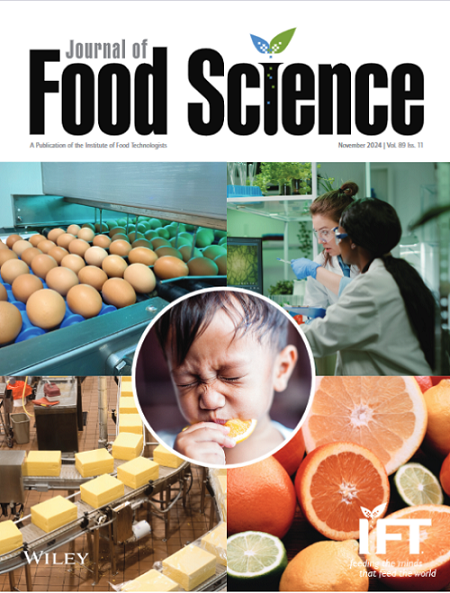
期刊介绍:
The goal of the Journal of Food Science is to offer scientists, researchers, and other food professionals the opportunity to share knowledge of scientific advancements in the myriad disciplines affecting their work, through a respected peer-reviewed publication. The Journal of Food Science serves as an international forum for vital research and developments in food science.
The range of topics covered in the journal include:
-Concise Reviews and Hypotheses in Food Science
-New Horizons in Food Research
-Integrated Food Science
-Food Chemistry
-Food Engineering, Materials Science, and Nanotechnology
-Food Microbiology and Safety
-Sensory and Consumer Sciences
-Health, Nutrition, and Food
-Toxicology and Chemical Food Safety
The Journal of Food Science publishes peer-reviewed articles that cover all aspects of food science, including safety and nutrition. Reviews should be 15 to 50 typewritten pages (including tables, figures, and references), should provide in-depth coverage of a narrowly defined topic, and should embody careful evaluation (weaknesses, strengths, explanation of discrepancies in results among similar studies) of all pertinent studies, so that insightful interpretations and conclusions can be presented. Hypothesis papers are especially appropriate in pioneering areas of research or important areas that are afflicted by scientific controversy.




 京公网安备 11010802042870号
京ICP备2023020795号-1
京公网安备 11010802042870号
京ICP备2023020795号-1

 分享
分享
 求助内容:
求助内容: 应助结果提醒方式:
 扫码关注我们
