{"title":"人工智能在促进食品安全中的作用:实现零污染的战略路径","authors":"Sobia Naseem , Muhammad Rizwan","doi":"10.1016/j.foodcont.2025.111292","DOIUrl":null,"url":null,"abstract":"<div><div>Food safety is advancing toward zero contamination using artificial intelligence (AI) for supply chain management, quality control, contamination detection, and consumer safety. AI integrates with technologies like the Internet of Things (IoT), blockchain, and genomics to enhance traceability, predictive analytics, and pathogen identification across the food supply chain. AI applications in food safety range from detecting contaminants and monitoring supply chains to predicting potential risks and optimizing quality control processes. To attain zero contamination, the role of AI will be central in creating resilient, responsive, and efficient food safety systems that protect public health and foster consumer trust. AI promises significant benefits in mitigating risks and ensuring food integrity, challenges, including data quality, regulatory frameworks, and ethical considerations, require careful attention. Continuous innovation and strategic investments are crucial for realizing AI's full potential in addressing evolving food safety challenges and promoting global food security. Future research directions involve enhancing data-sharing practices, implementing transparent AI systems, and fostering interdisciplinary collaborations. These collaborations are keys to maximizing AI's potential in safeguarding public health and fostering a resilient food system.</div></div>","PeriodicalId":319,"journal":{"name":"Food Control","volume":"175 ","pages":"Article 111292"},"PeriodicalIF":6.3000,"publicationDate":"2025-09-01","publicationTypes":"Journal Article","fieldsOfStudy":null,"isOpenAccess":false,"openAccessPdf":"","citationCount":"0","resultStr":"{\"title\":\"The role of artificial intelligence in advancing food safety: A strategic path to zero contamination\",\"authors\":\"Sobia Naseem , Muhammad Rizwan\",\"doi\":\"10.1016/j.foodcont.2025.111292\",\"DOIUrl\":null,\"url\":null,\"abstract\":\"<div><div>Food safety is advancing toward zero contamination using artificial intelligence (AI) for supply chain management, quality control, contamination detection, and consumer safety. AI integrates with technologies like the Internet of Things (IoT), blockchain, and genomics to enhance traceability, predictive analytics, and pathogen identification across the food supply chain. AI applications in food safety range from detecting contaminants and monitoring supply chains to predicting potential risks and optimizing quality control processes. To attain zero contamination, the role of AI will be central in creating resilient, responsive, and efficient food safety systems that protect public health and foster consumer trust. AI promises significant benefits in mitigating risks and ensuring food integrity, challenges, including data quality, regulatory frameworks, and ethical considerations, require careful attention. Continuous innovation and strategic investments are crucial for realizing AI's full potential in addressing evolving food safety challenges and promoting global food security. Future research directions involve enhancing data-sharing practices, implementing transparent AI systems, and fostering interdisciplinary collaborations. These collaborations are keys to maximizing AI's potential in safeguarding public health and fostering a resilient food system.</div></div>\",\"PeriodicalId\":319,\"journal\":{\"name\":\"Food Control\",\"volume\":\"175 \",\"pages\":\"Article 111292\"},\"PeriodicalIF\":6.3000,\"publicationDate\":\"2025-09-01\",\"publicationTypes\":\"Journal Article\",\"fieldsOfStudy\":null,\"isOpenAccess\":false,\"openAccessPdf\":\"\",\"citationCount\":\"0\",\"resultStr\":null,\"platform\":\"Semanticscholar\",\"paperid\":null,\"PeriodicalName\":\"Food Control\",\"FirstCategoryId\":\"97\",\"ListUrlMain\":\"https://www.sciencedirect.com/science/article/pii/S0956713525001616\",\"RegionNum\":1,\"RegionCategory\":\"农林科学\",\"ArticlePicture\":[],\"TitleCN\":null,\"AbstractTextCN\":null,\"PMCID\":null,\"EPubDate\":\"2025/3/10 0:00:00\",\"PubModel\":\"Epub\",\"JCR\":\"Q1\",\"JCRName\":\"FOOD SCIENCE & TECHNOLOGY\",\"Score\":null,\"Total\":0}","platform":"Semanticscholar","paperid":null,"PeriodicalName":"Food Control","FirstCategoryId":"97","ListUrlMain":"https://www.sciencedirect.com/science/article/pii/S0956713525001616","RegionNum":1,"RegionCategory":"农林科学","ArticlePicture":[],"TitleCN":null,"AbstractTextCN":null,"PMCID":null,"EPubDate":"2025/3/10 0:00:00","PubModel":"Epub","JCR":"Q1","JCRName":"FOOD SCIENCE & TECHNOLOGY","Score":null,"Total":0}
The role of artificial intelligence in advancing food safety: A strategic path to zero contamination
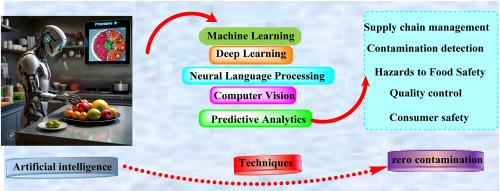
Food safety is advancing toward zero contamination using artificial intelligence (AI) for supply chain management, quality control, contamination detection, and consumer safety. AI integrates with technologies like the Internet of Things (IoT), blockchain, and genomics to enhance traceability, predictive analytics, and pathogen identification across the food supply chain. AI applications in food safety range from detecting contaminants and monitoring supply chains to predicting potential risks and optimizing quality control processes. To attain zero contamination, the role of AI will be central in creating resilient, responsive, and efficient food safety systems that protect public health and foster consumer trust. AI promises significant benefits in mitigating risks and ensuring food integrity, challenges, including data quality, regulatory frameworks, and ethical considerations, require careful attention. Continuous innovation and strategic investments are crucial for realizing AI's full potential in addressing evolving food safety challenges and promoting global food security. Future research directions involve enhancing data-sharing practices, implementing transparent AI systems, and fostering interdisciplinary collaborations. These collaborations are keys to maximizing AI's potential in safeguarding public health and fostering a resilient food system.
期刊介绍:
Food Control is an international journal that provides essential information for those involved in food safety and process control.
Food Control covers the below areas that relate to food process control or to food safety of human foods:
• Microbial food safety and antimicrobial systems
• Mycotoxins
• Hazard analysis, HACCP and food safety objectives
• Risk assessment, including microbial and chemical hazards
• Quality assurance
• Good manufacturing practices
• Food process systems design and control
• Food Packaging technology and materials in contact with foods
• Rapid methods of analysis and detection, including sensor technology
• Codes of practice, legislation and international harmonization
• Consumer issues
• Education, training and research needs.
The scope of Food Control is comprehensive and includes original research papers, authoritative reviews, short communications, comment articles that report on new developments in food control, and position papers.




 京公网安备 11010802042870号
京ICP备2023020795号-1
京公网安备 11010802042870号
京ICP备2023020795号-1

 分享
分享
 求助内容:
求助内容: 应助结果提醒方式:
 扫码关注我们
