{"title":"优化酶解以改善微藻蛋白提取物的功能和结构特性","authors":"Motahharesadat Amiri, Bahram Hassani, Hamid Babapour, Ali Nikmanesh, Seyed Ebrahim Hosseini, Gholamhassan Asadi, Ahmadreza Abedinia","doi":"10.1111/1750-3841.70129","DOIUrl":null,"url":null,"abstract":"<div>\n \n <section>\n \n \n <p>This study aimed to optimize the hydrolysis conditions for converting bioactive peptides from the microalgae <i>Scenedesmus obliquus</i> isolated protein (SOIP) using pepsin. The SOIP was first characterized using sodium dodecyl-sulfate polyacrylamide gel electrophoresis (SDS-PAGE) and high-performance liquid chromatography (HPLC) for amino acid profiles. Response surface methodology (RSM) with a central composite design (CCD) was then employed to determine the optimal hydrolysis parameters of enzyme concentration and time for pepsin. Hydrolysates were fractionated based on molecular weight and evaluated for antioxidant, emulsifying, fat binding, and foaming properties. Statistical analysis using RSM showed that both hydrolysis time and enzyme concentration positively influenced the yield of bioactive peptides. Peptides in the 5–10 kDa range demonstrated the highest antioxidant activity, while lower molecular weight peptides (<5 kDa) exhibited superior fat-binding and emulsifying properties. Overall, hydrolysis significantly enhanced the functional properties compared to the unhydrolyzed control. This study demonstrated that <i>Scenedesmus obliquus</i> is a promising source of bioactive peptides and defined optimized conditions for their enzymatic extraction using pepsin.</p>\n </section>\n \n <section>\n \n <h3> Practical Application</h3>\n \n <p><i>Scenedesmus obliquus</i> shows promise as a source of bioactive peptides, aligning with the demand for sustainable food ingredients. Our research optimizes pepsin hydrolysis parameters, enhancing efficiency for industrial-scale peptide extraction. Peptides from <i>Scenedesmus obliquus</i> exhibit antioxidant, emulsifying, fat binding, and foaming properties, supporting their use in functional food development. These peptides offer opportunities for innovative, health-enhancing food formulations. Generally, microalgae-derived ingredients contribute to sustainable food production practices.</p>\n </section>\n </div>","PeriodicalId":193,"journal":{"name":"Journal of Food Science","volume":"90 4","pages":""},"PeriodicalIF":3.4000,"publicationDate":"2025-04-04","publicationTypes":"Journal Article","fieldsOfStudy":null,"isOpenAccess":false,"openAccessPdf":"","citationCount":"0","resultStr":"{\"title\":\"Optimization of enzyme hydrolysis to improve functional and structural properties of microalgae protein extract\",\"authors\":\"Motahharesadat Amiri, Bahram Hassani, Hamid Babapour, Ali Nikmanesh, Seyed Ebrahim Hosseini, Gholamhassan Asadi, Ahmadreza Abedinia\",\"doi\":\"10.1111/1750-3841.70129\",\"DOIUrl\":null,\"url\":null,\"abstract\":\"<div>\\n \\n <section>\\n \\n \\n <p>This study aimed to optimize the hydrolysis conditions for converting bioactive peptides from the microalgae <i>Scenedesmus obliquus</i> isolated protein (SOIP) using pepsin. The SOIP was first characterized using sodium dodecyl-sulfate polyacrylamide gel electrophoresis (SDS-PAGE) and high-performance liquid chromatography (HPLC) for amino acid profiles. Response surface methodology (RSM) with a central composite design (CCD) was then employed to determine the optimal hydrolysis parameters of enzyme concentration and time for pepsin. Hydrolysates were fractionated based on molecular weight and evaluated for antioxidant, emulsifying, fat binding, and foaming properties. Statistical analysis using RSM showed that both hydrolysis time and enzyme concentration positively influenced the yield of bioactive peptides. Peptides in the 5–10 kDa range demonstrated the highest antioxidant activity, while lower molecular weight peptides (<5 kDa) exhibited superior fat-binding and emulsifying properties. Overall, hydrolysis significantly enhanced the functional properties compared to the unhydrolyzed control. This study demonstrated that <i>Scenedesmus obliquus</i> is a promising source of bioactive peptides and defined optimized conditions for their enzymatic extraction using pepsin.</p>\\n </section>\\n \\n <section>\\n \\n <h3> Practical Application</h3>\\n \\n <p><i>Scenedesmus obliquus</i> shows promise as a source of bioactive peptides, aligning with the demand for sustainable food ingredients. Our research optimizes pepsin hydrolysis parameters, enhancing efficiency for industrial-scale peptide extraction. Peptides from <i>Scenedesmus obliquus</i> exhibit antioxidant, emulsifying, fat binding, and foaming properties, supporting their use in functional food development. These peptides offer opportunities for innovative, health-enhancing food formulations. Generally, microalgae-derived ingredients contribute to sustainable food production practices.</p>\\n </section>\\n </div>\",\"PeriodicalId\":193,\"journal\":{\"name\":\"Journal of Food Science\",\"volume\":\"90 4\",\"pages\":\"\"},\"PeriodicalIF\":3.4000,\"publicationDate\":\"2025-04-04\",\"publicationTypes\":\"Journal Article\",\"fieldsOfStudy\":null,\"isOpenAccess\":false,\"openAccessPdf\":\"\",\"citationCount\":\"0\",\"resultStr\":null,\"platform\":\"Semanticscholar\",\"paperid\":null,\"PeriodicalName\":\"Journal of Food Science\",\"FirstCategoryId\":\"97\",\"ListUrlMain\":\"https://ift.onlinelibrary.wiley.com/doi/10.1111/1750-3841.70129\",\"RegionNum\":2,\"RegionCategory\":\"农林科学\",\"ArticlePicture\":[],\"TitleCN\":null,\"AbstractTextCN\":null,\"PMCID\":null,\"EPubDate\":\"\",\"PubModel\":\"\",\"JCR\":\"Q2\",\"JCRName\":\"FOOD SCIENCE & TECHNOLOGY\",\"Score\":null,\"Total\":0}","platform":"Semanticscholar","paperid":null,"PeriodicalName":"Journal of Food Science","FirstCategoryId":"97","ListUrlMain":"https://ift.onlinelibrary.wiley.com/doi/10.1111/1750-3841.70129","RegionNum":2,"RegionCategory":"农林科学","ArticlePicture":[],"TitleCN":null,"AbstractTextCN":null,"PMCID":null,"EPubDate":"","PubModel":"","JCR":"Q2","JCRName":"FOOD SCIENCE & TECHNOLOGY","Score":null,"Total":0}
Optimization of enzyme hydrolysis to improve functional and structural properties of microalgae protein extract
This study aimed to optimize the hydrolysis conditions for converting bioactive peptides from the microalgae Scenedesmus obliquus isolated protein (SOIP) using pepsin. The SOIP was first characterized using sodium dodecyl-sulfate polyacrylamide gel electrophoresis (SDS-PAGE) and high-performance liquid chromatography (HPLC) for amino acid profiles. Response surface methodology (RSM) with a central composite design (CCD) was then employed to determine the optimal hydrolysis parameters of enzyme concentration and time for pepsin. Hydrolysates were fractionated based on molecular weight and evaluated for antioxidant, emulsifying, fat binding, and foaming properties. Statistical analysis using RSM showed that both hydrolysis time and enzyme concentration positively influenced the yield of bioactive peptides. Peptides in the 5–10 kDa range demonstrated the highest antioxidant activity, while lower molecular weight peptides (<5 kDa) exhibited superior fat-binding and emulsifying properties. Overall, hydrolysis significantly enhanced the functional properties compared to the unhydrolyzed control. This study demonstrated that Scenedesmus obliquus is a promising source of bioactive peptides and defined optimized conditions for their enzymatic extraction using pepsin.
Practical Application
Scenedesmus obliquus shows promise as a source of bioactive peptides, aligning with the demand for sustainable food ingredients. Our research optimizes pepsin hydrolysis parameters, enhancing efficiency for industrial-scale peptide extraction. Peptides from Scenedesmus obliquus exhibit antioxidant, emulsifying, fat binding, and foaming properties, supporting their use in functional food development. These peptides offer opportunities for innovative, health-enhancing food formulations. Generally, microalgae-derived ingredients contribute to sustainable food production practices.
期刊介绍:
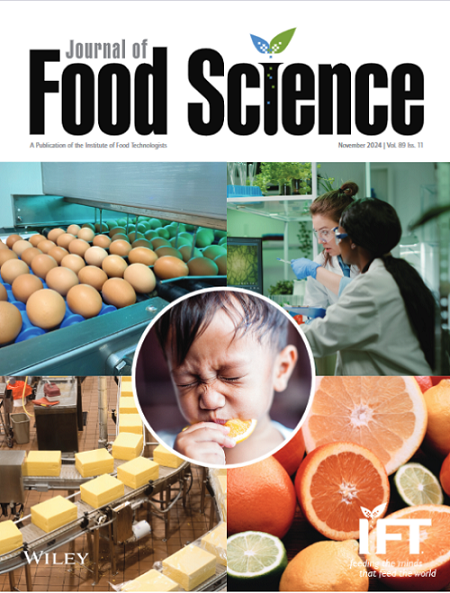
The goal of the Journal of Food Science is to offer scientists, researchers, and other food professionals the opportunity to share knowledge of scientific advancements in the myriad disciplines affecting their work, through a respected peer-reviewed publication. The Journal of Food Science serves as an international forum for vital research and developments in food science.
The range of topics covered in the journal include:
-Concise Reviews and Hypotheses in Food Science
-New Horizons in Food Research
-Integrated Food Science
-Food Chemistry
-Food Engineering, Materials Science, and Nanotechnology
-Food Microbiology and Safety
-Sensory and Consumer Sciences
-Health, Nutrition, and Food
-Toxicology and Chemical Food Safety
The Journal of Food Science publishes peer-reviewed articles that cover all aspects of food science, including safety and nutrition. Reviews should be 15 to 50 typewritten pages (including tables, figures, and references), should provide in-depth coverage of a narrowly defined topic, and should embody careful evaluation (weaknesses, strengths, explanation of discrepancies in results among similar studies) of all pertinent studies, so that insightful interpretations and conclusions can be presented. Hypothesis papers are especially appropriate in pioneering areas of research or important areas that are afflicted by scientific controversy.




 京公网安备 11010802042870号
京ICP备2023020795号-1
京公网安备 11010802042870号
京ICP备2023020795号-1

 分享
分享
 求助内容:
求助内容: 应助结果提醒方式:
 扫码关注我们
