Rong Shen, Yi Jiang, Guanglong Liu, Shenjia Gao, Hao Sun, Xinyi Wu, Jiahui Gu, Han Wu, Ke Mo, Xing Niu, Ronen Ben-Ami, Wanjing Shang, Jie Zhang, Jun Wang, Changhong Miao, Zhizhang Wang, Wankun Chen
{"title":"Single-Cell Landscape of Bronchoalveolar Lavage Fluid Identifies Specific Neutrophils during Septic Immunosuppression","authors":"Rong Shen, Yi Jiang, Guanglong Liu, Shenjia Gao, Hao Sun, Xinyi Wu, Jiahui Gu, Han Wu, Ke Mo, Xing Niu, Ronen Ben-Ami, Wanjing Shang, Jie Zhang, Jun Wang, Changhong Miao, Zhizhang Wang, Wankun Chen","doi":"10.1002/advs.202406218","DOIUrl":null,"url":null,"abstract":"<p>Sepsis-induced immunosuppression is related to increased susceptibility to secondary infections and death. Lung is the most vulnerable target organ in sepsis, but the understanding of the pulmonary immunosuppression state is still limited. Here, single-cell RNA sequencing of bronchoalveolar lavage fluid (BALF) is performed to map the landscape of immune cells, revealing a neutrophil-driven immunosuppressive program in the lungs of patients with immunosuppressive sepsis. Although immunosuppressive genes are upregulated in different immune cells, only neutrophils dramatically increase in the BALF of patients in immunosuppressive phase of sepsis. Five neutrophil subpopulations in BALF are identified, among which <i>CXCR2</i><sup>+</sup> and <i>CD274 (</i>PD-L1 coding gene)<sup>+</sup><i>IL1RN</i><sup>+</sup> neutrophil subpopulations increased significantly during septic immunosuppression. Interestingly, a developmental trajectory from <i>CXCR2</i><sup>+</sup> to <i>CD274</i><sup>+</sup><i>IL1RN</i><sup>+</sup> neutrophil subpopulation is disclosed. Moreover, the therapeutic effect of <i>CXCR2</i> blockade is observed on the survival of septic mice, along with a decreased number of PD-L1<i><sup>+</sup></i> neutrophils. Taken together, the <i>CXCR2</i><sup>+</sup> neutrophil subpopulation is discovered as a contributor to immunosuppression in sepsis and identified it as a potential therapeutic target in sepsis treatment.</p>","PeriodicalId":117,"journal":{"name":"Advanced Science","volume":"12 11","pages":""},"PeriodicalIF":14.1000,"publicationDate":"2025-01-30","publicationTypes":"Journal Article","fieldsOfStudy":null,"isOpenAccess":false,"openAccessPdf":"https://www.ncbi.nlm.nih.gov/pmc/articles/PMC11923989/pdf/","citationCount":"0","resultStr":null,"platform":"Semanticscholar","paperid":null,"PeriodicalName":"Advanced Science","FirstCategoryId":"88","ListUrlMain":"https://advanced.onlinelibrary.wiley.com/doi/10.1002/advs.202406218","RegionNum":1,"RegionCategory":"材料科学","ArticlePicture":[],"TitleCN":null,"AbstractTextCN":null,"PMCID":null,"EPubDate":"","PubModel":"","JCR":"Q1","JCRName":"CHEMISTRY, MULTIDISCIPLINARY","Score":null,"Total":0}
引用次数: 0
Abstract
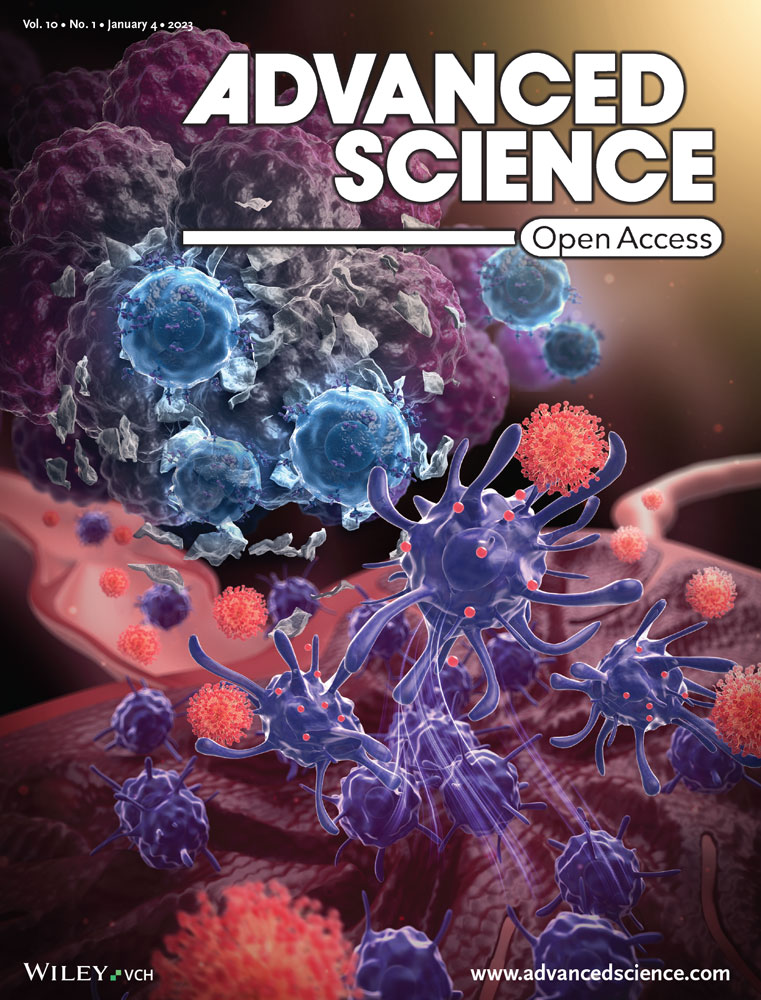
Sepsis-induced immunosuppression is related to increased susceptibility to secondary infections and death. Lung is the most vulnerable target organ in sepsis, but the understanding of the pulmonary immunosuppression state is still limited. Here, single-cell RNA sequencing of bronchoalveolar lavage fluid (BALF) is performed to map the landscape of immune cells, revealing a neutrophil-driven immunosuppressive program in the lungs of patients with immunosuppressive sepsis. Although immunosuppressive genes are upregulated in different immune cells, only neutrophils dramatically increase in the BALF of patients in immunosuppressive phase of sepsis. Five neutrophil subpopulations in BALF are identified, among which CXCR2+ and CD274 (PD-L1 coding gene)+IL1RN+ neutrophil subpopulations increased significantly during septic immunosuppression. Interestingly, a developmental trajectory from CXCR2+ to CD274+IL1RN+ neutrophil subpopulation is disclosed. Moreover, the therapeutic effect of CXCR2 blockade is observed on the survival of septic mice, along with a decreased number of PD-L1+ neutrophils. Taken together, the CXCR2+ neutrophil subpopulation is discovered as a contributor to immunosuppression in sepsis and identified it as a potential therapeutic target in sepsis treatment.
期刊介绍:
Advanced Science is a prestigious open access journal that focuses on interdisciplinary research in materials science, physics, chemistry, medical and life sciences, and engineering. The journal aims to promote cutting-edge research by employing a rigorous and impartial review process. It is committed to presenting research articles with the highest quality production standards, ensuring maximum accessibility of top scientific findings. With its vibrant and innovative publication platform, Advanced Science seeks to revolutionize the dissemination and organization of scientific knowledge.





 京公网安备 11010802042870号
京ICP备2023020795号-1
京公网安备 11010802042870号
京ICP备2023020795号-1

 分享
分享
 求助内容:
求助内容: 应助结果提醒方式:
 扫码关注我们
