{"title":"High Rosmarinic Acid Content <i>Melissa officinalis</i> L. Phytocomplex Modulates Microglia Neuroinflammation Induced by High Glucose.","authors":"Giacomina Videtta, Chiara Sasia, Nicoletta Galeotti","doi":"10.3390/antiox14020161","DOIUrl":null,"url":null,"abstract":"<p><p>Diabetic patients experience hyperglycemia, which can affect multiple organs, including brain function, leading to disabling neurological complications. Hyperglycemia plays a key role in promoting neuroinflammation, the most common complication in diabetic individuals, through the activation of microglia. Attenuating hyperglycemia-related neuroinflammation in microglia may reduce diabetes-associated neurological comorbidities. Natural remedies containing phenolic compounds have shown efficacy in mitigating microglia-mediated neuroinflammation. The aim of this study was to investigate the potential of a <i>Melissa officinalis</i> L. (MO) phytocomplex, obtained from plant cell cultures and enriched in its main polyphenolic constituent, rosmarinic acid (RA), in attenuating hyperglycemia-induced neuroinflammation in microglia. A time-course morphological analysis of BV2 microglial cells exposed to high glucose (HG) levels showed a shift towards a proinflammatory phenotype, peaking after 48 h, which was reversed by pretreatment with MO. Biochemical assays revealed increased expression of the microglial marker CD11b (187%), activation of the NF-κB pathway (179%), expression of iNOS (225%), enhanced phosphorylation of ERK1/2 (180%), and increased expression of the proinflammatory cytokine IL-6 (173%). Pretreatment with MO prevented the aberrant expression of these proinflammatory mediators and restored SIRT1 levels. Exposure of neuronal SH-SY5Y cells to the conditioned medium from HG-exposed microglia significantly reduced cell viability. MO counteracted this effect, exhibiting neuroprotective activity. RA showed efficacy comparable to that of MO. In conclusion, MO and RA attenuated microglia-mediated oxidative imbalance and neuroinflammation under HG exposure by inhibiting the morphological shift toward a proinflammatory phenotype induced by HG and abrogating the subsequent activation of the downstream ERK1/2-NF-κB-iNOS pathway.</p>","PeriodicalId":7984,"journal":{"name":"Antioxidants","volume":"14 2","pages":""},"PeriodicalIF":6.6000,"publicationDate":"2025-01-29","publicationTypes":"Journal Article","fieldsOfStudy":null,"isOpenAccess":false,"openAccessPdf":"https://www.ncbi.nlm.nih.gov/pmc/articles/PMC11851730/pdf/","citationCount":"0","resultStr":null,"platform":"Semanticscholar","paperid":null,"PeriodicalName":"Antioxidants","FirstCategoryId":"3","ListUrlMain":"https://doi.org/10.3390/antiox14020161","RegionNum":2,"RegionCategory":"医学","ArticlePicture":[],"TitleCN":null,"AbstractTextCN":null,"PMCID":null,"EPubDate":"","PubModel":"","JCR":"Q1","JCRName":"BIOCHEMISTRY & MOLECULAR BIOLOGY","Score":null,"Total":0}
引用次数: 0
Abstract
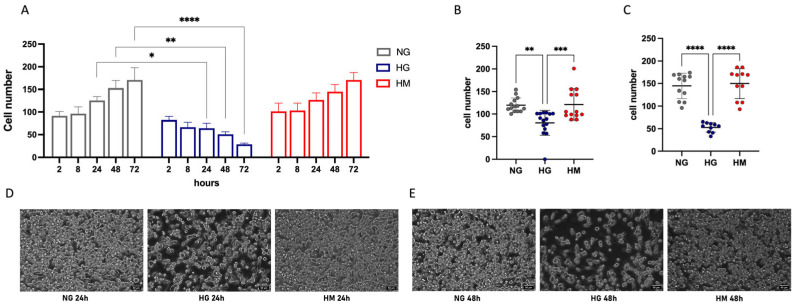
Diabetic patients experience hyperglycemia, which can affect multiple organs, including brain function, leading to disabling neurological complications. Hyperglycemia plays a key role in promoting neuroinflammation, the most common complication in diabetic individuals, through the activation of microglia. Attenuating hyperglycemia-related neuroinflammation in microglia may reduce diabetes-associated neurological comorbidities. Natural remedies containing phenolic compounds have shown efficacy in mitigating microglia-mediated neuroinflammation. The aim of this study was to investigate the potential of a Melissa officinalis L. (MO) phytocomplex, obtained from plant cell cultures and enriched in its main polyphenolic constituent, rosmarinic acid (RA), in attenuating hyperglycemia-induced neuroinflammation in microglia. A time-course morphological analysis of BV2 microglial cells exposed to high glucose (HG) levels showed a shift towards a proinflammatory phenotype, peaking after 48 h, which was reversed by pretreatment with MO. Biochemical assays revealed increased expression of the microglial marker CD11b (187%), activation of the NF-κB pathway (179%), expression of iNOS (225%), enhanced phosphorylation of ERK1/2 (180%), and increased expression of the proinflammatory cytokine IL-6 (173%). Pretreatment with MO prevented the aberrant expression of these proinflammatory mediators and restored SIRT1 levels. Exposure of neuronal SH-SY5Y cells to the conditioned medium from HG-exposed microglia significantly reduced cell viability. MO counteracted this effect, exhibiting neuroprotective activity. RA showed efficacy comparable to that of MO. In conclusion, MO and RA attenuated microglia-mediated oxidative imbalance and neuroinflammation under HG exposure by inhibiting the morphological shift toward a proinflammatory phenotype induced by HG and abrogating the subsequent activation of the downstream ERK1/2-NF-κB-iNOS pathway.
AntioxidantsBiochemistry, Genetics and Molecular Biology-Physiology
CiteScore
10.60
自引率
11.40%
发文量
2123
审稿时长
16.3 days
期刊介绍:
Antioxidants (ISSN 2076-3921), provides an advanced forum for studies related to the science and technology of antioxidants. It publishes research papers, reviews and communications. Our aim is to encourage scientists to publish their experimental and theoretical results in as much detail as possible. There is no restriction on the length of the papers. The full experimental details must be provided so that the results can be reproduced. Electronic files and software regarding the full details of the calculation or experimental procedure, if unable to be published in a normal way, can be deposited as supplementary electronic material.




 京公网安备 11010802042870号
京ICP备2023020795号-1
京公网安备 11010802042870号
京ICP备2023020795号-1

 分享
分享
 求助内容:
求助内容: 应助结果提醒方式:
 扫码关注我们
