{"title":"Assessing weight bias among Turkish dietitians: determinants and impact on professional practice.","authors":"Ezgi Bellikci-Koyu, Yasemin Karaagac, Şule Demirci","doi":"10.1186/s12909-025-06883-8","DOIUrl":null,"url":null,"abstract":"<p><strong>Background: </strong>Weight bias, whether explicit or implicit, has a detrimental effect on the physiological and psychological well-being of individuals, thereby complicating obesity management, particularly in healthcare settings. The objective of this study was to examine weight bias among Turkish dietitians. A further aim was to investigate the effect of the patient's weight status on the dietitian's assessment and dietetic practice.</p><p><strong>Methods: </strong>This cross-sectional web-based study analyzed data from 411 Turkish dietitians. The participants completed a series of sociodemographic information, anthropometric measurements, and scales, including the Fat Phobia Scale (FPS) and Attitudes Toward Obese Persons Scale (ATOP). After completing the scales, the dietitians were randomly assigned to a case study on lactose intolerance via an online survey platform. All patient information was identical, except for the patient's weight and photography. The objective of the case study was to evaluate how the body weight of a patient who consulted a dietitian for a reason unrelated to the body weight affected professional practices.</p><p><strong>Results: </strong>A total of 66.9% of dietitians exhibited fat phobia. While men had higher FPS scores than women (p = 0.022), dietitians with a family history of obesity (p = 0.032) had lower FPS scores. BMI was negatively associated with FPS scores (β = -0.036, p = 0.026). However, dietitians with a history of feeling overweight had higher FPS scores (p = 0.024). Dietitians' assessments of cases differed according to the patient's body weight status. Although, there were no statistically significant differences in FPS and ATOP scores between dietitians assigned to cases with higher or lower body weight (p > 0.05 for each), those assessing the case with higher body weight rated patients' nutritional (p = 0.025) and biochemical status (p < 0.001) as worse and were more inclined to recommend weight management strategies.</p><p><strong>Conclusions: </strong>The issue of fat phobia and weight bias represents a significant concern among dietitians, with notable impacts on their professional practice. It is therefore of crucial importance to address and resolve these issues within the context of dietetic education.</p><p><strong>Trial registration: </strong>ClinicalTrials.gov registration number: NCT06624111 (submitted 01/10/2024).</p>","PeriodicalId":51234,"journal":{"name":"BMC Medical Education","volume":"25 1","pages":"307"},"PeriodicalIF":3.2000,"publicationDate":"2025-02-25","publicationTypes":"Journal Article","fieldsOfStudy":null,"isOpenAccess":false,"openAccessPdf":"https://www.ncbi.nlm.nih.gov/pmc/articles/PMC11863906/pdf/","citationCount":"0","resultStr":null,"platform":"Semanticscholar","paperid":null,"PeriodicalName":"BMC Medical Education","FirstCategoryId":"3","ListUrlMain":"https://doi.org/10.1186/s12909-025-06883-8","RegionNum":2,"RegionCategory":"医学","ArticlePicture":[],"TitleCN":null,"AbstractTextCN":null,"PMCID":null,"EPubDate":"","PubModel":"","JCR":"Q1","JCRName":"EDUCATION & EDUCATIONAL RESEARCH","Score":null,"Total":0}
引用次数: 0
Abstract
Background: Weight bias, whether explicit or implicit, has a detrimental effect on the physiological and psychological well-being of individuals, thereby complicating obesity management, particularly in healthcare settings. The objective of this study was to examine weight bias among Turkish dietitians. A further aim was to investigate the effect of the patient's weight status on the dietitian's assessment and dietetic practice.
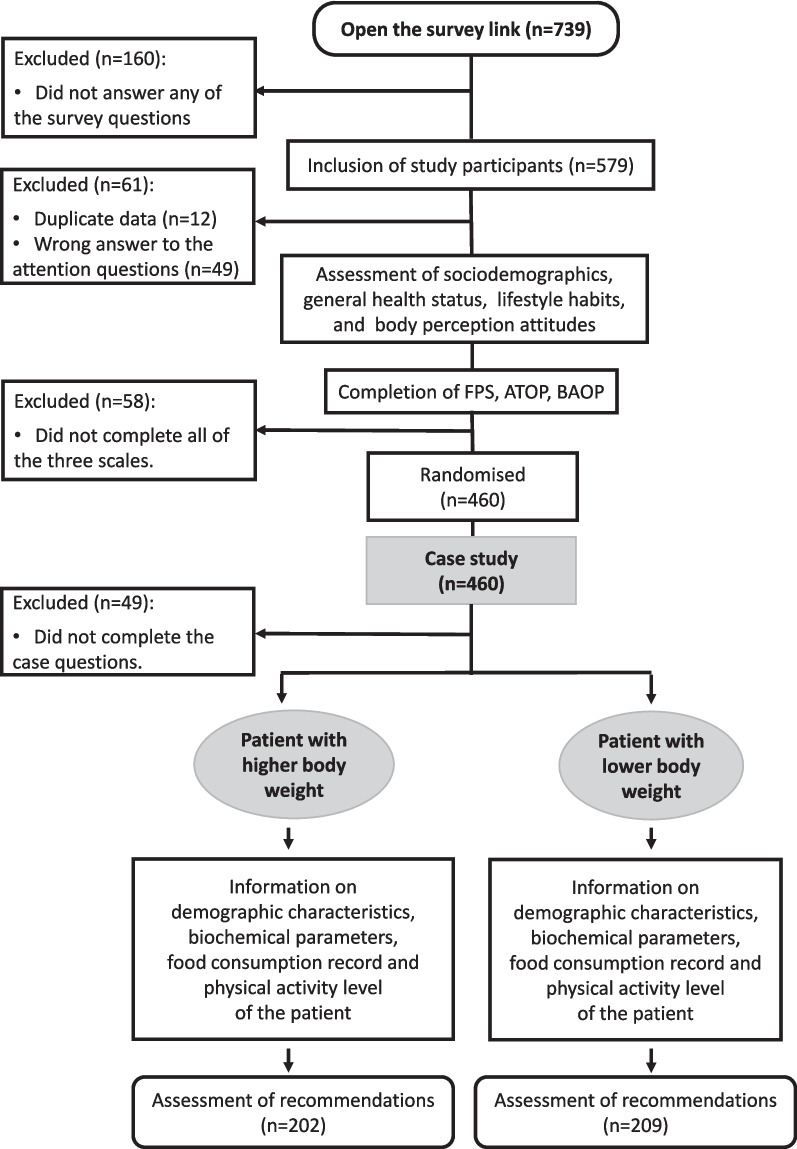
Methods: This cross-sectional web-based study analyzed data from 411 Turkish dietitians. The participants completed a series of sociodemographic information, anthropometric measurements, and scales, including the Fat Phobia Scale (FPS) and Attitudes Toward Obese Persons Scale (ATOP). After completing the scales, the dietitians were randomly assigned to a case study on lactose intolerance via an online survey platform. All patient information was identical, except for the patient's weight and photography. The objective of the case study was to evaluate how the body weight of a patient who consulted a dietitian for a reason unrelated to the body weight affected professional practices.
Results: A total of 66.9% of dietitians exhibited fat phobia. While men had higher FPS scores than women (p = 0.022), dietitians with a family history of obesity (p = 0.032) had lower FPS scores. BMI was negatively associated with FPS scores (β = -0.036, p = 0.026). However, dietitians with a history of feeling overweight had higher FPS scores (p = 0.024). Dietitians' assessments of cases differed according to the patient's body weight status. Although, there were no statistically significant differences in FPS and ATOP scores between dietitians assigned to cases with higher or lower body weight (p > 0.05 for each), those assessing the case with higher body weight rated patients' nutritional (p = 0.025) and biochemical status (p < 0.001) as worse and were more inclined to recommend weight management strategies.
Conclusions: The issue of fat phobia and weight bias represents a significant concern among dietitians, with notable impacts on their professional practice. It is therefore of crucial importance to address and resolve these issues within the context of dietetic education.
期刊介绍:
BMC Medical Education is an open access journal publishing original peer-reviewed research articles in relation to the training of healthcare professionals, including undergraduate, postgraduate, and continuing education. The journal has a special focus on curriculum development, evaluations of performance, assessment of training needs and evidence-based medicine.




 京公网安备 11010802042870号
京ICP备2023020795号-1
京公网安备 11010802042870号
京ICP备2023020795号-1

 分享
分享
 求助内容:
求助内容: 应助结果提醒方式:
 扫码关注我们
