Ravza Eraslan, Mustafa Ayata, Filiz Yagci, Haydar Albayrak
{"title":"Exploring the potential of artificial intelligence chatbots in prosthodontics education.","authors":"Ravza Eraslan, Mustafa Ayata, Filiz Yagci, Haydar Albayrak","doi":"10.1186/s12909-025-06849-w","DOIUrl":null,"url":null,"abstract":"<p><strong>Background: </strong>The purpose of this study was to evaluate the performance of widely used artificial intelligence (AI) chatbots in answering prosthodontics questions from the Dentistry Specialization Residency Examination (DSRE).</p><p><strong>Methods: </strong>A total of 126 DSRE prosthodontics questions were divided into seven subtopics (dental morphology, materials science, fixed dentures, removable partial dentures, complete dentures, occlusion/temporomandibular joint, and dental implantology). Questions were translated into English by the authors, and this version of the questions were asked to five chatbots (ChatGPT-3.5, Gemini Advanced, Claude Pro, Microsoft Copilot, and Perplexity) within a 7-day period. Statistical analyses, including chi-square and z-tests, were performed to compare accuracy rates across the chatbots and subtopics at a significance level of 0.05.</p><p><strong>Results: </strong>The overall accuracy rates for the chatbots were as follows: Copilot (73%), Gemini (63.5%), ChatGPT-3.5 (61.1%), Claude Pro (57.9%), and Perplexity (54.8%). Copilot significantly outperformed Perplexity (P = 0.035). However, no significant differences in accuracy were found across subtopics among chatbots. Questions on dental implantology had the highest accuracy rate (75%), while questions on removable partial dentures had the lowest (50.8%).</p><p><strong>Conclusion: </strong>Copilot showed the highest accuracy rate (73%), significantly outperforming Perplexity (54.8%). AI models demonstrate potential as educational support tools but currently face limitations in serving as reliable educational tools across all areas of prosthodontics. Future advancements in AI may lead to better integration and more effective use in dental education.</p>","PeriodicalId":51234,"journal":{"name":"BMC Medical Education","volume":"25 1","pages":"321"},"PeriodicalIF":3.2000,"publicationDate":"2025-02-27","publicationTypes":"Journal Article","fieldsOfStudy":null,"isOpenAccess":false,"openAccessPdf":"https://www.ncbi.nlm.nih.gov/pmc/articles/PMC11869545/pdf/","citationCount":"0","resultStr":null,"platform":"Semanticscholar","paperid":null,"PeriodicalName":"BMC Medical Education","FirstCategoryId":"3","ListUrlMain":"https://doi.org/10.1186/s12909-025-06849-w","RegionNum":2,"RegionCategory":"医学","ArticlePicture":[],"TitleCN":null,"AbstractTextCN":null,"PMCID":null,"EPubDate":"","PubModel":"","JCR":"Q1","JCRName":"EDUCATION & EDUCATIONAL RESEARCH","Score":null,"Total":0}
引用次数: 0
Abstract
Background: The purpose of this study was to evaluate the performance of widely used artificial intelligence (AI) chatbots in answering prosthodontics questions from the Dentistry Specialization Residency Examination (DSRE).
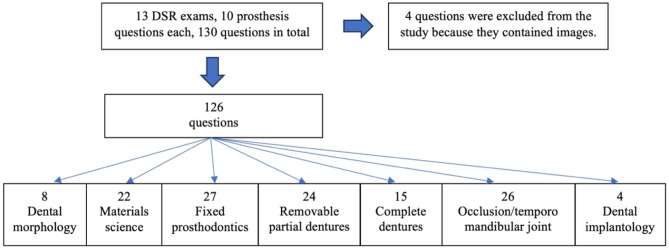
Methods: A total of 126 DSRE prosthodontics questions were divided into seven subtopics (dental morphology, materials science, fixed dentures, removable partial dentures, complete dentures, occlusion/temporomandibular joint, and dental implantology). Questions were translated into English by the authors, and this version of the questions were asked to five chatbots (ChatGPT-3.5, Gemini Advanced, Claude Pro, Microsoft Copilot, and Perplexity) within a 7-day period. Statistical analyses, including chi-square and z-tests, were performed to compare accuracy rates across the chatbots and subtopics at a significance level of 0.05.
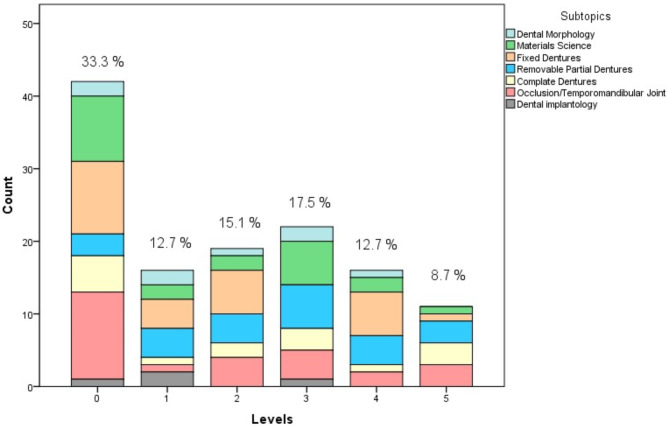
Results: The overall accuracy rates for the chatbots were as follows: Copilot (73%), Gemini (63.5%), ChatGPT-3.5 (61.1%), Claude Pro (57.9%), and Perplexity (54.8%). Copilot significantly outperformed Perplexity (P = 0.035). However, no significant differences in accuracy were found across subtopics among chatbots. Questions on dental implantology had the highest accuracy rate (75%), while questions on removable partial dentures had the lowest (50.8%).
Conclusion: Copilot showed the highest accuracy rate (73%), significantly outperforming Perplexity (54.8%). AI models demonstrate potential as educational support tools but currently face limitations in serving as reliable educational tools across all areas of prosthodontics. Future advancements in AI may lead to better integration and more effective use in dental education.
期刊介绍:
BMC Medical Education is an open access journal publishing original peer-reviewed research articles in relation to the training of healthcare professionals, including undergraduate, postgraduate, and continuing education. The journal has a special focus on curriculum development, evaluations of performance, assessment of training needs and evidence-based medicine.



 京公网安备 11010802042870号
京ICP备2023020795号-1
京公网安备 11010802042870号
京ICP备2023020795号-1

 分享
分享
 求助内容:
求助内容: 应助结果提醒方式:
 扫码关注我们
