Effects of self-controlled feedback on learning range of motion measurement techniques and self-efficacy among physical therapy students: a preliminary study.
{"title":"Effects of self-controlled feedback on learning range of motion measurement techniques and self-efficacy among physical therapy students: a preliminary study.","authors":"Ryohei Yamamoto, Takaki Imai, Yushin Yoshizato, Kazunori Akizuki","doi":"10.1186/s12909-025-06908-2","DOIUrl":null,"url":null,"abstract":"<p><strong>Background: </strong>Measuring range of motion (ROM) accurately using a universal goniometer or visual estimation is challenging for physical therapy students. Self-controlled (SC) feedback, where learners decide whether to receive feedback, can enhance learning and foster self-efficacy (SE) by promoting self-regulation. However, the impact of SC feedback on skill acquisition in ROM measurement technique and SE in physical therapy students remains unclear. This study investigates the effects of SC feedback on skill acquisition in ROM measurement techniques and students' SE.</p><p><strong>Methods: </strong>Thirty physical therapy students were quasi-randomly assigned to an SC group, which chose feedback during practice, or a Yoked (Yk) group, which received feedback based on the SC group's schedule. A goniometric measurement task, in which participants measure the ROM of left knee flexion using a universal goniometer, and a visual estimation task, in which they estimate it visually, were set as the learning tasks. After a pretest, they completed the practice (3 trials × 4 blocks) followed by short-term retention test (STRT) and LTRT (LTRT). All tests consisted of 3 trials. Measurement accuracy and time were used as test performance for both tasks. SE of ROM measurements was measured before the start of each test using a 10-point Likert scale. Feedback related to measurement errors were provided during practice in line with each group's conditions.</p><p><strong>Results: </strong>The SC group maintained high feedback frequency (80.0 ± 30.3%) during the practice. Both groups improved measurement accuracy and reduced time for goniometric measurement and visual estimation tasks, but no significant group differences were found. Goniometric accuracy exceeded visual estimation in both groups. SE before the pretest did not correlate with pretest accuracy. However, SE before the STRT correlated with accuracy at that time in both groups. In the SC group, SE before the LTRT test was related to the accuracy at the STRT.</p><p><strong>Conclusion: </strong>SC feedback did not demonstrate superior effectiveness, but external feedback improved ROM measurement accuracy and reduced measurement time. Moreover, SE after the practice was temporarily associated with accuracy, suggesting a potential link between SE and performance in skill acquisition.</p>","PeriodicalId":51234,"journal":{"name":"BMC Medical Education","volume":"25 1","pages":"326"},"PeriodicalIF":3.2000,"publicationDate":"2025-02-28","publicationTypes":"Journal Article","fieldsOfStudy":null,"isOpenAccess":false,"openAccessPdf":"https://www.ncbi.nlm.nih.gov/pmc/articles/PMC11871618/pdf/","citationCount":"0","resultStr":null,"platform":"Semanticscholar","paperid":null,"PeriodicalName":"BMC Medical Education","FirstCategoryId":"3","ListUrlMain":"https://doi.org/10.1186/s12909-025-06908-2","RegionNum":2,"RegionCategory":"医学","ArticlePicture":[],"TitleCN":null,"AbstractTextCN":null,"PMCID":null,"EPubDate":"","PubModel":"","JCR":"Q1","JCRName":"EDUCATION & EDUCATIONAL RESEARCH","Score":null,"Total":0}
引用次数: 0
Abstract
Background: Measuring range of motion (ROM) accurately using a universal goniometer or visual estimation is challenging for physical therapy students. Self-controlled (SC) feedback, where learners decide whether to receive feedback, can enhance learning and foster self-efficacy (SE) by promoting self-regulation. However, the impact of SC feedback on skill acquisition in ROM measurement technique and SE in physical therapy students remains unclear. This study investigates the effects of SC feedback on skill acquisition in ROM measurement techniques and students' SE.
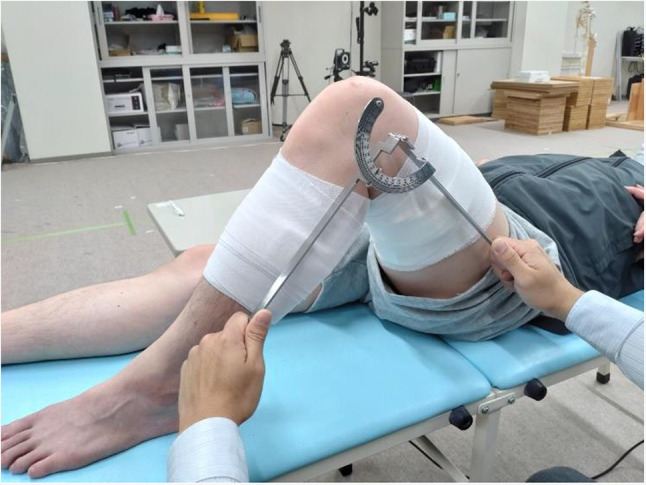
Methods: Thirty physical therapy students were quasi-randomly assigned to an SC group, which chose feedback during practice, or a Yoked (Yk) group, which received feedback based on the SC group's schedule. A goniometric measurement task, in which participants measure the ROM of left knee flexion using a universal goniometer, and a visual estimation task, in which they estimate it visually, were set as the learning tasks. After a pretest, they completed the practice (3 trials × 4 blocks) followed by short-term retention test (STRT) and LTRT (LTRT). All tests consisted of 3 trials. Measurement accuracy and time were used as test performance for both tasks. SE of ROM measurements was measured before the start of each test using a 10-point Likert scale. Feedback related to measurement errors were provided during practice in line with each group's conditions.
Results: The SC group maintained high feedback frequency (80.0 ± 30.3%) during the practice. Both groups improved measurement accuracy and reduced time for goniometric measurement and visual estimation tasks, but no significant group differences were found. Goniometric accuracy exceeded visual estimation in both groups. SE before the pretest did not correlate with pretest accuracy. However, SE before the STRT correlated with accuracy at that time in both groups. In the SC group, SE before the LTRT test was related to the accuracy at the STRT.
Conclusion: SC feedback did not demonstrate superior effectiveness, but external feedback improved ROM measurement accuracy and reduced measurement time. Moreover, SE after the practice was temporarily associated with accuracy, suggesting a potential link between SE and performance in skill acquisition.
期刊介绍:
BMC Medical Education is an open access journal publishing original peer-reviewed research articles in relation to the training of healthcare professionals, including undergraduate, postgraduate, and continuing education. The journal has a special focus on curriculum development, evaluations of performance, assessment of training needs and evidence-based medicine.





 京公网安备 11010802042870号
京ICP备2023020795号-1
京公网安备 11010802042870号
京ICP备2023020795号-1

 分享
分享
 求助内容:
求助内容: 应助结果提醒方式:
 扫码关注我们
