Zsófia Onódi, Pál Riba, Péter Ferdinandy, Anikó Görbe, Zoltán V Varga
{"title":"Implementing the flipped classroom model to enhance knowledge retention in pharmacology: a local case study at Semmelweis university.","authors":"Zsófia Onódi, Pál Riba, Péter Ferdinandy, Anikó Görbe, Zoltán V Varga","doi":"10.1186/s12909-025-06913-5","DOIUrl":null,"url":null,"abstract":"<p><strong>Background: </strong>The flipped classroom (FC) approach has demonstrated efficacy in enhancing the learning process, including within higher education contexts such as medical education. Recently, FC has emerged as potential alternative to traditional teaching models across various disciplines, particularly due to its more engaging nature. However, there is limited data available regarding its impact on student performance, particularly in the context of long-term knowledge retention in pharmacology. In this study, our objective was to assess the short- and long-term impact of FC on student performance in Hungarian pharmacology teaching at medical faculty in Semmelweis University (Budapest, Hungary).</p><p><strong>Methods and results: </strong>161 medical students and 10 teachers were involved in this study. We flipped four seminars, then we assessed the academic performance by using multiple choice tests immediately and two weeks after the flipped class. A follow-up assessment was conducted six months after the initial two FC sessions. Our findings indicated that the FC approach enhanced both short- and long-term knowledge retention across most topics. Notably, this long-term improvement was evident even six months after the original seminars on specific subjects. However, despite these topic-specific benefits, the overall performance, including exam grades, did not show significant improvement when compared to the conventional teaching approach. Additionally, we assessed student and teacher perceptions using two questionnaires immediately after practice and at the end of the year. According to the questionnaire responses, students perceived positively the FC approach, emphasizing its interactive and thought-provoking aspects. However, they identified the time-consuming nature of preparation as a significant concern. Teachers also viewed the FC approach favorably, particularly appreciating its interactivity and potential for greater effectiveness. Interestingly, more experienced teachers were less receptive to the FC method, and their perceptions of it were less favorable compared to those of their younger colleagues.</p><p><strong>Conclusions: </strong>The flipped classroom approach presents a viable strategy for teaching pharmacology, with the potential to enhance student performance and engagement. However, student occupation and faculty resistance may pose significant challenges to the implementation of such alternative teaching methods.</p>","PeriodicalId":51234,"journal":{"name":"BMC Medical Education","volume":"25 1","pages":"327"},"PeriodicalIF":3.2000,"publicationDate":"2025-02-28","publicationTypes":"Journal Article","fieldsOfStudy":null,"isOpenAccess":false,"openAccessPdf":"https://www.ncbi.nlm.nih.gov/pmc/articles/PMC11871698/pdf/","citationCount":"0","resultStr":null,"platform":"Semanticscholar","paperid":null,"PeriodicalName":"BMC Medical Education","FirstCategoryId":"3","ListUrlMain":"https://doi.org/10.1186/s12909-025-06913-5","RegionNum":2,"RegionCategory":"医学","ArticlePicture":[],"TitleCN":null,"AbstractTextCN":null,"PMCID":null,"EPubDate":"","PubModel":"","JCR":"Q1","JCRName":"EDUCATION & EDUCATIONAL RESEARCH","Score":null,"Total":0}
引用次数: 0
Abstract
Background: The flipped classroom (FC) approach has demonstrated efficacy in enhancing the learning process, including within higher education contexts such as medical education. Recently, FC has emerged as potential alternative to traditional teaching models across various disciplines, particularly due to its more engaging nature. However, there is limited data available regarding its impact on student performance, particularly in the context of long-term knowledge retention in pharmacology. In this study, our objective was to assess the short- and long-term impact of FC on student performance in Hungarian pharmacology teaching at medical faculty in Semmelweis University (Budapest, Hungary).
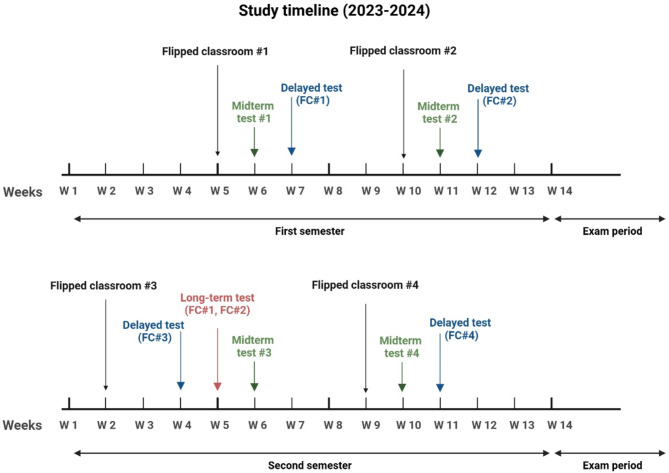
Methods and results: 161 medical students and 10 teachers were involved in this study. We flipped four seminars, then we assessed the academic performance by using multiple choice tests immediately and two weeks after the flipped class. A follow-up assessment was conducted six months after the initial two FC sessions. Our findings indicated that the FC approach enhanced both short- and long-term knowledge retention across most topics. Notably, this long-term improvement was evident even six months after the original seminars on specific subjects. However, despite these topic-specific benefits, the overall performance, including exam grades, did not show significant improvement when compared to the conventional teaching approach. Additionally, we assessed student and teacher perceptions using two questionnaires immediately after practice and at the end of the year. According to the questionnaire responses, students perceived positively the FC approach, emphasizing its interactive and thought-provoking aspects. However, they identified the time-consuming nature of preparation as a significant concern. Teachers also viewed the FC approach favorably, particularly appreciating its interactivity and potential for greater effectiveness. Interestingly, more experienced teachers were less receptive to the FC method, and their perceptions of it were less favorable compared to those of their younger colleagues.
Conclusions: The flipped classroom approach presents a viable strategy for teaching pharmacology, with the potential to enhance student performance and engagement. However, student occupation and faculty resistance may pose significant challenges to the implementation of such alternative teaching methods.
期刊介绍:
BMC Medical Education is an open access journal publishing original peer-reviewed research articles in relation to the training of healthcare professionals, including undergraduate, postgraduate, and continuing education. The journal has a special focus on curriculum development, evaluations of performance, assessment of training needs and evidence-based medicine.





 京公网安备 11010802042870号
京ICP备2023020795号-1
京公网安备 11010802042870号
京ICP备2023020795号-1

 分享
分享
 求助内容:
求助内容: 应助结果提醒方式:
 扫码关注我们
