Jordan Talan, Molly Forster, Leian Joseph, Deepak Pradhan
{"title":"Exploring the Role of Immersive Virtual Reality Simulation in Health Professions Education: Thematic Analysis.","authors":"Jordan Talan, Molly Forster, Leian Joseph, Deepak Pradhan","doi":"10.2196/62803","DOIUrl":null,"url":null,"abstract":"<p><strong>Background: </strong>Although technology is rapidly advancing in immersive virtual reality (VR) simulation, there is a paucity of literature to guide its implementation into health professions education, and there are no described best practices for the development of this evolving technology.</p><p><strong>Objective: </strong>We conducted a qualitative study using semistructured interviews with early adopters of immersive VR simulation technology to investigate use and motivations behind using this technology in educational practice, and to identify the educational needs that this technology can address.</p><p><strong>Methods: </strong>We conducted 16 interviews with VR early adopters. Data were analyzed via directed content analysis through the lens of the Unified Theory of Acceptance and Use of Technology.</p><p><strong>Results: </strong>The main themes that emerged included focus on cognitive skills, access to education, resource investment, and balancing immersion. These findings help to clarify the intended role of VR simulation in health professions education. Based on our data, we synthesized a set of research questions that may help define best practices for future VR development and implementation.</p><p><strong>Conclusions: </strong>Immersive VR simulation technology primarily serves to teach cognitive skills, expand access to educational experiences, act as a collaborative repository of widely relevant and diverse simulation scenarios, and foster learning through deep immersion. By applying the Unified Theory of Acceptance and Use of Technology theoretical framework to the context of VR simulation, we not only collected validation evidence for this established theory, but also proposed several modifications to better explain use behavior in this specific setting.</p>","PeriodicalId":36236,"journal":{"name":"JMIR Medical Education","volume":"11 ","pages":"e62803"},"PeriodicalIF":3.2000,"publicationDate":"2025-03-12","publicationTypes":"Journal Article","fieldsOfStudy":null,"isOpenAccess":false,"openAccessPdf":"https://www.ncbi.nlm.nih.gov/pmc/articles/PMC11922489/pdf/","citationCount":"0","resultStr":null,"platform":"Semanticscholar","paperid":null,"PeriodicalName":"JMIR Medical Education","FirstCategoryId":"1085","ListUrlMain":"https://doi.org/10.2196/62803","RegionNum":0,"RegionCategory":null,"ArticlePicture":[],"TitleCN":null,"AbstractTextCN":null,"PMCID":null,"EPubDate":"","PubModel":"","JCR":"Q1","JCRName":"EDUCATION, SCIENTIFIC DISCIPLINES","Score":null,"Total":0}
引用次数: 0
Abstract
Background: Although technology is rapidly advancing in immersive virtual reality (VR) simulation, there is a paucity of literature to guide its implementation into health professions education, and there are no described best practices for the development of this evolving technology.
Objective: We conducted a qualitative study using semistructured interviews with early adopters of immersive VR simulation technology to investigate use and motivations behind using this technology in educational practice, and to identify the educational needs that this technology can address.
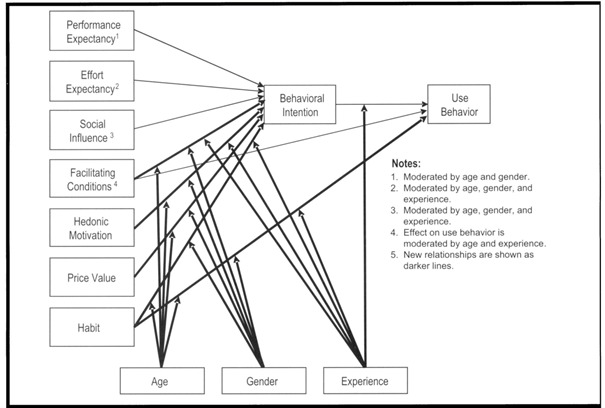
Methods: We conducted 16 interviews with VR early adopters. Data were analyzed via directed content analysis through the lens of the Unified Theory of Acceptance and Use of Technology.
Results: The main themes that emerged included focus on cognitive skills, access to education, resource investment, and balancing immersion. These findings help to clarify the intended role of VR simulation in health professions education. Based on our data, we synthesized a set of research questions that may help define best practices for future VR development and implementation.
Conclusions: Immersive VR simulation technology primarily serves to teach cognitive skills, expand access to educational experiences, act as a collaborative repository of widely relevant and diverse simulation scenarios, and foster learning through deep immersion. By applying the Unified Theory of Acceptance and Use of Technology theoretical framework to the context of VR simulation, we not only collected validation evidence for this established theory, but also proposed several modifications to better explain use behavior in this specific setting.





 京公网安备 11010802042870号
京ICP备2023020795号-1
京公网安备 11010802042870号
京ICP备2023020795号-1

 分享
分享
 求助内容:
求助内容: 应助结果提醒方式:
 扫码关注我们
