Sandra Atlante, Luca Cis, Davide Pirolli, Michela Gottardi Zamperla, Veronica Barbi, Antonello Mai, Clemens Zwergel, Serena Marcozzi, Maria Elisa Giuliani, Giorgia Bigossi, Giovanni Lai, Fiorenza Orlando, Robertina Giacconi, Fabrizia Lattanzio, Giulia Matacchione, Chiara Giordani, Massimo Bracci, Fabiola Olivieri, Federico Boschi, Paola Tabarelli De Fatis, Giovanni Battista Ivaldi, Marco Malavolta, Antonella Farsetti, Maria Cristina De Rosa, Carlo Gaetano
{"title":"A Xanthine Derivative With Novel Heat Shock Protein 90-Alpha Inhibitory and Senolytic Properties","authors":"Sandra Atlante, Luca Cis, Davide Pirolli, Michela Gottardi Zamperla, Veronica Barbi, Antonello Mai, Clemens Zwergel, Serena Marcozzi, Maria Elisa Giuliani, Giorgia Bigossi, Giovanni Lai, Fiorenza Orlando, Robertina Giacconi, Fabrizia Lattanzio, Giulia Matacchione, Chiara Giordani, Massimo Bracci, Fabiola Olivieri, Federico Boschi, Paola Tabarelli De Fatis, Giovanni Battista Ivaldi, Marco Malavolta, Antonella Farsetti, Maria Cristina De Rosa, Carlo Gaetano","doi":"10.1111/acel.70047","DOIUrl":null,"url":null,"abstract":"<p>The accumulation of senescent cells contributes to aging and related diseases; therefore, discovering safe senolytic agents—compounds that selectively eliminate senescent cells—is a critical priority. Heat shock protein 90 (HSP90) inhibitors (HSP90i), traditionally investigated for cancer treatment, have shown potential as senolytic agents. However, inhibitors face formulation, toxicity, and cost challenges. To overcome these limitations, we employed a virtual screening approach combining structure-based prefiltering with a ligand-based pharmacophore model to identify novel, potentially safe HSP90 alpha isoform inhibitors exhibiting senolytic properties. This strategy identified 14 candidate molecules evaluated for senolytic activity in primary human fetal pulmonary fibroblasts. Four compounds exhibited significant HSP90i and senolytic activity, including two novel compounds, namely K4 and K5. The latter, 1-benzyl-3-(2-methylphenyl)-3,7-dihydro-1H-purine-2,6-dione, structurally related to the xanthinic family, emerged as a promising, well-tolerated senolytic agent. K5 demonstrated senolytic activity across various cellular senescence models, including human fibroblasts, mesenchymal stem cells, and breast cancer cells. It was also effective in vivo, extending lifespan in <i>Drosophila</i> and reducing senescence markers in geriatric mice. Additionally, the xanthinic nature of K5 implicates a multimodal action, now including the inhibition of HSP90α, that might enhance its efficacy and selectivity towards senescent cells, Senolytic index SI > 1320 for IMR90 cells, and SI > 770 for WI38 cells, underscoring its therapeutic potential. These findings advance senolytic therapy research, opening new avenues for safer interventions to combat age-related inflammaging and diseases, including cancer, and possibly extend a healthy lifespan.</p>","PeriodicalId":55543,"journal":{"name":"Aging Cell","volume":"24 7","pages":""},"PeriodicalIF":7.1000,"publicationDate":"2025-03-17","publicationTypes":"Journal Article","fieldsOfStudy":null,"isOpenAccess":false,"openAccessPdf":"https://onlinelibrary.wiley.com/doi/epdf/10.1111/acel.70047","citationCount":"0","resultStr":null,"platform":"Semanticscholar","paperid":null,"PeriodicalName":"Aging Cell","FirstCategoryId":"99","ListUrlMain":"https://onlinelibrary.wiley.com/doi/10.1111/acel.70047","RegionNum":1,"RegionCategory":"医学","ArticlePicture":[],"TitleCN":null,"AbstractTextCN":null,"PMCID":null,"EPubDate":"","PubModel":"","JCR":"Q1","JCRName":"Biochemistry, Genetics and Molecular Biology","Score":null,"Total":0}
引用次数: 0
Abstract
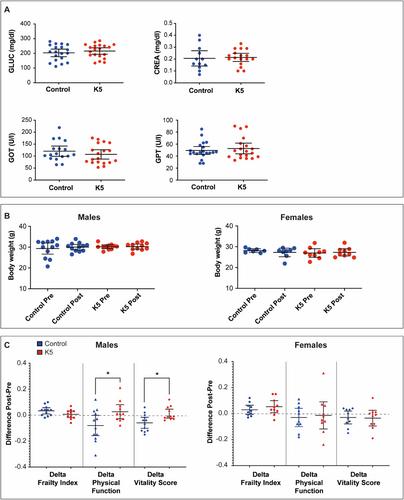
The accumulation of senescent cells contributes to aging and related diseases; therefore, discovering safe senolytic agents—compounds that selectively eliminate senescent cells—is a critical priority. Heat shock protein 90 (HSP90) inhibitors (HSP90i), traditionally investigated for cancer treatment, have shown potential as senolytic agents. However, inhibitors face formulation, toxicity, and cost challenges. To overcome these limitations, we employed a virtual screening approach combining structure-based prefiltering with a ligand-based pharmacophore model to identify novel, potentially safe HSP90 alpha isoform inhibitors exhibiting senolytic properties. This strategy identified 14 candidate molecules evaluated for senolytic activity in primary human fetal pulmonary fibroblasts. Four compounds exhibited significant HSP90i and senolytic activity, including two novel compounds, namely K4 and K5. The latter, 1-benzyl-3-(2-methylphenyl)-3,7-dihydro-1H-purine-2,6-dione, structurally related to the xanthinic family, emerged as a promising, well-tolerated senolytic agent. K5 demonstrated senolytic activity across various cellular senescence models, including human fibroblasts, mesenchymal stem cells, and breast cancer cells. It was also effective in vivo, extending lifespan in Drosophila and reducing senescence markers in geriatric mice. Additionally, the xanthinic nature of K5 implicates a multimodal action, now including the inhibition of HSP90α, that might enhance its efficacy and selectivity towards senescent cells, Senolytic index SI > 1320 for IMR90 cells, and SI > 770 for WI38 cells, underscoring its therapeutic potential. These findings advance senolytic therapy research, opening new avenues for safer interventions to combat age-related inflammaging and diseases, including cancer, and possibly extend a healthy lifespan.
期刊介绍:
Aging Cell, an Open Access journal, delves into fundamental aspects of aging biology. It comprehensively explores geroscience, emphasizing research on the mechanisms underlying the aging process and the connections between aging and age-related diseases.



 京公网安备 11010802042870号
京ICP备2023020795号-1
京公网安备 11010802042870号
京ICP备2023020795号-1

 分享
分享
 求助内容:
求助内容: 应助结果提醒方式:
 扫码关注我们
