Halisson R de Andrade, Fernanda Fenner, Valentina Pochio Vasques, Mariana Matos Vasconcelos, Marcio S Rassi, Jean G de Oliveira, Carmen Lúcia Penteado Lancellotti
{"title":"Cerebellar liponeurocytoma: illustrative case.","authors":"Halisson R de Andrade, Fernanda Fenner, Valentina Pochio Vasques, Mariana Matos Vasconcelos, Marcio S Rassi, Jean G de Oliveira, Carmen Lúcia Penteado Lancellotti","doi":"10.3171/CASE24521","DOIUrl":null,"url":null,"abstract":"<p><strong>Background: </strong>Cerebellar liponeurocytoma is a rare, low-grade neoplasm (WHO grade 2) characterized by neuronal or neurocytic differentiation and variable glial differentiation with lipoma-like alterations. First described in 1978 and recognized in the WHO classification in 2000, it presents significant challenges in radiological and pathological differentiation. This differentiation is crucial to avoid unnecessary or deleterious treatments.</p><p><strong>Observations: </strong>The patient presented with symptoms including headache, dizziness, hiccups, nausea, vomiting, tinnitus, and left-sided ataxia. Imaging revealed a heterogeneous lesion in the left cerebellopontine angle. Resection was performed via a left suboccipital retrosigmoid approach, resulting in significant improvement in axial and appendicular ataxia, although left-sided anacusis persisted. Histopathological analysis confirmed cerebellar liponeurocytoma showing hypercellularity, with neurocytic cells containing lipid accumulations. Immunohistochemical analysis revealed diffuse expression of synaptophysin and focal expression of glial fibrillary acidic protein, with a Ki-67 proliferation index of 7%.</p><p><strong>Lessons: </strong>Cerebellar liponeurocytoma is a rare tumor requiring accurate histopathological differentiation to determine the appropriate treatment. Resection remains the mainstay of treatment, with postoperative radiotherapy potentially reducing recurrence. Multidisciplinary follow-up is crucial for managing residual symptoms and monitoring for recurrence. This case aligns with existing literature and underscores the importance of comprehensive diagnostic and therapeutic approaches to improve patient outcomes. https://thejns.org/doi/10.3171/CASE24521.</p>","PeriodicalId":94098,"journal":{"name":"Journal of neurosurgery. Case lessons","volume":"9 11","pages":""},"PeriodicalIF":0.0000,"publicationDate":"2025-03-17","publicationTypes":"Journal Article","fieldsOfStudy":null,"isOpenAccess":false,"openAccessPdf":"https://www.ncbi.nlm.nih.gov/pmc/articles/PMC11912928/pdf/","citationCount":"0","resultStr":null,"platform":"Semanticscholar","paperid":null,"PeriodicalName":"Journal of neurosurgery. Case lessons","FirstCategoryId":"1085","ListUrlMain":"https://doi.org/10.3171/CASE24521","RegionNum":0,"RegionCategory":null,"ArticlePicture":[],"TitleCN":null,"AbstractTextCN":null,"PMCID":null,"EPubDate":"","PubModel":"","JCR":"","JCRName":"","Score":null,"Total":0}
引用次数: 0
Abstract
Background: Cerebellar liponeurocytoma is a rare, low-grade neoplasm (WHO grade 2) characterized by neuronal or neurocytic differentiation and variable glial differentiation with lipoma-like alterations. First described in 1978 and recognized in the WHO classification in 2000, it presents significant challenges in radiological and pathological differentiation. This differentiation is crucial to avoid unnecessary or deleterious treatments.
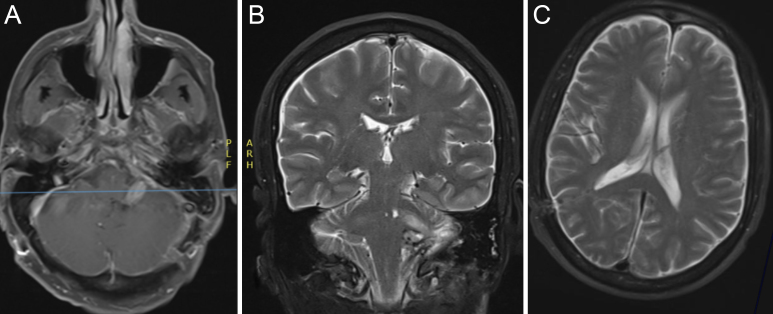
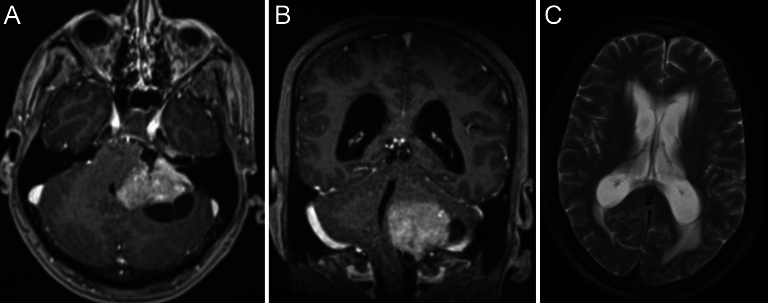
Observations: The patient presented with symptoms including headache, dizziness, hiccups, nausea, vomiting, tinnitus, and left-sided ataxia. Imaging revealed a heterogeneous lesion in the left cerebellopontine angle. Resection was performed via a left suboccipital retrosigmoid approach, resulting in significant improvement in axial and appendicular ataxia, although left-sided anacusis persisted. Histopathological analysis confirmed cerebellar liponeurocytoma showing hypercellularity, with neurocytic cells containing lipid accumulations. Immunohistochemical analysis revealed diffuse expression of synaptophysin and focal expression of glial fibrillary acidic protein, with a Ki-67 proliferation index of 7%.
Lessons: Cerebellar liponeurocytoma is a rare tumor requiring accurate histopathological differentiation to determine the appropriate treatment. Resection remains the mainstay of treatment, with postoperative radiotherapy potentially reducing recurrence. Multidisciplinary follow-up is crucial for managing residual symptoms and monitoring for recurrence. This case aligns with existing literature and underscores the importance of comprehensive diagnostic and therapeutic approaches to improve patient outcomes. https://thejns.org/doi/10.3171/CASE24521.





 京公网安备 11010802042870号
京ICP备2023020795号-1
京公网安备 11010802042870号
京ICP备2023020795号-1

 分享
分享

 求助内容:
求助内容: 应助结果提醒方式:
 扫码关注我们
