{"title":"Initial experience with surgical humidification to prevent tissue dehydration during pterional craniotomy for aneurysm clipping: illustrative case.","authors":"Alexios A Adamides, Kate Furlong, John D Laidlaw","doi":"10.3171/CASE24685","DOIUrl":null,"url":null,"abstract":"<p><strong>Background: </strong>During craniotomy, brain tissues are exposed to the relatively cold and dry environment of the operating room. This, together with excess localized heat generated from the surgical microscope light, can lead to increased evaporation from the wound, tissue desiccation, and potential thermal injury to neural and vascular tissue. The authors describe their initial experience with the technique of surgical humidification during aneurysm clipping with minimal intracranial irrigation.</p><p><strong>Observations: </strong>The patient's intracranial tissue showed no visible signs of dehydration, even though no irrigation was used during the intradural dissection stages or aneurysm clipping. The surgical humidification device was easy to use and ergonomic, and it did not interfere with the surgeon's visualization, dissection, or clip application. The procedure was uneventful, and the patient did not experience any perioperative complications.</p><p><strong>Lessons: </strong>While further investigation is needed to confirm the clinical impact of surgical humidification in neurosurgery, this therapy was safe and effective in this patient. Surgical humidification maintained intracranial tissue hydration and minimized the need for irrigation. https://thejns.org/doi/10.3171/CASE24685.</p>","PeriodicalId":94098,"journal":{"name":"Journal of neurosurgery. Case lessons","volume":"9 11","pages":""},"PeriodicalIF":0.7000,"publicationDate":"2025-03-17","publicationTypes":"Journal Article","fieldsOfStudy":null,"isOpenAccess":false,"openAccessPdf":"https://www.ncbi.nlm.nih.gov/pmc/articles/PMC11912922/pdf/","citationCount":"0","resultStr":null,"platform":"Semanticscholar","paperid":null,"PeriodicalName":"Journal of neurosurgery. Case lessons","FirstCategoryId":"1085","ListUrlMain":"https://doi.org/10.3171/CASE24685","RegionNum":0,"RegionCategory":null,"ArticlePicture":[],"TitleCN":null,"AbstractTextCN":null,"PMCID":null,"EPubDate":"","PubModel":"","JCR":"","JCRName":"","Score":null,"Total":0}
引用次数: 0
Abstract
Background: During craniotomy, brain tissues are exposed to the relatively cold and dry environment of the operating room. This, together with excess localized heat generated from the surgical microscope light, can lead to increased evaporation from the wound, tissue desiccation, and potential thermal injury to neural and vascular tissue. The authors describe their initial experience with the technique of surgical humidification during aneurysm clipping with minimal intracranial irrigation.
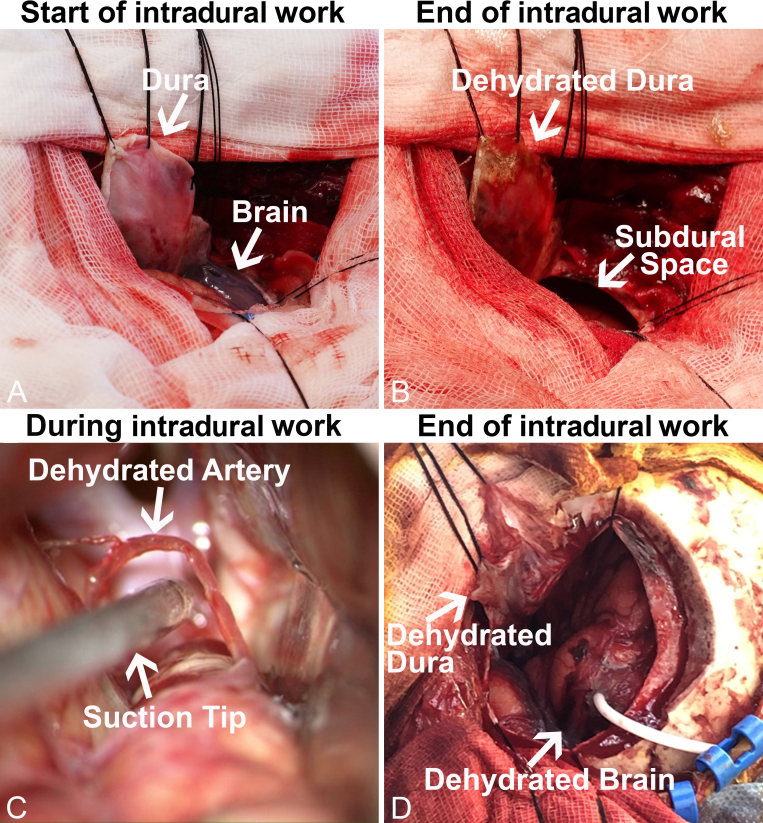
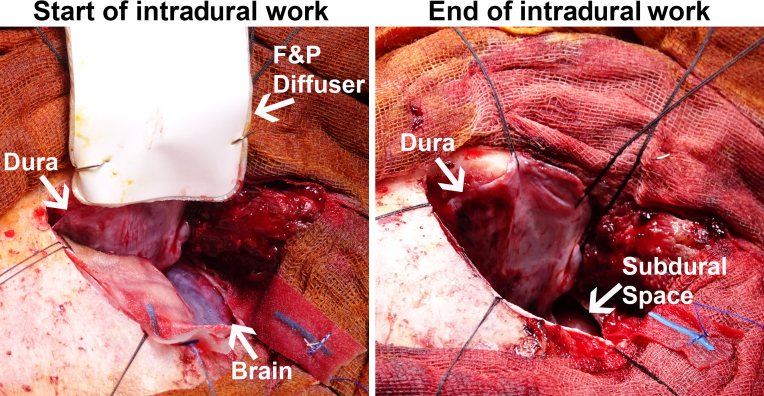
Observations: The patient's intracranial tissue showed no visible signs of dehydration, even though no irrigation was used during the intradural dissection stages or aneurysm clipping. The surgical humidification device was easy to use and ergonomic, and it did not interfere with the surgeon's visualization, dissection, or clip application. The procedure was uneventful, and the patient did not experience any perioperative complications.
Lessons: While further investigation is needed to confirm the clinical impact of surgical humidification in neurosurgery, this therapy was safe and effective in this patient. Surgical humidification maintained intracranial tissue hydration and minimized the need for irrigation. https://thejns.org/doi/10.3171/CASE24685.





 京公网安备 11010802042870号
京ICP备2023020795号-1
京公网安备 11010802042870号
京ICP备2023020795号-1

 分享
分享

 求助内容:
求助内容: 应助结果提醒方式:
 扫码关注我们
