{"title":"Differences in emotional expression among college students: a study on integrating psychometric methods and algorithm optimization.","authors":"Xiaozhu Chen","doi":"10.1186/s40359-025-02506-5","DOIUrl":null,"url":null,"abstract":"<p><strong>Background: </strong>College students are in an important stage of life development, and their emotional expression ability has a profound impact on their mental health, interpersonal relationships, and academic performance. There are significant differences in emotional expression among individuals, which are influenced by various factors such as gender, cultural background, and personality traits. However, traditional research on emotional expression often relies on a single measurement method, which has problems such as single data dimensions, limited analysis methods, and lack of real-time dynamism and personalization. To overcome these limitations, this study conducted a comprehensive analysis using psychometric methods and algorithm optimization techniques.</p><p><strong>Methods: </strong>The Emotional Intelligence Scale (EQ-i) and the depression-anxiety-stress-21 (DASS-21) were used to quantitatively evaluate the emotional state of college students, and their facial expressions and speech emotion data were collected. In order to improve the precision of data analysis, random forests, support vector machines, and neural network machine learning algorithms were applied, and the variance analysis was used to calculate and compare the emotional differences of different genders and academic backgrounds in different grades.</p><p><strong>Results: </strong>The research results showed that gender, major, and grade differences significantly affected the emotional expression of college students. The F-values for the total EQ-i score of different genders were 7.00, and the F-values for depression, anxiety, and stress scores between different grades were 22.45, 12.48, and 9.14. Male engineering students scored higher in emotional intelligence than female liberal arts students, but liberal arts students showed more significant improvement in later academic years, reflecting the differing impacts of disciplinary environments on emotional development. Female students generally exhibited higher levels of anxiety and stress, particularly those in liberal arts, while female engineering students faced additional psychological burdens due to gender imbalance and biases. Anxiety and stress levels increased across all students as they advanced in their studies, correlating with academic and graduation pressures.</p><p><strong>Conclusion: </strong>This article was based on the integration of psychometric methods and algorithm optimization techniques, exploring the differences in emotional expression among college students, providing new ideas for personalized mental health interventions for college students, enriching the theoretical basis of emotional expression research, and providing important references for education and mental health practice.</p>","PeriodicalId":37867,"journal":{"name":"BMC Psychology","volume":"13 1","pages":"280"},"PeriodicalIF":3.0000,"publicationDate":"2025-03-20","publicationTypes":"Journal Article","fieldsOfStudy":null,"isOpenAccess":false,"openAccessPdf":"https://www.ncbi.nlm.nih.gov/pmc/articles/PMC11927134/pdf/","citationCount":"0","resultStr":null,"platform":"Semanticscholar","paperid":null,"PeriodicalName":"BMC Psychology","FirstCategoryId":"102","ListUrlMain":"https://doi.org/10.1186/s40359-025-02506-5","RegionNum":3,"RegionCategory":"心理学","ArticlePicture":[],"TitleCN":null,"AbstractTextCN":null,"PMCID":null,"EPubDate":"","PubModel":"","JCR":"Q1","JCRName":"PSYCHOLOGY, MULTIDISCIPLINARY","Score":null,"Total":0}
引用次数: 0
Abstract
Background: College students are in an important stage of life development, and their emotional expression ability has a profound impact on their mental health, interpersonal relationships, and academic performance. There are significant differences in emotional expression among individuals, which are influenced by various factors such as gender, cultural background, and personality traits. However, traditional research on emotional expression often relies on a single measurement method, which has problems such as single data dimensions, limited analysis methods, and lack of real-time dynamism and personalization. To overcome these limitations, this study conducted a comprehensive analysis using psychometric methods and algorithm optimization techniques.
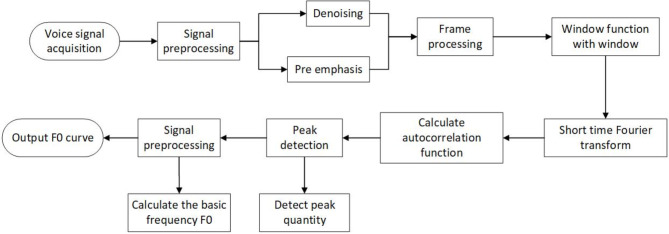
Methods: The Emotional Intelligence Scale (EQ-i) and the depression-anxiety-stress-21 (DASS-21) were used to quantitatively evaluate the emotional state of college students, and their facial expressions and speech emotion data were collected. In order to improve the precision of data analysis, random forests, support vector machines, and neural network machine learning algorithms were applied, and the variance analysis was used to calculate and compare the emotional differences of different genders and academic backgrounds in different grades.
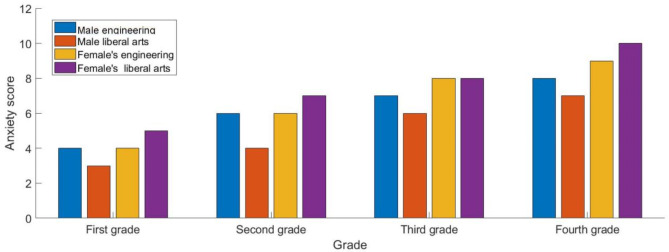
Results: The research results showed that gender, major, and grade differences significantly affected the emotional expression of college students. The F-values for the total EQ-i score of different genders were 7.00, and the F-values for depression, anxiety, and stress scores between different grades were 22.45, 12.48, and 9.14. Male engineering students scored higher in emotional intelligence than female liberal arts students, but liberal arts students showed more significant improvement in later academic years, reflecting the differing impacts of disciplinary environments on emotional development. Female students generally exhibited higher levels of anxiety and stress, particularly those in liberal arts, while female engineering students faced additional psychological burdens due to gender imbalance and biases. Anxiety and stress levels increased across all students as they advanced in their studies, correlating with academic and graduation pressures.
Conclusion: This article was based on the integration of psychometric methods and algorithm optimization techniques, exploring the differences in emotional expression among college students, providing new ideas for personalized mental health interventions for college students, enriching the theoretical basis of emotional expression research, and providing important references for education and mental health practice.
期刊介绍:
BMC Psychology is an open access, peer-reviewed journal that considers manuscripts on all aspects of psychology, human behavior and the mind, including developmental, clinical, cognitive, experimental, health and social psychology, as well as personality and individual differences. The journal welcomes quantitative and qualitative research methods, including animal studies.




 京公网安备 11010802042870号
京ICP备2023020795号-1
京公网安备 11010802042870号
京ICP备2023020795号-1

 分享
分享
 求助内容:
求助内容: 应助结果提醒方式:
 扫码关注我们
