{"title":"Investigating Biomechanical Postural Control Strategies in Healthy Aging Adults and Survivors of Stroke.","authors":"Lara A Thompson, Roni A Romero Melendez, Ji Chen","doi":"10.3390/biomechanics4010010","DOIUrl":null,"url":null,"abstract":"<p><p>As the aging populations, both nationwide and worldwide, rapidly increase, falls leading to unintentional injury and death subsequently increase. Thus, developing an understanding of biomechanical postural control strategies used to maintain balance in aging healthy adults, and those that have suffered stroke, are critical. Here, we were interested in how one's body segments stabilize relative to one another, and in space, in order to maintain balance. To accomplish this goal, we studied 30 healthy individuals and 8 survivors of stroke between 60 and 85 years old, both before and after several weeks of sensory training. Motion capture data were acquired to assess participants' body kinematics during walking: forward (easiest), forward-tandem, backward, and backward-tandem walking (most challenging). Deviations (via the observation of the absolute angle with deviations, or AADs) of the head, thorax, and lumbar areas relative to an earth vertical reference, as well as how one body segment stabilized in space or relative to the inferior body segment (via the observation of anchoring indices, or AIs), were explored. The results provide metrics (AADs and AIs) that can assess aging posture. Further, the results show an initial indication that, for aging individuals, training could lead to improved head and body stabilization in space.</p>","PeriodicalId":72381,"journal":{"name":"Biomechanics (Basel, Switzerland)","volume":"4 1","pages":"153-164"},"PeriodicalIF":1.4000,"publicationDate":"2024-03-01","publicationTypes":"Journal Article","fieldsOfStudy":null,"isOpenAccess":false,"openAccessPdf":"https://www.ncbi.nlm.nih.gov/pmc/articles/PMC11952681/pdf/","citationCount":"0","resultStr":null,"platform":"Semanticscholar","paperid":null,"PeriodicalName":"Biomechanics (Basel, Switzerland)","FirstCategoryId":"1085","ListUrlMain":"https://doi.org/10.3390/biomechanics4010010","RegionNum":0,"RegionCategory":null,"ArticlePicture":[],"TitleCN":null,"AbstractTextCN":null,"PMCID":null,"EPubDate":"2024/3/5 0:00:00","PubModel":"Epub","JCR":"","JCRName":"","Score":null,"Total":0}
引用次数: 0
Abstract
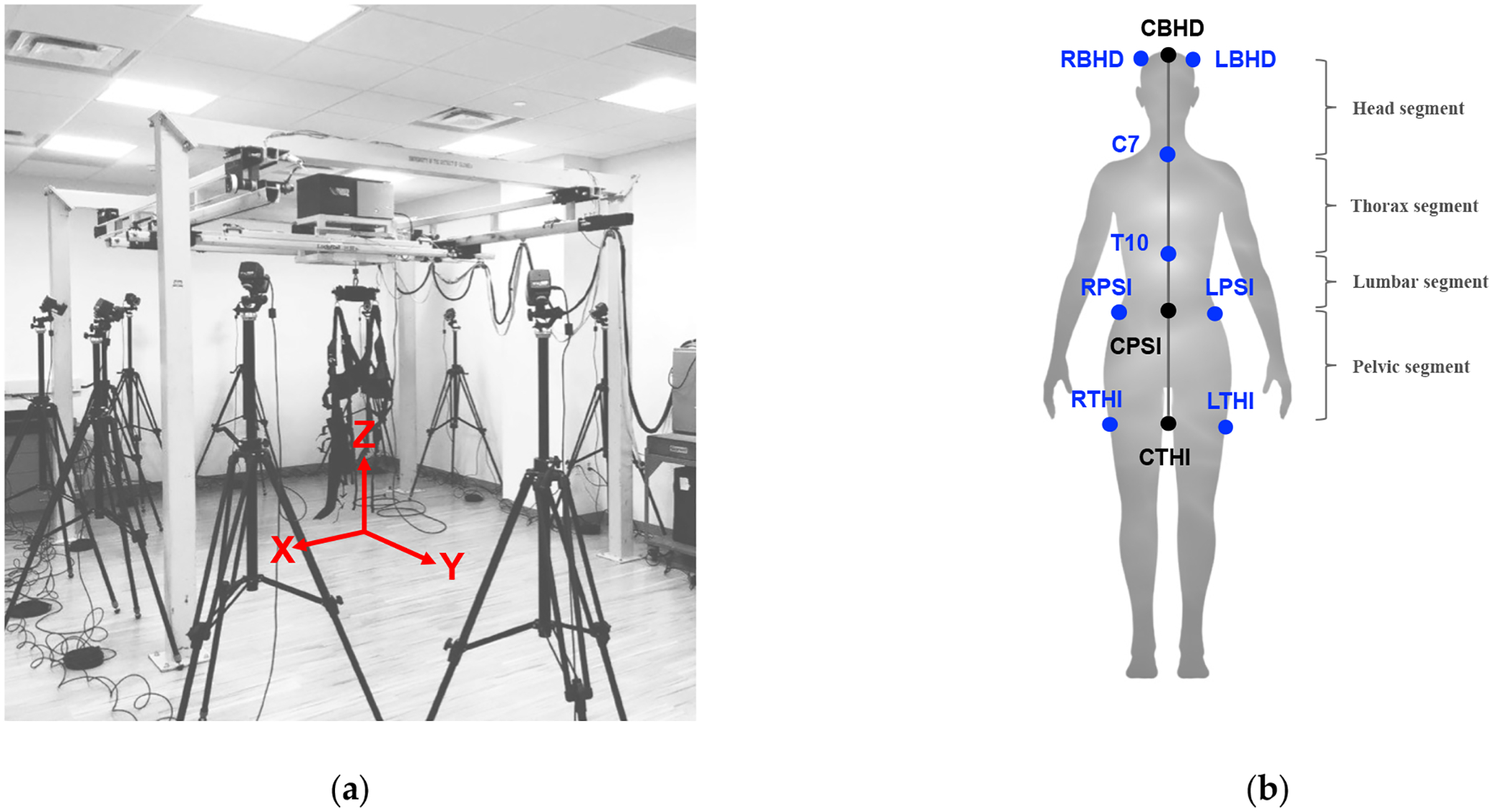
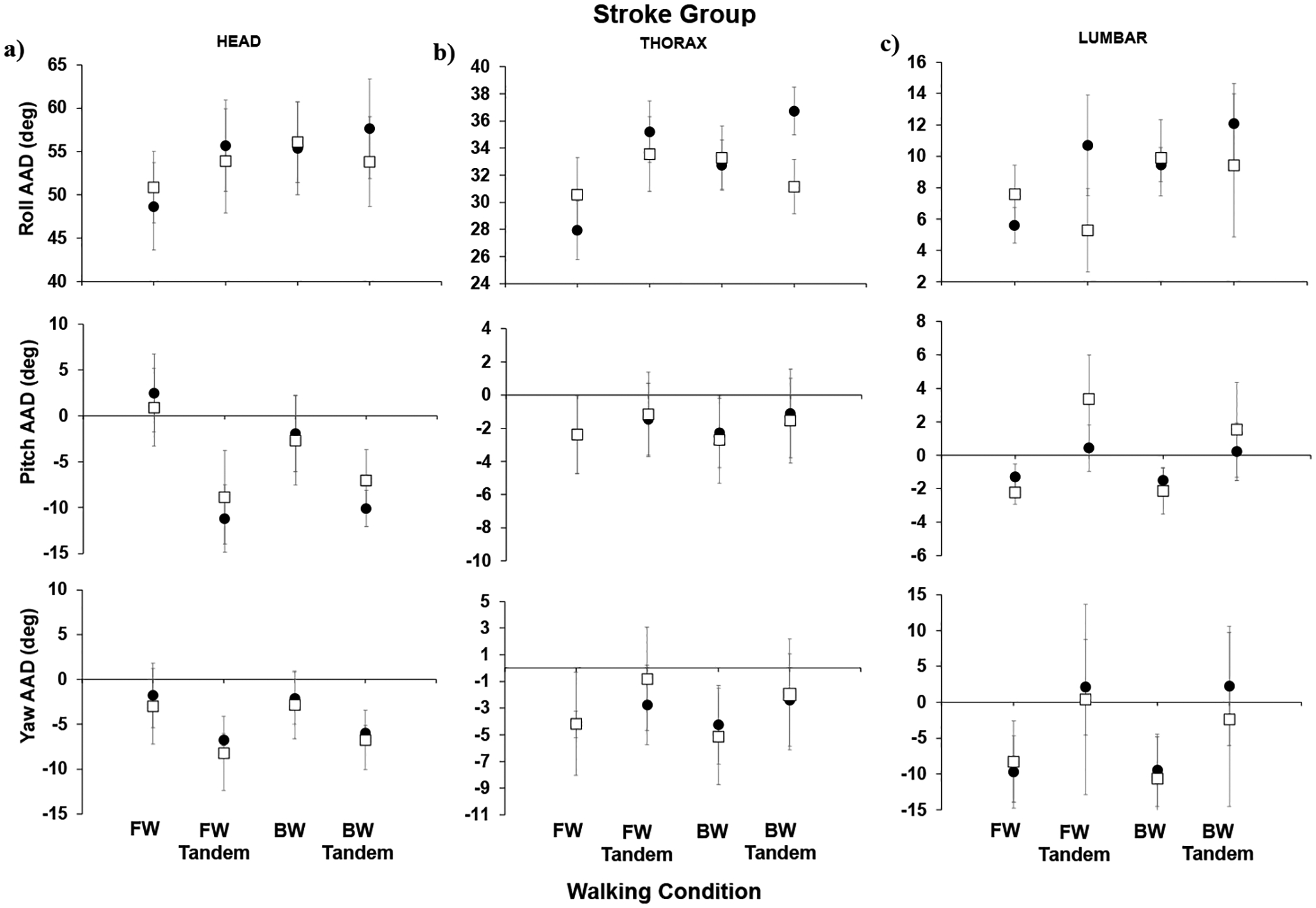
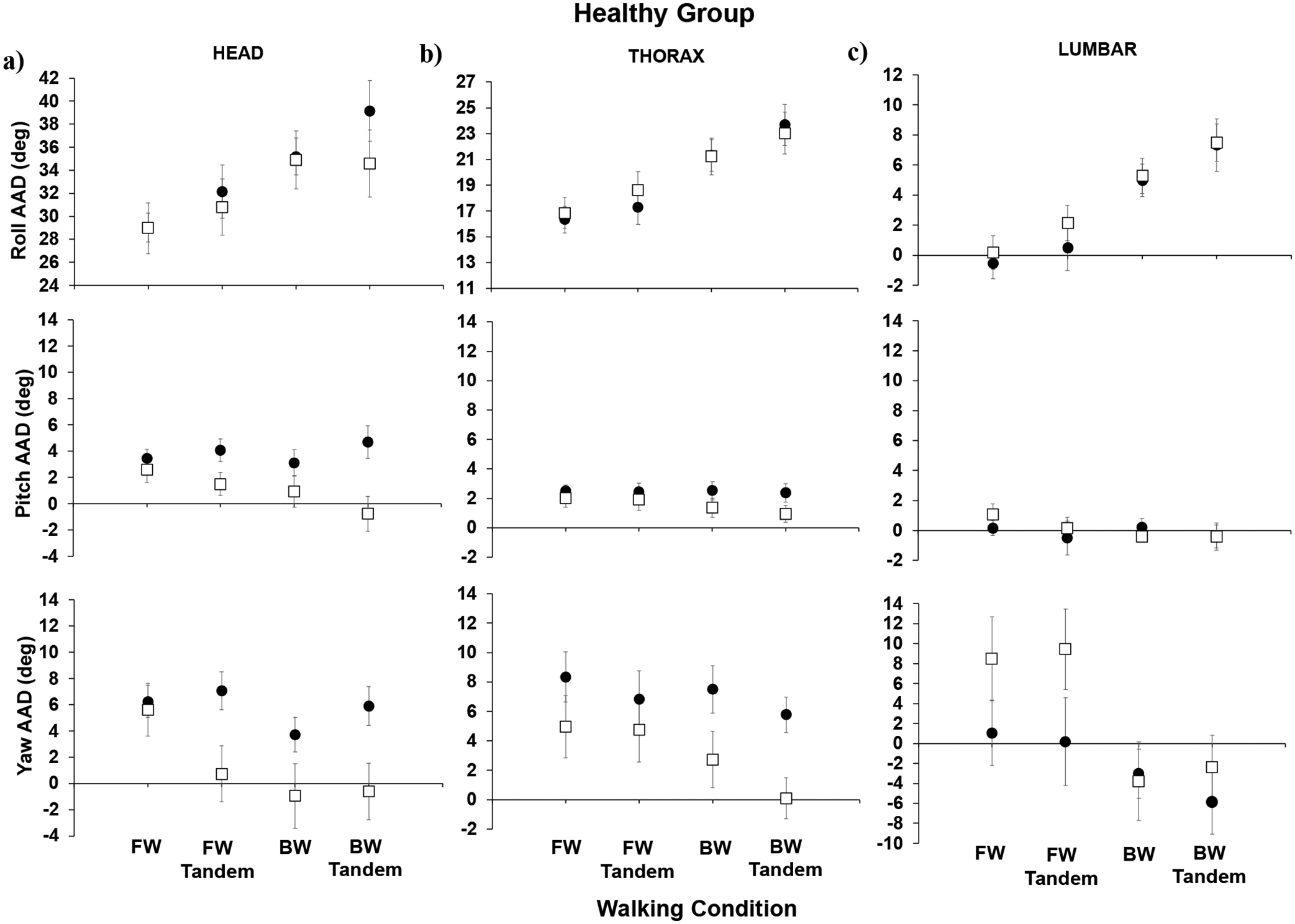
As the aging populations, both nationwide and worldwide, rapidly increase, falls leading to unintentional injury and death subsequently increase. Thus, developing an understanding of biomechanical postural control strategies used to maintain balance in aging healthy adults, and those that have suffered stroke, are critical. Here, we were interested in how one's body segments stabilize relative to one another, and in space, in order to maintain balance. To accomplish this goal, we studied 30 healthy individuals and 8 survivors of stroke between 60 and 85 years old, both before and after several weeks of sensory training. Motion capture data were acquired to assess participants' body kinematics during walking: forward (easiest), forward-tandem, backward, and backward-tandem walking (most challenging). Deviations (via the observation of the absolute angle with deviations, or AADs) of the head, thorax, and lumbar areas relative to an earth vertical reference, as well as how one body segment stabilized in space or relative to the inferior body segment (via the observation of anchoring indices, or AIs), were explored. The results provide metrics (AADs and AIs) that can assess aging posture. Further, the results show an initial indication that, for aging individuals, training could lead to improved head and body stabilization in space.



 京公网安备 11010802042870号
京ICP备2023020795号-1
京公网安备 11010802042870号
京ICP备2023020795号-1

 分享
分享

 求助内容:
求助内容: 应助结果提醒方式:
 扫码关注我们
