Diego G. Gomes , Bruno T. Sousa , Joana C. Pieretti , Roney H. Pereira , Wagner R. de Souza , Halley C. Oliveira , Amedea B Seabra
{"title":"Nanoencapsulated nitric oxide donor triggers a dose-dependent effect on the responses of maize seedlings to high light stress","authors":"Diego G. Gomes , Bruno T. Sousa , Joana C. Pieretti , Roney H. Pereira , Wagner R. de Souza , Halley C. Oliveira , Amedea B Seabra","doi":"10.1016/j.stress.2024.100711","DOIUrl":null,"url":null,"abstract":"<div><div>Nanoencapsulation of nitric oxide (NO) donors provides sustained release of NO, prolonging its action on plants. Here, we evaluated the action of NO-releasing chitosan nanoparticles containing GSNO (S-nitrosoglutathione) on the protection of maize plants (<em>Zea mays</em> cv. Balu 787) against high light-induced stress. Experiment 1 was used to compare maize plants under different light intensities. Experiment 2 evaluated the protective effect of chitosan nanoparticles containing GSNO (NPNO) in different concentrations (200 or 400 µM). Experiment 3 compared the protective effect of NPNO to non-nanoencapsulated GSNO (NO) and nanoparticles without NO-releasing molecule (NP). In experiments 1 and 2, chlorophyll <em>a</em> fluorescence and gas exchange measurements were performed. In experiment 3, chlorophyll <em>a</em> fluorescence and biochemical analyses were carried out. In experiment 1, increases in dynamic photoinhibition (DP) of 135 % (Day 1), 370 % (Day 2), 206 % (Day 3), and 100 % (Day 5) were observed from sun plants. In experiment 2, NPNO400 showed higher levels of DP on the first (+ 148 %) and second days (+ 171 %), followed by a reduction on the fifth day (- 22 %). For gas exchange parameters, NPNO400 attenuated the reduction in <em>A</em> at noon and significantly increased <em>k</em>, while NPNO200 decreased the <em>k</em> value. The differences in the effects induced by NPNO treatments are dose-dependent. In experiment 3, NPNO was the only treatment that significantly increased NO bioavailability and the activity of antioxidant enzymes (SOD; POD), contributing to mitigating stress caused by excess light on plants. The nanoencapsulation of NO donors protected maize plants against photoinhibition.</div></div>","PeriodicalId":34736,"journal":{"name":"Plant Stress","volume":"15 ","pages":"Article 100711"},"PeriodicalIF":6.8000,"publicationDate":"2025-03-01","publicationTypes":"Journal Article","fieldsOfStudy":null,"isOpenAccess":false,"openAccessPdf":"","citationCount":"0","resultStr":null,"platform":"Semanticscholar","paperid":null,"PeriodicalName":"Plant Stress","FirstCategoryId":"1085","ListUrlMain":"https://www.sciencedirect.com/science/article/pii/S2667064X24003646","RegionNum":0,"RegionCategory":null,"ArticlePicture":[],"TitleCN":null,"AbstractTextCN":null,"PMCID":null,"EPubDate":"2024/12/12 0:00:00","PubModel":"Epub","JCR":"Q1","JCRName":"PLANT SCIENCES","Score":null,"Total":0}
引用次数: 0
Abstract
Nanoencapsulation of nitric oxide (NO) donors provides sustained release of NO, prolonging its action on plants. Here, we evaluated the action of NO-releasing chitosan nanoparticles containing GSNO (S-nitrosoglutathione) on the protection of maize plants (Zea mays cv. Balu 787) against high light-induced stress. Experiment 1 was used to compare maize plants under different light intensities. Experiment 2 evaluated the protective effect of chitosan nanoparticles containing GSNO (NPNO) in different concentrations (200 or 400 µM). Experiment 3 compared the protective effect of NPNO to non-nanoencapsulated GSNO (NO) and nanoparticles without NO-releasing molecule (NP). In experiments 1 and 2, chlorophyll a fluorescence and gas exchange measurements were performed. In experiment 3, chlorophyll a fluorescence and biochemical analyses were carried out. In experiment 1, increases in dynamic photoinhibition (DP) of 135 % (Day 1), 370 % (Day 2), 206 % (Day 3), and 100 % (Day 5) were observed from sun plants. In experiment 2, NPNO400 showed higher levels of DP on the first (+ 148 %) and second days (+ 171 %), followed by a reduction on the fifth day (- 22 %). For gas exchange parameters, NPNO400 attenuated the reduction in A at noon and significantly increased k, while NPNO200 decreased the k value. The differences in the effects induced by NPNO treatments are dose-dependent. In experiment 3, NPNO was the only treatment that significantly increased NO bioavailability and the activity of antioxidant enzymes (SOD; POD), contributing to mitigating stress caused by excess light on plants. The nanoencapsulation of NO donors protected maize plants against photoinhibition.
期刊介绍:
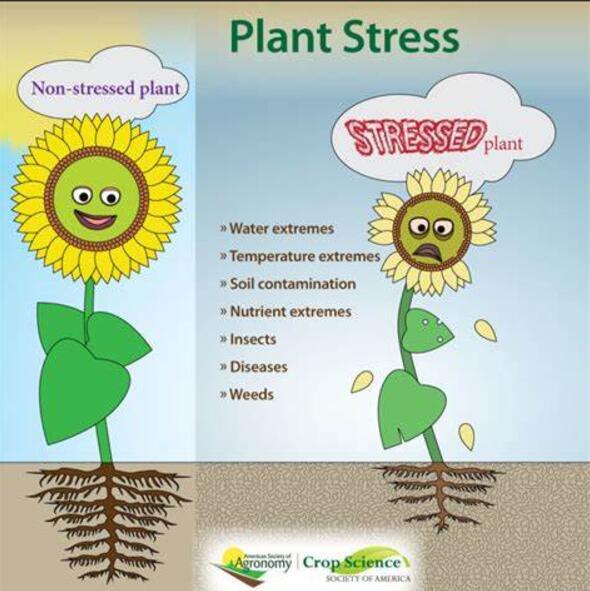
The journal Plant Stress deals with plant (or other photoautotrophs, such as algae, cyanobacteria and lichens) responses to abiotic and biotic stress factors that can result in limited growth and productivity. Such responses can be analyzed and described at a physiological, biochemical and molecular level. Experimental approaches/technologies aiming to improve growth and productivity with a potential for downstream validation under stress conditions will also be considered. Both fundamental and applied research manuscripts are welcome, provided that clear mechanistic hypotheses are made and descriptive approaches are avoided. In addition, high-quality review articles will also be considered, provided they follow a critical approach and stimulate thought for future research avenues.
Plant Stress welcomes high-quality manuscripts related (but not limited) to interactions between plants and:
Lack of water (drought) and excess (flooding),
Salinity stress,
Elevated temperature and/or low temperature (chilling and freezing),
Hypoxia and/or anoxia,
Mineral nutrient excess and/or deficiency,
Heavy metals and/or metalloids,
Plant priming (chemical, biological, physiological, nanomaterial, biostimulant) approaches for improved stress protection,
Viral, phytoplasma, bacterial and fungal plant-pathogen interactions.
The journal welcomes basic and applied research articles, as well as review articles and short communications. All submitted manuscripts will be subject to a thorough peer-reviewing process.




 京公网安备 11010802042870号
京ICP备2023020795号-1
京公网安备 11010802042870号
京ICP备2023020795号-1

 分享
分享
 求助内容:
求助内容: 应助结果提醒方式:
 扫码关注我们
