Pietro Emilio Nepi , Claudia Pisuttu , Cristina Nali , Elisa Pellegrini , Ron Shmuleviz , Stefano Brizzolara , Pietro Tonutti
{"title":"Volatile organic compounds as potential markers of Botrytis cinerea infection in intact harvested grape berries","authors":"Pietro Emilio Nepi , Claudia Pisuttu , Cristina Nali , Elisa Pellegrini , Ron Shmuleviz , Stefano Brizzolara , Pietro Tonutti","doi":"10.1016/j.stress.2025.100803","DOIUrl":null,"url":null,"abstract":"<div><div>Partially dehydrated grapes are traditionally added in several wine-producing countries to enrich must composition for complex dry/sweet wines. Unfortunately, the controlled conditions in grape dehydration chambers are conducive to the development of <em>Botrytis cinerea</em> (causal agent of grey mold), thus resulting in significant grape losses. A few published papers have reported specific quantitative and qualitative alterations in the profile of volatile organic compounds (VOCs) of grape berries in response to <em>B. cinerea</em> infection. However, to the best of our knowledge, none of them studied the biochemical response of intact grape berries to the infection. The information deriving from intact berries analysis can be used to develop specific VOC sensors for early infection detection. To better understand the VOCs specifically induced by <em>B. cinerea</em> infection, homogeneous intact berries of non-inoculated Sangiovese and Corvina cultivars were collected and analysed by SPME-GC-MS. The same analysis was used for berries that had been artificially inoculated with a spore suspension of <em>B. cinerea</em> (105 spores mL<sup>−1</sup>) or mock inoculated using the same volume of growth medium. The results showed that inoculated berries emit significantly higher levels of a set of primary (hexanol, 2-hexen-1-ol, 3-hexen-1-ol) and secondary (1-penten-3-ol) alcohols. Some of these alcohols have already been reported to correlate with <em>B. cinerea</em> infection, while others possibly representing new infection markers. Setting up sensors that can detect the volatile markers identified inside the dehydration chambers would improve grape withering through the early detection of <em>B. cinerea</em>, possibly leading to a reduction in spoilage and grape losses via the targeted adjustments of environmental conditions.</div></div>","PeriodicalId":34736,"journal":{"name":"Plant Stress","volume":"16 ","pages":"Article 100803"},"PeriodicalIF":6.8000,"publicationDate":"2025-06-01","publicationTypes":"Journal Article","fieldsOfStudy":null,"isOpenAccess":false,"openAccessPdf":"","citationCount":"0","resultStr":null,"platform":"Semanticscholar","paperid":null,"PeriodicalName":"Plant Stress","FirstCategoryId":"1085","ListUrlMain":"https://www.sciencedirect.com/science/article/pii/S2667064X25000685","RegionNum":0,"RegionCategory":null,"ArticlePicture":[],"TitleCN":null,"AbstractTextCN":null,"PMCID":null,"EPubDate":"2025/3/11 0:00:00","PubModel":"Epub","JCR":"Q1","JCRName":"PLANT SCIENCES","Score":null,"Total":0}
引用次数: 0
Abstract
Partially dehydrated grapes are traditionally added in several wine-producing countries to enrich must composition for complex dry/sweet wines. Unfortunately, the controlled conditions in grape dehydration chambers are conducive to the development of Botrytis cinerea (causal agent of grey mold), thus resulting in significant grape losses. A few published papers have reported specific quantitative and qualitative alterations in the profile of volatile organic compounds (VOCs) of grape berries in response to B. cinerea infection. However, to the best of our knowledge, none of them studied the biochemical response of intact grape berries to the infection. The information deriving from intact berries analysis can be used to develop specific VOC sensors for early infection detection. To better understand the VOCs specifically induced by B. cinerea infection, homogeneous intact berries of non-inoculated Sangiovese and Corvina cultivars were collected and analysed by SPME-GC-MS. The same analysis was used for berries that had been artificially inoculated with a spore suspension of B. cinerea (105 spores mL−1) or mock inoculated using the same volume of growth medium. The results showed that inoculated berries emit significantly higher levels of a set of primary (hexanol, 2-hexen-1-ol, 3-hexen-1-ol) and secondary (1-penten-3-ol) alcohols. Some of these alcohols have already been reported to correlate with B. cinerea infection, while others possibly representing new infection markers. Setting up sensors that can detect the volatile markers identified inside the dehydration chambers would improve grape withering through the early detection of B. cinerea, possibly leading to a reduction in spoilage and grape losses via the targeted adjustments of environmental conditions.
期刊介绍:
The journal Plant Stress deals with plant (or other photoautotrophs, such as algae, cyanobacteria and lichens) responses to abiotic and biotic stress factors that can result in limited growth and productivity. Such responses can be analyzed and described at a physiological, biochemical and molecular level. Experimental approaches/technologies aiming to improve growth and productivity with a potential for downstream validation under stress conditions will also be considered. Both fundamental and applied research manuscripts are welcome, provided that clear mechanistic hypotheses are made and descriptive approaches are avoided. In addition, high-quality review articles will also be considered, provided they follow a critical approach and stimulate thought for future research avenues.
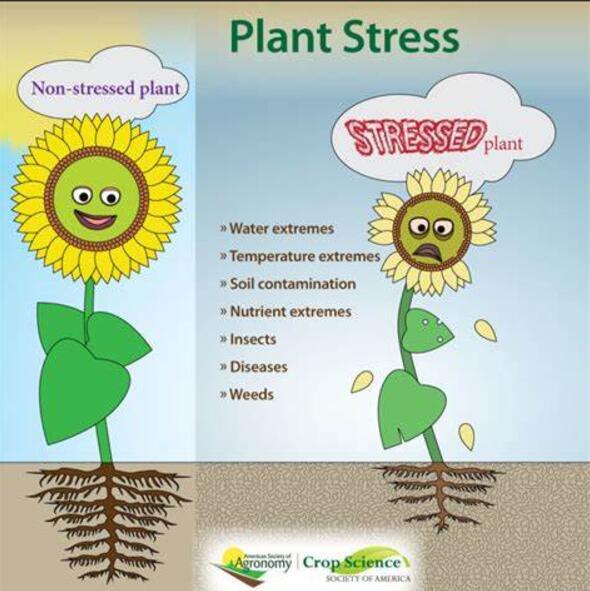
Plant Stress welcomes high-quality manuscripts related (but not limited) to interactions between plants and:
Lack of water (drought) and excess (flooding),
Salinity stress,
Elevated temperature and/or low temperature (chilling and freezing),
Hypoxia and/or anoxia,
Mineral nutrient excess and/or deficiency,
Heavy metals and/or metalloids,
Plant priming (chemical, biological, physiological, nanomaterial, biostimulant) approaches for improved stress protection,
Viral, phytoplasma, bacterial and fungal plant-pathogen interactions.
The journal welcomes basic and applied research articles, as well as review articles and short communications. All submitted manuscripts will be subject to a thorough peer-reviewing process.




 京公网安备 11010802042870号
京ICP备2023020795号-1
京公网安备 11010802042870号
京ICP备2023020795号-1

 分享
分享
 求助内容:
求助内容: 应助结果提醒方式:
 扫码关注我们
