Hideaki Nakajima, William E B Johnson, Mikiko Kamitani, Shuji Watanabe, Kazuya Honjoh, Arisa Kubota, Akihiko Matsumine
{"title":"Proteomic analysis and effects on osteogenic differentiation of exosomes from patients with ossification of the spinal ligament.","authors":"Hideaki Nakajima, William E B Johnson, Mikiko Kamitani, Shuji Watanabe, Kazuya Honjoh, Arisa Kubota, Akihiko Matsumine","doi":"10.1093/jbmrpl/ziaf021","DOIUrl":null,"url":null,"abstract":"<p><p>Ossification of the spinal ligament (OSL), including ossification of the posterior longitudinal ligament and ossification of the ligamentum flavum (OLF), is a multifactorial disease that includes genetic predisposition. The association between the rate of ossification in the spinal canal and the severity of myelopathy symptoms is well known, but the degree of progression varies widely among patients. Although many candidate genes and biomarkers have been reported, there are no definitive and quantitative conclusions to date, probably because of low reproducibility due to individual differences. In this study, we focused on exosomes secreted by ossified spinal ligament cells. Exosomes are crucial for intercellular communication during development and progression of disease. In a co-culture study of non-OLF cells with OLF cells, there was increased osteogenic differentiation, including Runx2 and Wnt3a expression, with use of exosome-penetrating filters (1.2 μm) compared to exosome-non-penetrating filters (0.03 μm). Dose-dependent increases in alkaline phosphatase activity and mineral deposition were observed in non-OLF cells treated with OLF-derived exosomes. These results support the hypothesis that OLF-derived exosomes are involved in regulation of osteogenic differentiation. In comparative proteomics analysis, 32 factors were increased and 40 were decreased in OLF-derived exosomes compared to non-OLF-derived exosomes. Molecular network analysis of these 72 factors indicated 10 significant pathways, including the matrix metalloproteinase (MMP) signaling, mTOR signaling, Wnt signaling and VDR-associated pathways. Among the upregulated exosomal membrane proteins in OLF samples, COL IV, FMNL3, mTORC2, and PIP4K showed increased expression with greater ossification, suggesting they may serve as biomarkers of disease activity and therapeutic targets. These factors are involved in the PI3K/Akt/mTOR signaling pathway, and particularly mTOR is known to regulate osteogenic and chondrogenic differentiation. In contrast, fatty acid-binding protein 5, several KRT family proteins, S100A8, SERPINB3, and transglutaminase, were significantly downregulated in OLF-derived exosomes. These findings provide novel insights into the molecular mechanisms underlying OSL pathogenesis.</p>","PeriodicalId":14611,"journal":{"name":"JBMR Plus","volume":"9 4","pages":"ziaf021"},"PeriodicalIF":2.4000,"publicationDate":"2025-02-02","publicationTypes":"Journal Article","fieldsOfStudy":null,"isOpenAccess":false,"openAccessPdf":"https://www.ncbi.nlm.nih.gov/pmc/articles/PMC11911064/pdf/","citationCount":"0","resultStr":null,"platform":"Semanticscholar","paperid":null,"PeriodicalName":"JBMR Plus","FirstCategoryId":"1085","ListUrlMain":"https://doi.org/10.1093/jbmrpl/ziaf021","RegionNum":0,"RegionCategory":null,"ArticlePicture":[],"TitleCN":null,"AbstractTextCN":null,"PMCID":null,"EPubDate":"2025/4/1 0:00:00","PubModel":"eCollection","JCR":"Q2","JCRName":"ENDOCRINOLOGY & METABOLISM","Score":null,"Total":0}
引用次数: 0
Abstract
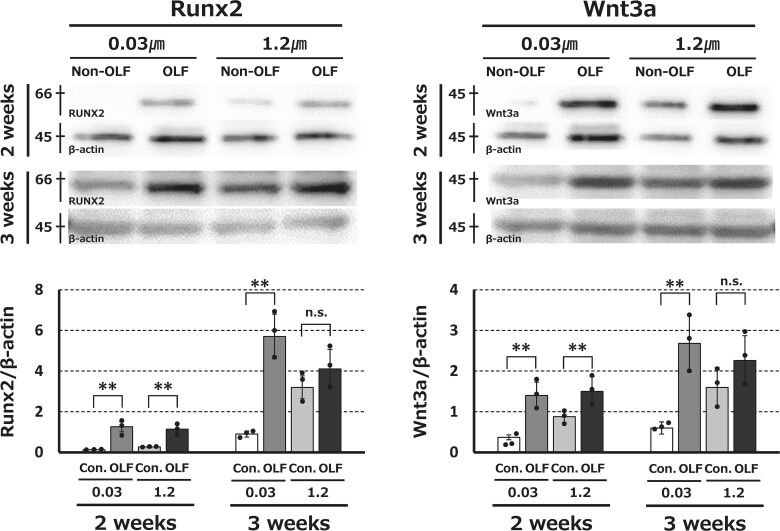
Ossification of the spinal ligament (OSL), including ossification of the posterior longitudinal ligament and ossification of the ligamentum flavum (OLF), is a multifactorial disease that includes genetic predisposition. The association between the rate of ossification in the spinal canal and the severity of myelopathy symptoms is well known, but the degree of progression varies widely among patients. Although many candidate genes and biomarkers have been reported, there are no definitive and quantitative conclusions to date, probably because of low reproducibility due to individual differences. In this study, we focused on exosomes secreted by ossified spinal ligament cells. Exosomes are crucial for intercellular communication during development and progression of disease. In a co-culture study of non-OLF cells with OLF cells, there was increased osteogenic differentiation, including Runx2 and Wnt3a expression, with use of exosome-penetrating filters (1.2 μm) compared to exosome-non-penetrating filters (0.03 μm). Dose-dependent increases in alkaline phosphatase activity and mineral deposition were observed in non-OLF cells treated with OLF-derived exosomes. These results support the hypothesis that OLF-derived exosomes are involved in regulation of osteogenic differentiation. In comparative proteomics analysis, 32 factors were increased and 40 were decreased in OLF-derived exosomes compared to non-OLF-derived exosomes. Molecular network analysis of these 72 factors indicated 10 significant pathways, including the matrix metalloproteinase (MMP) signaling, mTOR signaling, Wnt signaling and VDR-associated pathways. Among the upregulated exosomal membrane proteins in OLF samples, COL IV, FMNL3, mTORC2, and PIP4K showed increased expression with greater ossification, suggesting they may serve as biomarkers of disease activity and therapeutic targets. These factors are involved in the PI3K/Akt/mTOR signaling pathway, and particularly mTOR is known to regulate osteogenic and chondrogenic differentiation. In contrast, fatty acid-binding protein 5, several KRT family proteins, S100A8, SERPINB3, and transglutaminase, were significantly downregulated in OLF-derived exosomes. These findings provide novel insights into the molecular mechanisms underlying OSL pathogenesis.







 京公网安备 11010802042870号
京ICP备2023020795号-1
京公网安备 11010802042870号
京ICP备2023020795号-1

 分享
分享
 求助内容:
求助内容: 应助结果提醒方式:
 扫码关注我们
