{"title":"Preoperative MRI-based predictive model for biochemical recurrence following radical prostatectomy","authors":"Qianyu Peng, lili Xu, Daming zhang, Jiahui Zhang, Xiaoxiao Zhang, Xin Bai, Li Chen, Erjia guo, Linjing Yang, Yongfei Wu, Chen Chen, Sihong Yu, Zhengyu Jin, Gumuyang Zhang, Hao Sun","doi":"10.1007/s00261-025-04877-0","DOIUrl":null,"url":null,"abstract":"<div><h3>Purpose</h3><p>To determine the biochemical recurrence (BCR)-related pelvic anatomic characteristics before radical prostatectomy (RP) and to establish a new predictive model for BCR-free survival (BCRFS).</p><h3>Methods</h3><p>The study involved 170 patients who underwent RP between January 2015 and December 2022. Kaplan–Meier plots were applied to estimate survival probabilities. Multivariate Cox regression models were employed to identify predictors for BCRFS, which were subsequently incorporated into an MRI-based nomogram to visualize the model. The Harrell’s concordance index (C-index) was employed to evaluate the discrimination, and compared with a basic model without incorporating pelvic anatomy. Time-dependent receiver operating characteristic (ROC) curves and decision curve analysis (DCA) were applied to identify the advantage of the new predictive model. Three risk categories were created.</p><h3>Results</h3><p>Multifactorial analysis revealed that age, capsule contact length (CCL), tumor’s distance to the proximal membranous urethra (UD), urethral width, and annual surgery volume were independent risk factors for BCR (all <i>p</i> < 0.05). The established predictive model yielded a C-index of 0.850 that was superior to aforementioned basic model with C-index of 0.771 (<i>p</i> < 0.001). Our new model with an area under the ROC curve (AUC) of 0.893 revealed better predictive ability in BCRFS than basic model with the AUC of 0.823 (<i>p</i> = 0.01), and DCA demonstrated that our model generated more net benefits.</p><h3>Conclusion</h3><p>UD and urethral width are independent predictors of BCRFS. Our new model exhibits superior predictive accuracy with respect to BCRFS relative to the basic model. Apart from tumor features, pelvic anatomical features should also be considered before the treatment decision making of PCa patients.</p><h3>Graphical abstract</h3><div><figure><div><div><picture><source><img></source></picture></div></div></figure></div></div>","PeriodicalId":7126,"journal":{"name":"Abdominal Radiology","volume":"50 10","pages":"4687 - 4699"},"PeriodicalIF":2.2000,"publicationDate":"2025-03-18","publicationTypes":"Journal Article","fieldsOfStudy":null,"isOpenAccess":false,"openAccessPdf":"","citationCount":"0","resultStr":null,"platform":"Semanticscholar","paperid":null,"PeriodicalName":"Abdominal Radiology","FirstCategoryId":"3","ListUrlMain":"https://link.springer.com/article/10.1007/s00261-025-04877-0","RegionNum":3,"RegionCategory":"医学","ArticlePicture":[],"TitleCN":null,"AbstractTextCN":null,"PMCID":null,"EPubDate":"","PubModel":"","JCR":"Q2","JCRName":"RADIOLOGY, NUCLEAR MEDICINE & MEDICAL IMAGING","Score":null,"Total":0}
引用次数: 0
Abstract
Purpose
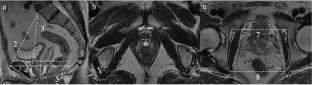
To determine the biochemical recurrence (BCR)-related pelvic anatomic characteristics before radical prostatectomy (RP) and to establish a new predictive model for BCR-free survival (BCRFS).
Methods
The study involved 170 patients who underwent RP between January 2015 and December 2022. Kaplan–Meier plots were applied to estimate survival probabilities. Multivariate Cox regression models were employed to identify predictors for BCRFS, which were subsequently incorporated into an MRI-based nomogram to visualize the model. The Harrell’s concordance index (C-index) was employed to evaluate the discrimination, and compared with a basic model without incorporating pelvic anatomy. Time-dependent receiver operating characteristic (ROC) curves and decision curve analysis (DCA) were applied to identify the advantage of the new predictive model. Three risk categories were created.
Results
Multifactorial analysis revealed that age, capsule contact length (CCL), tumor’s distance to the proximal membranous urethra (UD), urethral width, and annual surgery volume were independent risk factors for BCR (all p < 0.05). The established predictive model yielded a C-index of 0.850 that was superior to aforementioned basic model with C-index of 0.771 (p < 0.001). Our new model with an area under the ROC curve (AUC) of 0.893 revealed better predictive ability in BCRFS than basic model with the AUC of 0.823 (p = 0.01), and DCA demonstrated that our model generated more net benefits.
Conclusion
UD and urethral width are independent predictors of BCRFS. Our new model exhibits superior predictive accuracy with respect to BCRFS relative to the basic model. Apart from tumor features, pelvic anatomical features should also be considered before the treatment decision making of PCa patients.
目的:探讨根治性前列腺切除术(RP)前生化复发(BCR)相关盆腔解剖特征,建立无BCR生存期(BCRFS)新的预测模型。方法:该研究涉及170例2015年1月至2022年12月期间接受RP的患者。Kaplan-Meier图用于估计生存概率。采用多变量Cox回归模型来确定BCRFS的预测因子,随后将其纳入基于mri的nomogram模型可视化。采用Harrell’s concordance index (C-index)评价辨别性,并与未纳入骨盆解剖的基本模型进行比较。采用时间相关的受试者工作特征(ROC)曲线和决策曲线分析(DCA)来确定新预测模型的优势。创建了三个风险类别。结果:多因素分析显示,年龄、包膜接触长度(CCL)、肿瘤与近端膜性尿道(UD)的距离、尿道宽度、年手术量是BCRFS的独立危险因素(均p)。结论:UD和尿道宽度是BCRFS的独立预测因素。相对于基本模型,我们的新模型在BCRFS方面表现出更高的预测精度。前列腺癌患者的治疗决策除考虑肿瘤特征外,还应考虑盆腔解剖特征。
期刊介绍:
Abdominal Radiology seeks to meet the professional needs of the abdominal radiologist by publishing clinically pertinent original, review and practice related articles on the gastrointestinal and genitourinary tracts and abdominal interventional and radiologic procedures. Case reports are generally not accepted unless they are the first report of a new disease or condition, or part of a special solicited section.
Reasons to Publish Your Article in Abdominal Radiology:
· Official journal of the Society of Abdominal Radiology (SAR)
· Published in Cooperation with:
European Society of Gastrointestinal and Abdominal Radiology (ESGAR)
European Society of Urogenital Radiology (ESUR)
Asian Society of Abdominal Radiology (ASAR)
· Efficient handling and Expeditious review
· Author feedback is provided in a mentoring style
· Global readership
· Readers can earn CME credits





 京公网安备 11010802042870号
京ICP备2023020795号-1
京公网安备 11010802042870号
京ICP备2023020795号-1

 分享
分享
 求助内容:
求助内容: 应助结果提醒方式:
 扫码关注我们
