A Brief Cognitive Behavioral Therapy-Based Digital Intervention for Reducing Hazardous Alcohol Use in South Korea: Development and Prospective Pilot Study.
Manjae Kwon, Daa Un Moon, Minjae Kang, Young-Chul Jung
{"title":"A Brief Cognitive Behavioral Therapy-Based Digital Intervention for Reducing Hazardous Alcohol Use in South Korea: Development and Prospective Pilot Study.","authors":"Manjae Kwon, Daa Un Moon, Minjae Kang, Young-Chul Jung","doi":"10.2196/64459","DOIUrl":null,"url":null,"abstract":"<p><strong>Background: </strong>Alcohol consumption is a leading cause of death and disability worldwide, associated with numerous acute and chronic medical conditions. Digital health interventions offer a promising solution to overcome barriers associated with traditional treatment methods, providing accessible, scalable, and cost-effective means to support individuals in reducing hazardous drinking.</p><p><strong>Objective: </strong>This pilot study aims to evaluate the feasibility, acceptability, and preliminary efficacy of the Sober smartphone app in individuals with hazardous alcohol use.</p><p><strong>Methods: </strong>This single-group, pre- and postpilot study included 20 participants with risky alcohol use, identified using the Alcohol Use Disorder Identification Test. Participants used the Sober app for 4 weeks, incorporating cognitive behavioral therapy-based interventions. Feasibility was assessed by study and session completion rates, acceptability by participant satisfaction and perceived usefulness, and preliminary efficacy by changes in alcohol consumption and psychiatric symptoms. Semistructured interviews with participants and clinicians provided qualitative perspectives on the app's usability, efficacy, and areas for improvement.</p><p><strong>Results: </strong>Of the 20 enrolled participants, 17 completed the study. The app demonstrated high feasibility with an 85% (17/20) study completion rate, and 59% (10/17) completed all cognitive behavioral therapy sessions. Participants reported positive acceptability, with average satisfaction and usefulness ratings of 3.8 and 3.7 of 5, respectively. Preliminary efficacy outcomes showed significant improvements: abstinence days increased from 67% to 85% (z=-3.17; P=.002), heavy drinking episodes decreased from 3.3 to 1.9 (t16=-2.97; P=.003), and total alcohol consumption reduced from 456.8 to 195.9 mL (t16=3.16; P=.002). Alcohol Use Disorder Identification Test scores dropped from 17.5 to 10.7 (t16=4.51; P<.001). Additionally, depression (Patient Health Questionnaire-9) scores decreased from 5.8 to 4.4 (t16=2.91; P=.01), and anxiety (Generalized Anxiety Disorder-7) scores from 3.4 to 2.1 (z=-2.80; P=.005). No adverse events were reported. Qualitative analysis found participants valued daily logging but noted usability issues, while clinicians called for tailored goals, enhanced communication features, and age-specific content.</p><p><strong>Conclusions: </strong>The mobile app Sober shows promise as an effective tool for reducing hazardous alcohol consumption and improving related psychiatric symptoms. The study demonstrated high feasibility and positive acceptability, with significant preliminary efficacy in reducing alcohol use. Qualitative findings provided actionable evidence for refining the app's usability and clinical integration. Further research through a randomized controlled trial is warranted to confirm these findings and optimize the app's features and content.</p>","PeriodicalId":14841,"journal":{"name":"JMIR Formative Research","volume":"9 ","pages":"e64459"},"PeriodicalIF":2.0000,"publicationDate":"2025-03-19","publicationTypes":"Journal Article","fieldsOfStudy":null,"isOpenAccess":false,"openAccessPdf":"https://www.ncbi.nlm.nih.gov/pmc/articles/PMC11941278/pdf/","citationCount":"0","resultStr":null,"platform":"Semanticscholar","paperid":null,"PeriodicalName":"JMIR Formative Research","FirstCategoryId":"1085","ListUrlMain":"https://doi.org/10.2196/64459","RegionNum":0,"RegionCategory":null,"ArticlePicture":[],"TitleCN":null,"AbstractTextCN":null,"PMCID":null,"EPubDate":"","PubModel":"","JCR":"Q3","JCRName":"HEALTH CARE SCIENCES & SERVICES","Score":null,"Total":0}
引用次数: 0
Abstract
Background: Alcohol consumption is a leading cause of death and disability worldwide, associated with numerous acute and chronic medical conditions. Digital health interventions offer a promising solution to overcome barriers associated with traditional treatment methods, providing accessible, scalable, and cost-effective means to support individuals in reducing hazardous drinking.
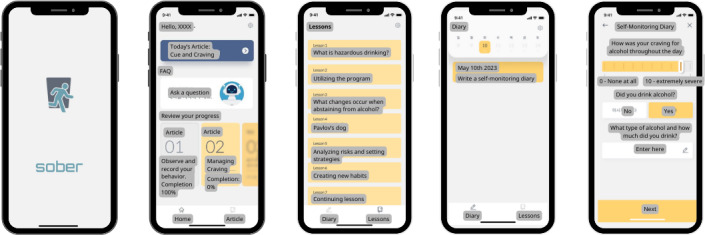
Objective: This pilot study aims to evaluate the feasibility, acceptability, and preliminary efficacy of the Sober smartphone app in individuals with hazardous alcohol use.
Methods: This single-group, pre- and postpilot study included 20 participants with risky alcohol use, identified using the Alcohol Use Disorder Identification Test. Participants used the Sober app for 4 weeks, incorporating cognitive behavioral therapy-based interventions. Feasibility was assessed by study and session completion rates, acceptability by participant satisfaction and perceived usefulness, and preliminary efficacy by changes in alcohol consumption and psychiatric symptoms. Semistructured interviews with participants and clinicians provided qualitative perspectives on the app's usability, efficacy, and areas for improvement.
Results: Of the 20 enrolled participants, 17 completed the study. The app demonstrated high feasibility with an 85% (17/20) study completion rate, and 59% (10/17) completed all cognitive behavioral therapy sessions. Participants reported positive acceptability, with average satisfaction and usefulness ratings of 3.8 and 3.7 of 5, respectively. Preliminary efficacy outcomes showed significant improvements: abstinence days increased from 67% to 85% (z=-3.17; P=.002), heavy drinking episodes decreased from 3.3 to 1.9 (t16=-2.97; P=.003), and total alcohol consumption reduced from 456.8 to 195.9 mL (t16=3.16; P=.002). Alcohol Use Disorder Identification Test scores dropped from 17.5 to 10.7 (t16=4.51; P<.001). Additionally, depression (Patient Health Questionnaire-9) scores decreased from 5.8 to 4.4 (t16=2.91; P=.01), and anxiety (Generalized Anxiety Disorder-7) scores from 3.4 to 2.1 (z=-2.80; P=.005). No adverse events were reported. Qualitative analysis found participants valued daily logging but noted usability issues, while clinicians called for tailored goals, enhanced communication features, and age-specific content.
Conclusions: The mobile app Sober shows promise as an effective tool for reducing hazardous alcohol consumption and improving related psychiatric symptoms. The study demonstrated high feasibility and positive acceptability, with significant preliminary efficacy in reducing alcohol use. Qualitative findings provided actionable evidence for refining the app's usability and clinical integration. Further research through a randomized controlled trial is warranted to confirm these findings and optimize the app's features and content.





 京公网安备 11010802042870号
京ICP备2023020795号-1
京公网安备 11010802042870号
京ICP备2023020795号-1

 分享
分享
 求助内容:
求助内容: 应助结果提醒方式:
 扫码关注我们
